




Canada Explores Concessions to Ease U.S. Tariff Pressure
Canada and the United States are negotiating a deal in which Ottawa would concede on a long list of Trump administration trade demands in exchange for some relief on sectoral tariffs, as talks intensify less than two weeks before another round of threatened American levies.
According to eight sources on both sides of the border with knowledge of the negotiations, the two countries are in an intensive phase of talks and are trading in-depth proposals, but no agreement has yet been reached. The Globe and Mail is not identifying the sources because they were not authorized to discuss the top-secret bargaining.
At the centre of the proposals is a swap. Canada would agree to a range of U.S. demands: removing retaliatory tariffs on U.S. products such as autos; the return of American alcohol to shelves; removing provincial procurement restrictions; and agreeing to Washington’s interpretation of how dairy quotas should be allocated. One of the sources said the U.S. has a priority list of around 10 items it wants dealt with.

In return, the U.S. would lower sectoral levies, known as Section 232 tariffs, on steel and aluminum, with Ottawa also pushing for relief on autos and forest products. Canada is also hoping to avoid U.S. President Donald Trump’s latest round of threatened tariffs, scheduled to take effect on Aug. 19.
The U.S. is not expected to remove the Sec. 232 tariffs entirely, some of the sources said, and a key part of the negotiation revolves around the tariff levels that would remain in place. The Globe previously reported that the two sides have discussed tariff-rate quotas on steel and aluminum, intended to limit how much of the metals Canada exports to the U.S.
One of the individuals who spoke to The Globe said steel could face a tariff of 10 to 15 per cent inside the quota, while aluminum would face a single-digit tariff inside the quota, with higher tariff rates outside the quota.
The deal under discussion, four of the sources said, would represent only the first phase of trade talks and is being described as an “interim deal.” If the two sides can reach some sort of agreement and break a months-long negotiating impasse by Aug. 19, additional talks would likely take place through the fall.
One demand the U.S. has made that might be part of a future phase of bargaining is that Canada accept a baseline tariff on nearly all of its exports, including those covered by the United States-Mexico-Canada Agreement, said three of the sources. So far, most of these have been exempt. The proposed tariff would be below the 10-to-12.5-per-cent “forced labour” tariff that the U.S. currently imposes on most countries.
Later rounds of negotiations could also include discussions about defence and security, aligning external tariffs on certain Chinese goods and increased co-operation in sectors such as energy and critical minerals.
One source said the U.S. will press Canada in later rounds to fulfill its long-delayed plan to buy $19-billion worth of U.S.-made F-35 fighter jets, which Prime Minister Mark Carney put on hold last year amid Mr. Trump’s tariffs and annexation threats. If Canada joins the President’s planned Golden Dome missile-defence system, Ottawa would buy other U.S. military gear such as radar planes, the source said.
There would also be later trilateral discussions about structural changes to USMCA, including tightening rules of origin for automobiles and other key industrial goods. In its trade talks with Mexico, the U.S. has pushed for tighter North American auto content rules and a new requirement that 50 per cent of a vehicle must be made of U.S. parts.
All of this would continue Mr. Trump’s sweeping campaign to dismantle the global free-trade architecture that his country spent decades building. It would also formalize the change in the continental commercial relationship to one of managed trade and press forward Mr. Trump’s practice of having trading partners agree to protectionism from the U.S. while restricting their own ability to impose trade barriers.
This current, more intensive round of negotiations kicked off after Mr. Trump last month announced plans to impose 50-per-cent tariffs on US$20-billion more worth of Canadian goods. The threat, widely seen as an effort to put pressure on Ottawa for a breakthrough, also set the Aug. 19 deadline. One source said that Mr. Trump gave U.S. Trade Representative Jamieson Greer more latitude to negotiate.
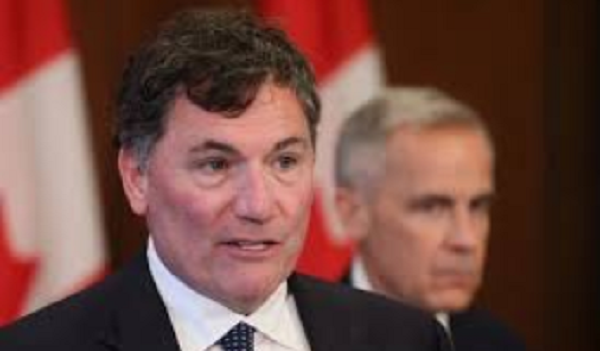
Canada-U.S. Trade Minister Dominic LeBlanc and Janice Charette, Canada’s chief negotiator, met with Mr. Greer last week and this week in Washington. This week, one of the sources said, the two sides traded written proposals.
Mr. LeBlanc returned to Canada on Friday with plans to be back in Washington on Monday. Ms. Charette planned to stay in the U.S. capital through the weekend. One source said a small army of Canadian negotiators and experts is planning to camp out next week at the Canadian embassy on Pennsylvania Avenue in a full-court press for a deal.

“As detailed trade discussions between our two countries are ongoing, we will not comment on specifics. Canada’s objective remains to reach a comprehensive deal that addresses sectoral tariffs and benefits Canadian workers, farmers and businesses,” Gabriel Brunet, a spokesperson for Mr. LeBlanc, said in a statement.
Three sources said that the Canadian negotiating team was cautiously optimistic a deal could be reached and a different source said there was optimism on the U.S. side, too. One of those sources said that Canada is not pushing for an extension of talks beyond Aug. 19.
All of The Globe’s sources said that talks and proposals were fluid and could still fly off the rails. Two of the sources said that Mr. Trump has not signed off on any of the proposals being discussed at the bargaining table.
Another possible friction point is the provincial premiers, who will have to sign off on the alcohol and procurement demands. Canada and the U.S. are furthest apart on auto and lumber tariffs, two sources said, which could make it hard for Ontario Premier Doug Ford and B.C. Premier David Eby to end their alcohol bans.
Those two sources said that the tariffs on forestry may not be fully resolved in the interim deal, which could instead include an agreement to address lumber tariffs through more negotiations. One of those sources said that Canada has made clear to the U.S. that the Sec. 232 tariffs on lumber must be dealt with to persuade B.C. to lift its booze ban.
“There is not a chance in hell that U.S. alcohol is going back on the shelf in British Columbia,” Mr. Eby said at the Council of the Federation meeting in July in Prince Edward Island.
On tariffs targeting the auto sector, the two sources cautioned that those talks include Mexico as well and so they could fall into the broader USMCA renegotiation rather than an interim bilateral agreement. However, one of those sources said that it could change as meetings continue.
Mr. Ford’s office declined to comment but the Premier has repeatedly said American alcohol will remain out of provincial stores until a deal is struck.
The office of Quebec Premier Christine Fréchette said on Friday: “The sale of alcohol falls exclusively under Quebec’s jurisdiction. It is Quebec – and Quebec alone − that will make this decision.”
Discussions around dairy quotas could also be politically sensitive in Quebec, especially ahead of the provincial election. Two sources said that the U.S. is not pushing to dismantle Canada’s supply management system or increase the size of quotas given to American companies.
Instead, those sources said, Washington is looking for Ottawa to change how it allocates existing quotas – an issue the two sides have fought over since dairy quotas were expanded under the USMCA in 2020.
On Thursday, Mr. LeBlanc and Ms. Charette briefed provincial trade ministers and members of the federal advisory committee on Canada-U.S. relations, which includes business figures, politicians and labour leaders.

An agreement could also be a tough political sell after Mr. Carney won last year’s election in part by promising an “elbows up” response to Mr. Trump. The Prime Minister has often said that no deal is better than a bad deal – although the President’s threatened tariff escalation may have changed the federal government’s calculus. He has already taken flak for making a string of concessions to Mr. Trump away from the bargaining table and receiving nothing for them.
The Sec. 232 tariffs, which Mr. Trump imposed last year, have inflicted harm on key Canadian industrial sectors. Canada’s chief objective in talks has been to reach a deal that removed or lowered all of the levies.
As it stands, steel and aluminum face a 50-per-cent tariff, metal-containing derivative products are subject to a 25-per-cent tariff and autos face a 25-per-cent tariff with a carve-out for U.S auto parts. Softwood lumber faces a 10-per-cent Sec. 232 tariff (on top of other duties) while wood furniture and cabinets are subject to a 25-per-cent tariff.
With reports from Laura Stone in Toronto and Maura Forrest in Montreal
This article was first reported by The Glo9be and Mail