





Trade Tensions Rise as Canada Pushes Back Against Proposed U.S. Deal
A tentative trade deal between Canada and the U.S. collapsed less than an hour before a late Friday deadline, triggering the imposition of President Donald Trump’s latest round of 50-per cent-tariffs on $US28-billion of Canadian exports, a vow of “dollar-for-dollar” retaliation by Prime Minister Mark Carney and an abrupt escalation in the continental trade war.
Mr. Trump and Mr. Carney had reached a deal earlier in the week, causing the President to put his new tariffs on hold until 12.01 a.m. Saturday while the two sides finalized details. But Mr. Carney said the U.S. tried to change the deal, so he broke off the talks and recalled Canadian negotiators.
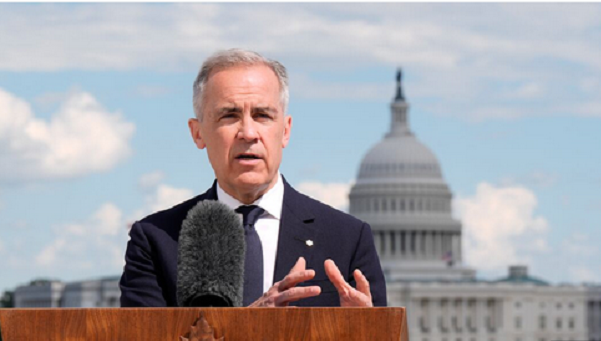
“Last-minute changes in the U.S. proposed terms were unfair, uneconomic and called into question the reliability of any deal,” the Prime Minister said in a statement. On Mr. Trump’s new levies, he added, “Canada will match those tariffs dollar for dollar to protect our workers and businesses.”

U.S. Trade Representative Jamieson Greer told reporters on a conference call late Friday that it was Canada that caused the deal to fall apart by asking for more.
“Despite the U.S. offer to Canada to receive the best treatment of any major exporter to our market, new demands and walk backs of other commitments by Canada have upended the careful balance reached in the past days,” he said.
In addition to trade matters, Mr. Greer said, the deal had been set to include national security, critical minerals and aerospace coordination provisions.
If Canada follows through on its threat to retaliate, one U.S. official said, Mr. Trump will be given options to hit back. The Globe and Mail agreed not to identify the official as a condition of participating in a briefing on the talks.
Canadian negotiators, led by Canada-U.S. Trade Minister Dominic LeBlanc and chief negotiator Janice Charette, spent much of Friday afternoon and evening hunkered down with Mr. Greer at his office by the White House. Marc-André Blanchard, the Prime Minister’s chief of staff, and Mark Wiseman, Canada’s ambassador to Washington, joined the group for the second straight day.
In on-and-off talks over the past year, Canada had sought relief from Mr. Trump’s tariffs of 50 per cent on steel and aluminum, 25 per cent on autos, 10 to 25 per cent on forestry products, and several other sectoral levies.
The negotiations kicked into high gear this past month after the U.S., threatened the new levies, which target electronics, alcohol, dairy and numerous other products. The Trump administration believed Canada was stalling for time in hopes that a weakening President – amid the Iran war and looming congressional elections – would agree to a better deal.
The proposed deal revolved around a trade-off: Canada accepting some level of tariffs from Mr.Trump, and conceding on a long list of U.S. trade demands, in exchange for the President lowering those tariffs and not imposing new ones.
Among other things, the U.S. demanded that Canada stop its retaliatory tariffs against American autos, change how licences are allocated under the dairy supply-management system, and have provincial governments end retaliatory bans on American alcohol and Buy Canadian procurement practices.
U.S. negotiators, The Globe and Mail has reported, also raised defence and security issues in the talks, such as Canada’s long-delayed F35 fighter jet purchase, critical minerals, the Golden Dome missile defence system and oil exports.
The U.S. official said Friday that the deal ultimately collapsed because Canada wanted more relief on the sectoral tariffs than the U.S. was willing to give. The official said that, in the end, it came down to just one or two of the tariffed sectors.
In recent days, sources with knowledge of the negotiations pointed to a number of sticking points. The U.S., for instance, wanted to exempt from tariffs only the value of American-made content in Canadian cars, while Canada wanted an exemption for Canadian and Mexican content, too.
On forestry, meanwhile, U.S. negotiators did not want the sector covered by the deal, while Canada insisted that it had to be.
The deal under discussion for steel was particularly harsh, the sources said: it would have obliged Canada to accept both a four-million-tonne quota on exports to the U.S. and a tariff of 25 per cent on steel within that quota. Above the quota, the levy would be 50 per cent. In addition, Canada would have had to remove all of its counter-tariffs on U.S. steel.
One source pointed to another potential factor in recent days. Commerce Secretary Howard Lutnick, who became directly involved in the talks earlier this week, wanted a tougher deal with Canada, the source said.
Mr. Trump’s latest tariffs will hit around 5 per cent of Canadian exports to the United States, which means the immediate economic impact will be relatively small. Royal Bank of Canada economists pegged the impact of the new Sec. 338 tariffs at 0.4 per cent of GDP, while Capital Economics estimated the fallout at 0.6 per cent.

However, the tariffs will hammer certain Canadian manufacturing industries, including electronics, plastics, paper products, furniture and home appliances. RBC estimates that upwards of 20 per cent of production and jobs in the electronics and apparel industry in Canada could be impacted by the new U.S. tariffs.
The tariffs also won’t impact all regions of the country equally, with Ontario, Quebec and British Columbia hit the hardest, and Alberta and Saskatchewan emerging largely unscathed.
“This will be a body blow to North American competitiveness in this self-defeating trade saga. A whopping, non-absorbable tariff is not sustainable or viable for business,” Candace Laing, CEO of the Canadian Chamber of Commerce said in a statement late Friday. “Americans will see their costs go up, and Canadians will see customers, investment and small businesses disappear.”
Ontario Premier Doug Ford, who had avoided all public comment this week, said he was behind Mr. Carney’s plans for retaliation.
“Team Canada needs to stand together more united than ever before,” he said in a post on social media. “The prime minister has my full support for a strong response – tariff for tariff, dollar for dollar. As we fight to protect Canadian sovereignty and economic security, everything needs to be on the table.”
Mr. Ford, whose anti-tariff ad last October caused Mr. Trump to end a previous round of negotiations, was emblematic of another difficulty Mr. Carney faced in landing a deal: He needed the premiers to co-operate on ending their alcohol and procurement retaliations despite a potential deal that would have hammered some of their provinces.
More of Canada’s premiers banded together with Carney following the announcement.
British Columbia Premier David Eby said on social media that “our politeness should never be mistaken for weakness.”
Susan Holt of New Brunswick said in a statement that her province stands strong and united with Team Canada as we fight for a fair deal.
Alberta Premier Danielle Smith, on the other hand, said on social media she is “deeply disappointed” that Canada and the United States have not been able to reach a trade agreement.
“No one benefits from a trade war,” she said.
Smith also said she welcomed the federal government’s intention to provide relief for those businesses that are impacted.
“Alberta will continue to advocate for a strong tariff-free relationship between Canada and the U.S., and I will be urging the federal government to restart negotiations as soon as possible,” she said.
The Prime Minister also drew flak from provincial and industry officials who said that, particularly in the past week, Mr. Carney kept them in the dark about what Canada was agreeing to at the bargaining table. Ottawa released no public details on the talks.
Mr. Carney rode to power last year promising an “elbows up” response to Mr. Trump’s tariffs and annexation threats. In office, he has vacillated between taking a hard line and making concessions.
Unlike the United Kingdom, the European Union, Japan and other countries that cut hasty, lopsided trade deals last year – agreeing to punitive U.S. terms in exchange for not getting punished even further – the Prime Minister held out for a better agreement.
But he seemed to calculate that accepting some level of tariff, along with making other concessions, was economically preferable to Mr. Trump’s levies continuing at their current levels or increasing. Businesses, meanwhile, pushed for more certainty.

Mr. Carney also made numerous concessions away from the bargaining table for which he received nothing in exchange. Last year, for instance, he scrapped a planned digital services tax, increased military spending and border security and rolled back Canada’s retaliatory tariffs.
This year, the Prime Minister reversed requirements that streaming services such as Netflix and Amazon support Canadian content creators. He also agreed to share revenue from the Gordie Howe International Bridge from Windsor, Ont. to Detroit with the U.S., even though the Canadian government paid the full cost of building the span.
Still, U.S. officials frequently complained about Canada’s intransigence, pointing to the fact that Ottawa and Beijing were the only two foreign governments to fight back against Mr. Trump’s global trade war, and to Mr. Carney’s rebuke of American hegemony in his viral speech at the World Economic Forum in Davos this past winter.
This article was first reporeted by The Globe and Mail