





Trade Barriers Reshape Aluminum Sourcing for Canadian Brewing Industry From Chinese Suppliers
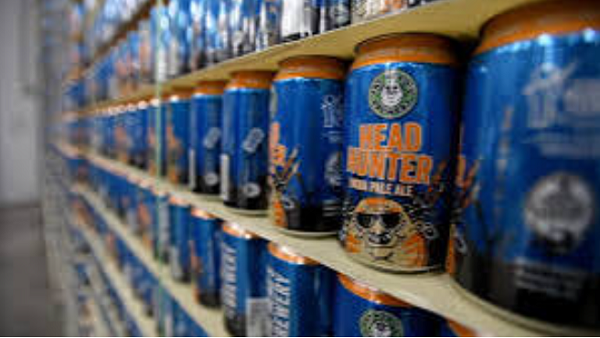
The aluminum can is an undersung hero of modern life. It is lightweight, leak-proof and recyclable, the ideal container for life’s necessities and many of its pleasures, too. The staccato crack of a beer can opening has served as the opening beat to countless festivities.
Over the past year, though, it has been the sound of misery for Canadian breweries – and the sound of opportunity for Chinese manufacturers. North American can prices have risen roughly 50 per cent since early last year, after U.S. tariffs dramatically hiked the cost of aluminum on both sides of the border.
Tariffs have made the thin-walled can a heavy weight on the budgets of alcohol producers, for whom it is often the single most expensive item on the list of goods that go into a serving of beer. For as long as anyone can remember, Canada has bought cans from U.S. companies, which have been making containers since the late 1800s.

But on a recent afternoon in September, half of the cans sitting on the floor of a 20,000-square-foot warehouse space in Burnaby, B.C., had arrived there from the other side of the Pacific. Vadim Bajgoric pointed to the towering rows of gleaming “tallboy” cylinders – packed 5,835 to a pallet – waiting for his can-printing company, Canvas Craft, to digitally print them with colourful labelling for the stouts, sours, pale ales and lagers they will soon contain.
Cans sitting on plastic pallets had come from the U.S., Mr. Bajgoric said, while those on wooden pallets were from China.
It wasn’t like this two years ago, when all of the cans that came through Mr. Bajgoric’s printing line were made in North America.
Then came the tariffs and soaring prices.
Now, “China has a tremendous edge,” Mr. Bajgoric said. Factories outside Shanghai are selling cans at a one-third discount to those in the U.S.
U.S. tariffs have increased prices across the continent, in part because of long-established trading patterns. While Canada is a major aluminum producer, the U.S. is the principal maker of aluminum coil, which is then used to fashion cans.
Can contracts on both sides of the border are typically based on U.S. Midwest aluminum pricing – an industry standard, which has been lifted high by tariffs. The U.S. has imposed 50 per cent tariffs on Canadian aluminum. (Canada has countered with similar tariffs, although it has made exemptions for goods used in food and beverage packaging.)
It has all given a major advantage to Chinese aluminum.
Shane Vear, who imports and distributes Chinese cans in Canada as the owner of the Southern Ontario-based Caravan Bev Co., has seen a 30 per cent increase in business since last year. Companies “were buying from the U.S., but then all of a sudden these things got a lot more expensive,” he said.
For some can sizes, Chinese prices are now roughly on par with what American-made product cost prior to President Donald Trump’s second-term inauguration and the raft of tariffs he imposed. The difference can reach eight cents a can, a relative fortune for Canada’s hundreds of brewers, who together fill 3.7 billion cans a year.
“Five cents a can is the difference between being profitable or not in our business,” said Yuri Akeroyd, president of The Strait & Narrow, a Vancouver Island-based maker of canned gin and vodka cocktails.
Over the past eight months, Mr. Akeroyd’s company began buying most of its cans from China. He is keenly aware of the irony. Mr. Trump has promoted tariffs as a way to bolster U.S. manufacturing. Instead, it has driven customers like Mr. Akeroyd to buy Chinese-made goods.
“It really comes down to the bottom line and trying to survive,” he said.
Cost wasn’t the only consideration.
“In the past, we’d looked at buying from overseas as being a lot more volatile and risky, whereas over the last year we’ve felt that it’s actually less volatile,” Mr. Akeroyd said.
After nearly two years of whiplash from changing White House whims, Mr. Akeroyd said he would likely buy Chinese cans even if they weren’t cheaper, rather than rely on a country where “we don’t know what’s going to happen tomorrow.”
The Strait & Narrow is a minnow in the ocean of alcoholic beverages, but its relatively small size has allowed it to be nimble. Larger drink-makers are typically constrained by multiyear can contracts. It’s part of the reason the overall mix of cans imported into Canada has been slow to change. In 2025, imports of Chinese aluminum cans rose by 14 per cent by value, Canadian trade data show. Spending on U.S. imports, which continue to dominate the market, also rose by 11 per cent.
Those numbers, however, don’t reflect changes in buying pattern in 2026, nor do they account for how much of the value of last year’s U.S. imports is directly attributable to tariffs.
In its annual report, Crown Holdings, a major U.S. company that manufactures aluminum cans in Calgary and Toronto in addition to numerous locations in the United States, said its 2025 net sales rose mostly “from the pass-through of higher aluminum costs.”
Crown did not respond to a request for comment.
The company has won loyalty with some of its customers over relationships that have extended many years. In Calgary, the Crown plant sits blocks away from Big Rock Brewery, which endeavours to buy local.
“Getting 355-millilitre standard cans out of Crown Calgary ticks all those boxes,” said David Kinder, Big Rock’s president.

But rising expenses have hurt. Aluminum tariffs alone have cost Big Rock well over $1-million so far this year. Six weeks ago, the brewery laid off 10 per cent of its workers.
Big Rock has a multiyear agreement to buy North American cans. But that won’t last forever, and commitments to local supply have their limits. Big Rock has begun looking for alternatives.
“It’s not really about what I’d like to do. It will get to the point it’s about what I need to do have a viable business,” Mr. Kinder said.
Still, some brewers wonder whether a Chinese can really is cheaper. Long-distance shippers are exposed to the vicissitudes of ocean-freight pricing, and the cost of moving a container across the Pacific has risen dramatically in the wake of the war in Iran.
“You trade the volatility of the commodity market for the unpredictability and volatility of the shipping world – which we’ve done in the past,” said Jim Lister, president of Victoria-based Phillips Brewing and Malting Co. “We’ve sourced from Asia previously and found it to be a nightmare.”
Phillips Brewing has contracts for North American cans until the beginning of next year. Like others, Mr. Lister is looking at alternatives. He is also hoping for a solution that doesn’t drive him to buy from overseas.
Perhaps, he said, Canada and the U.S. can finalize a trade agreement. Or maybe the U.S. midterm elections in November will prompt a change in course.
If that doesn’t happen, he said, something else will have to give, like the cost of a Canadian beer.
“You can’t keep eating cost increases without changing the price of your products at some point,” he said.
This article was first reported by The Globe and Mail