




Carney Applauds Shift in U.S. Strategy for Reinvigorating Trade Negotiations
Prime Minister Mark Carney said the United States is “asking less” and “offering more” in negotiations aimed at a trade deal that he says are making progress.
But he cautioned still more headway needs to be made.
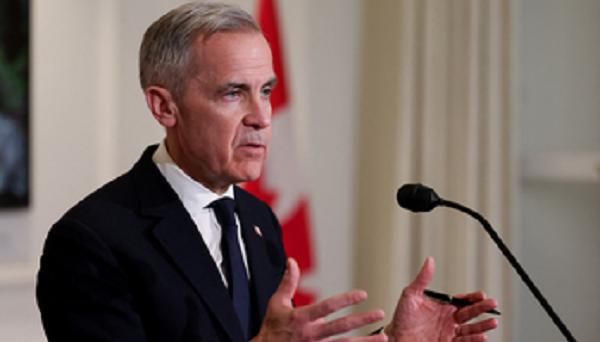
U.S. negotiators have backed off a position that regarded French-protection laws as trade barriers, as well as proposals that would have restricted Ottawa’s ability to sign trade deals with countries, Mr. Carney said while speaking to reporters Tuesday at a meeting of Commonwealth heads of government in Antigua and Barbuda.

“We are making progress, but it’s not over yet,” the Prime Minister said, speaking in French.
“There are certain red lines for the government of Canada – areas where the Americans have decided that maintaining their previous position is no longer necessary, specifically regarding the French language, Canadian culture and Canada’s sovereign latitude to pursue free trade agreements with other nations.”
“If I were to paraphrase it, they’re asking less and they’re offering more – but we’re not quite there” yet, he said.
“Some significant issues remain. Further negotiations are required,” the Prime Minister later added.
Trade talks are expected to pick up where they left off in August, when Canada walked away from the negotiations with the two countries deadlocked over matters including automobile trade.
One of Ottawa’s chief goals is to get the U.S. to reduce hefty protectionist tariffs on Canadian-made steel, aluminum and autos, as well as levies on softwood. President Donald Trump has imposed these to restrict foreign imports and induce companies to move manufacturing back to the U.S. and curb the use of Canadian softwood.
Mr. Carney was asked about Canadian negotiators travelling to Washington to conduct talks, but he said that’s not critical at the moment. “It’s not always necessary to have the trade negotiators go formally into the U.S. trade representatives’ offices or the Department of Commerce, or for the equivalent to happen here,” he said. “There are good lines of communications, open progress is being made.”
“The process of more intense negotiations has begun.”
”What is important for us is to reach an agreement that is in the best interests of Canadians. Secondly, we want an agreement that includes elements that strengthen the incentives for all parties – especially the Americans – to abide by the deal. That is a challenge, but we are looking for ways to achieve all of this.”
Mr. Trump has been under pressure ahead of Tuesday’s midterm elections to address concerns about affordability. His approval ratings have been buffeted by the negative economic effects of his tariff-heavy trade policy and the war in Iran.

When Canada walked away from the trade-deal bargaining table with Washington more than two months ago, Mr. Carney said the U.S. had been offering a “bad deal” that “asked too much and offered too little” for this country.
The Prime Minister also said at the time that U.S. trade proposals, as they stood, would have curtailed Canadian sovereignty and eroded or destroyed major industries here.
Mr. Carney has given three main reasons for abandoning trade talks in August. He said the U.S. refused to extend tariff relief to medium- and heavy-duty trucks, which would have affected the viability of the General Motors and Ford plants in Ontario.
He also said the U.S. was pushing for changes around the discoverability of French-language content for online streaming services, and that Washington had suggested language that Ottawa believed could have restricted Canada’s ability to make trade deals with other countries.
This article was first reported by The Globe and Mail