




Nvidia Executive Scandal Introduces New Risk to Global AI Trajectory
For the past couple of years, the artificial intelligence industry has been obsessed with chokepoints. No company wants to be too reliant on any one cloud provider. Nor does any company want to rely too much on a single AI model.
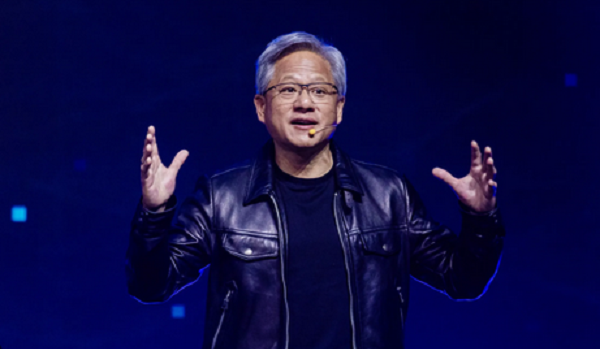
But it turns out there is another concentration risk: So much of the AI industry revolves around one man, Nvidia Corp. NVDA-Q chief executive Jensen Huang, who has become one of the most prominent evangelists, suppliers, investors and policy thinkers in the global AI ecosystem.
And now industry watchers are grappling with a previously unthinkable question: What is Nvidia, and indeed the AI industry, without its leather-jacket-clad champion?

“Nvidia is not an ordinary company and Jensen is not an ordinary CEO,” Bernstein analyst Stacy Rasgon wrote in a note Monday. “He IS Nvidia.”
On Sunday, the Santa Clara, Calif.-based company’s board of directors said that it is opening an investigation after Mr. Huang disclosed an intimate relationship with a woman who U.S. intelligence agencies contend, according to The New York Times, is a Chinese spy.
U.S. media had reported that Mr. Huang developed a close relationship with a woman who goes by the name Alice Huang, an executive at a Singapore-based data centre company called Megaspeed, which also happens to be a large Nvidia customer. (She is not related to Mr. Huang.)
The U.S. Commerce Department had been investigating whether the company was involved in redirecting Nvidia chips, known as graphics processing units, to China to circumvent export rules.
The company’s probe will be led by a committee of independent board directors and assisted by outside counsel, according to Nvidia. The statement said that the board “has no reason to believe that either national security or Nvidia secrets were compromised.”
While the outcome of the investigation is far from certain, it raises the possibility that Mr. Huang could be ousted or that he resigns from his role at Nvidia, the world’s predominant supplier of chips to fuel AI development.
Such a move could carry consequences for the entire AI industry. In addition to supplying the majority of the chips to support the massive build out of data centres, Nvidia has been a large investor in AI companies, even some of its own customers. A new CEO could take a different approach, leading to less deal making in the industry, including for Canadian startups.
At the very least, the investigation is creating more uncertainty in global markets as investors are already skittish about the longevity of the AI data centre build out.
“The AI infrastructure investment trade was in the middle of starting to pop on its own,” said John Ruffolo, founder of Maverix Private Equity in Toronto. “Nvidia’s latest distraction is likely going to add to the anxiety of the bubble bursting.”
It is hard to overstate Mr. Huang’s influence over AI development. In 1993, he co-founded Nvidia, which then built GPUs for video gaming, but later focused on the AI industry, long before it was popular.
The bet has made Mr. Huang, 63, one of the wealthiest individuals in the world and turned Nvidia into a multitrillion-dollar behemoth. Born in Taiwan, Mr. Huang now has the ear of U.S. President Donald Trump and last year helped persuade the administration to reverse restrictions on chip exports to China.
Competitors such as Canadian-founded Tenstorrent Holdings Inc. have sprung up in recent years to challenge Nvidia’s lock on the AI chip market. Even so, the company is expected to command up to 75 per cent of the market through to 2030, according to Bloomberg Intelligence.
Nvidia has also been an important financial backer of some of its own customers, notably OpenAI and AI cloud company CoreWeave Inc. CRWV-Q. And it has invested in Cohere Inc. and Waabi Innovation Inc., the two most prominent Canadian AI companies.
On a visit to Toronto in 2024, Mr. Huang championed Canada’s AI ecosystem. “There are a lot of different things that we have to do in order to accelerate the ecosystem here in Canada,” he said during an onstage appearance. “Part of it requires the encouragement and support of government. Part of it is about inspiring a young researcher to continue to do research here in Canada.”
During that same trip, Mr. Huang signed a letter of intent with François-Philippe Champagne, who was then federal innovation minister, to “explore opportunities to work together on creating AI computing power in Canada.”
Mr. Huang has met regularly with government officials around the world and advocated for countries to build their own domestic AI computing capacity – a message that also benefits Nvidia’s bottom line.
Some analysts have contended that Nvidia’s investments amount to circular financing – money for customers to buy more chips, essentially – and are fuelling runaway AI spending. An equally worrying question, according to some analysts, is what happens if Nvidia were to curtail that support, at a time when markets are already racked with uncertainty about the pace of spending on data centres, and the amount of debt being used to finance it.
“We’ve long considered Nvidia and Jensen Huang to be at the centre of the AI ecosystem,” wrote Morningstar analyst Brian Colello. “His departure could lead to less AI deal making and financing.”
AI-related stocks sold off last week after the Democrats took control of both chambers of Congress in the U.S. midterm elections, fuelling concerns of increased AI regulation. Mr. Colello wrote that questions around Mr. Huang will not help with those concerns. “The possibility of the leading AI CEO being influenced by a Chinese spy may raise the rhetoric and negative backlash against AI even further,” he wrote on Monday.
Mr. Huang owns roughly 3.6 per cent of Nvidia but does not own multiple-voting shares, unlike other tech company CEOs. That makes him vulnerable to being ousted.

But he still wields massive influence at the company. Mr. Huang remains a board member and runs a flat organizational structure with some 60 direct reports. He is heavily involved in strategy, direction and customer relationships.
“Hence it is not immediately clear who would (or could) step in should (for whatever reason) he were to find himself unwilling or unable to lead,” Mr. Rasgon said in his note.
The most important job for any company board is to ensure there are potential CEO successors in place, said Richard Leblanc, a professor of governance, law and ethics at York University. “If there is no potential successor, that is a failure of governance,” he said.
That task can be more difficult when the current CEO is also on the board, as with Nvidia. “It’s very difficult to do because the CEO doesn’t want to co-operate because they think they’re going to live forever, especially if they’re a founder,” Prof. Leblanc said, speaking generally.
The market reaction to the board investigation has been somewhat tepid, even with the fate of Mr. Huang uncertain. Nvidia shares closed down more than 4 per cent on Monday. That could be because the market is assuming – or hoping – that Mr. Huang is not going anywhere.
Mr. Trump, for one, appeared to wave away any concerns when questioned by reporters on Sunday. “He’s done an amazing job for our country,” he said.
Indeed, Mr. Huang’s position as the only CEO Nvidia has ever known lends him more support with the board, wrote Mr. Colello at Morningstar. “It is also entirely possible that Jensen Huang stays on as leader and the AI build out moves forward without issue.”
This article was first reported by The Globe and Mail