






Automakers can play key roles in boosting Canada’s defence capacity, Joly says
Canada’s auto-making sector can play a key role in the federal government’s $9.3-billion plan to bolster the country’s defence, Industry Minister Mélanie Joly says.
Prime Minister Mark Carney said Monday that Canada would fulfill its NATO commitment of spending 2 per cent of gross domestic product on its military in this fiscal year.
Ms. Joly, speaking at an automotive industry conference Tuesday, said the sector, battered by U.S. tariffs, could use its manufacturing muscle to help Canada reach its defence goals.
“We are in a wartime cabinet right now,” Ms. Joly told reporters at the Automotive Parts Manufacturers’ Association’s annual meeting. “We must build our defence capacity.”
Ms. Joly did not provide specifics but said she will have talks with various industries, including autos, steel, aluminum and artificial intelligence. She pointed to General Motors’ Oshawa operations, which have made military vehicles based on existing truck platforms.


“We know the Canadian Armed Forces need more vehicles and need to be protected better,” she said.
“We will build through our defence investments. That means more than $9-billion, and that includes investment in our industrial defence capacity, and that in turn could help the auto sector.”
Flavio Volpe, president of APMA, said defence spending is welcome but is no substitute for the passenger-vehicle manufacturing that has sustained the domestic sector for more than 100 years.
Military manufacturing involves different engineering tolerances, regulations and markets, he said.
“Good that we are thinking about it. I think we need to be creative and figure out how we feed into that, but it’s not a replacement,” Mr. Volpe said.
The day-long conference gave industry representatives an opportunity to hear from political and business leaders amid a tariff war with the United States that has already cost thousands of jobs and threatened the Canadian auto sector.
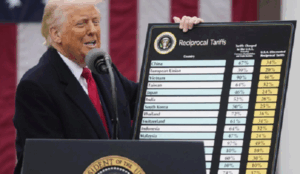
U.S. President Donald Trump has imposed 25-per-cent tariffs on the non-U.S. content in Canadian- and Mexican-made cars.
Canadian auto parts have been spared the tariff applied to Canadian-assembled cars.
Rob Wildeboer, executive chair of parts maker Martinrea International Inc., told the conference how he helped Trump advisers at the White House understand that duties on parts would quickly shut down the industry across North America, as suppliers would refuse to make money-losing components. It was a message they were not hearing from the U.S. industry for fear of reprisals, Mr. Wildeboer said.
Still, the suppliers rely on Ontario’s assembly plants for about half their sales.
“We got the tariffs off parts. We got to do it on cars,” Mr. Volpe said.
The trade tensions come amid falling North American car sales and production, said Joe McCabe of AutoForecast Solutions, a Pennsylvania-based consultancy.
Even before the tariff war, Ontario’s auto plants owned by the Detroit Three faced uncertain futures: idled and awaiting new vehicles, making niche-market minivans and muscle cars, or operating under capacity.
The tariffs have amplified those risks, Mr. McCabe said in an interview on the sidelines of the conference.
Ontario’s plants have been hit by layoffs and production cuts this year as automakers delay new models and extend the life of existing ones, trying to buy time while gauging the tariffs’ effect on production and sales.


For parts makers and their customers, this has meant a freeze in new investments, illustrated by Honda Canada’s recent move to postpone its $15-billion EV project in Ontario. “There’s no question there is a chill,” said Vic Fedeli, Ontario’s Minister of Economic Development.
Mr. McCabe said automakers will pass on the tariffs to buyers of luxury models, eat them at the low end and share the cost with consumers on mid-priced autos.
Victor Dodig, CEO of Canadian Imperial Bank of Commerce, said the tariffs have put Canada in a “war-footing” economic state that will mean uncertainty for 10 or 15 years.
He said Canada will get through the tough times, but faces a changed world.
“It’s not going to be like it was before,” he said. “It’s going to be different.”
Still, he said, the U.S. will remain Canada’s largest trading partner, likely forever.
This article was first reported by The Globe and Mail