






Job Hunt Hurdles: Why Toronto Youth Face an Uphill Battle in Employment
Discrimination over age, gender and race is preventing young Torontonians from landing a job, a report says, and two youth organizations are calling on the city and employers to take action.
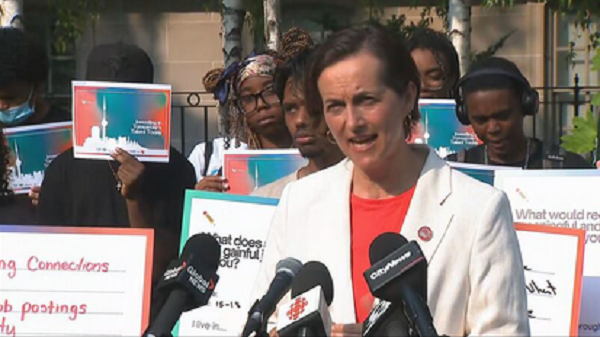
The Toronto Youth Cabinet and The Neighbourhood Group Community Services have released a “Youth Employment Postcard Report,” which found identity-based discrimination and systemic barriers pose the biggest obstacles to landing a job for young people in the GTA. The findings in the report this month were based on a two month-long survey of over 7,000 Torontonians ages 15 through 24.
“Young people want to work. They want to contribute,” said Stephen Mensah, a youth advocate and the former executive director of The Neighbourhood Group. “However, they’ve not been able to receive the opportunities they deserve.”
One of the most cited barriers to finding a job was discrimination, with the report noting that nearly 60 per cent of respondents said they felt like employers’ perceptions of their age, race, gender, language skills or disability prevented them from getting hired. Youth said they felt passed over despite being qualified for a position, judged during interviews or excluded in the workplace.
“I want a job where I can feel seen and respected,” one respondent quoted in the report said. “Sometimes it feels like people have already decided who I am before I even say a word.”
Mensah added that he and the other report authors heard that some youth experienced postal code discrimination.
“Sometimes (racialized youth) can’t get an interview because their postal code says they live in a neighbourhood improvement area or community that has been in the news a lot for violence,” said Mensah. “So they’re already stereotyped before they even get an opportunity.”
“And if they do happen get an interview by luck,” Mensah continued, “then they are oftentimes perceived in a negative way by employers.”
Along with identity-based discrimination, around three-quarters of the young people surveyed said challenges like finding reliable transportation or having to juggle work with other responsibilities like school or caregiving made it harder for them to get a job.
Many also said that they didn’t have enough experience to make them employable — a finding that Mensah described as a catch-22 where youth need a job to gain more work experience, but can’t get a job without any.
Mireya Martinez, 18, said she faced this dilemma first hand while applying for summer jobs back in 2024 to support her family after her single mother lost her job and started relying on Employment Insurance benefits.
“I couldn’t get a job without experience, but also I didn’t have anybody or supports available to assist me in my pursuit of employment,” she said.


While Martinez eventually got a job at McDonald’s after five months of being rejected or never hearing back from employers, she said she felt that her age also kept her from finding something sooner.
“Employers do view people who are younger as being less reliable,” she said, “when in reality we’re trying our best and want to accommodate our work schedule with our home life and school.”
(Two months into her McDonald’s gig, Martinez said she had to quit after she couldn’t find a work schedule that would fit with the start of her final year of high school.)
Even when young people are able to get a job, the workplaces aren’t necessarily safe or supportive.
Merna Hermez, 18, has learned that she needs to work extra hard to befriend her coworkers and managers to make sure she is treated fairly and given the shifts she wants.
“You have to learn to make friends are your job in order to survive.”
Mensah said some respondents pointed to similar issues in the report.
The employment report comes as youth in Toronto face the highest unemployment rate in decades outside of the pandemic. It has become common for many teens and young adults to wait in long lines at job fairs and apply to hundreds of jobs only to be rejected.
For Mensah, the report’s findings aren’t surprising. But he said he hopes the data puts pressure on the city officials to deal with youth concerns, particularly after city hall committed to create 10,000 youth summer jobs by summer 2026 as part of its 10-year economic action plan in November.
“We really wanted to hammer down is that a job is not just about economic instability,” he said, “but it’s also going to provide young people with hope for a better future.”
To address these concerns, Mensah recommended the city create “wraparound” services for employed youth, including mental health supports, free transportation costs and access to work-appropriate clothing to those who don’t have any. Martinez added that the city and employers should create more entry-level positions that employ youth with little to no experience to help them develop transferable skills.
Mensah added that there is a public safety component to helping young people find jobs. He said that the rise in carjackings, robberies and violent crimes committed by youth that Toronto has been seeing in recent months is not the result of young people being bored.
“We’re seeing this because young people are broke, or their parents don’t have financial stability,” he said, “so that leads them down a path of violence and criminality where they’re forced to make ends meet.”
“If you give the young person a good job, a young person is not going to go grab a gun.”
This article was first reported by The Star