





Copper Takes the Spotlight as Canada’s Next Big Commodity Story
It may not be as shiny as gold, but it keeps the lights on.
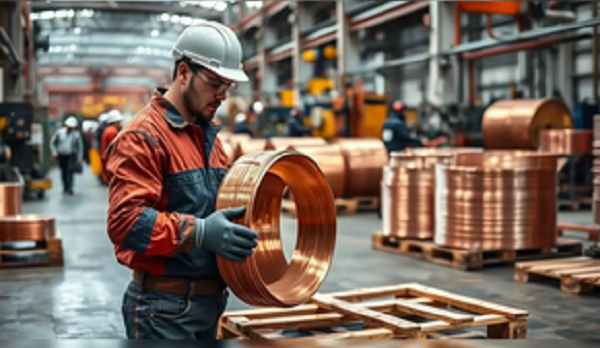
Without copper, there is no power in the modern world, and as the demand for power increases, so does the demand for copper.
With new mines, revived projects, and rising global demand for the metal, Canada is well positioned to lift national output levels to what it was two decades ago, the CEO of the Mining Association of Canada, Pierre Gratton, told BNN Bloomberg.
“I expect copper to be making a big comeback in the next few years,” said Gratton.
Copper prices hit an all-time high this fall, now hovering at US$5 per pound.
Gratton credits the high prices to the electrification of the planet, which brought new uses for the metal in AI infrastructure, renewable energy, and EVs, which use roughly four times more copper than conventional cars.
“Power needs copper. That’s what transmits power,” said Gratton.
“It doesn’t matter what kind of power — whether it’s nuclear power, whether it’s wind power, solar power, hydro power — it all goes on copper wire. Every house has copper wire. Every transmission line is copper.”
Production rebounds for the first time in a decade
Canada’s copper output rebounded for the first time in a decade last year.
Mined copper production climbed 6.2 per cent since 2023, Natural Resources Canada (NRCan) told BNN Bloomberg. Global overcapacity, inflation, and supply-chain pressures are raising costs and delaying projects.

Canada’s last major copper boom was driven by China’s urbanization in the 2000s.
Several B.C. mines came online, but output fell nearly 18 per cent by 2023 as deposits aged and permitting slowed, according to NRCan.
“During the last 10 to 15 years, copper didn’t attract the kind of exploration that gold did,” said Gratton.
But that’s changing. Now, there are many projects on the horizon.
In British Columbia, Teck Resources’ Highland Valley is being extended beyond 2040, while Newmont’s Red Chris expansion could lift national copper output by 15 per cent before the end of the decade.
New Gold’s New Afton is ramping up to produce about 45,000 tonnes a year, and Foran Mining’s McIlvenna Bay in Saskatchewan is set to start production by 2026.
On the horizon are Troilus Gold in Quebec, Yellowhead and Kemess in B.C., and the Casino project in the Yukon, all advancing through approvals alongside the long-discussed Galore Creek and Schaft Creek deposits in northwestern B.C.
Expanding production on the ground
Canada’s third-largest copper producer, Hudbay Minerals Inc, said it expects to be crowned second place by 2027.
The company said it produced about 39,000 tonnes of copper from its Canadian mines in British Columbia and Manitoba last year.
But infrastructure remains one of the biggest constraints to increasing Canada’s critical mineral output, it said.
“In many northern and remote regions, access to reliable transportation, energy and port capacity ultimately determines whether a project can move forward,” Candace Brule, Hudbay’s senior vice president for capital markets and corporate affairs, told BNN Bloomberg.
“No single company or community can take on the full burden of building that infrastructure alone.”
Economists have warned that the real barrier in investment has been uncertainty.
“Most of it has to do with the regulatory environment and environmental review process. There’s just no certainty for businesses if they want to develop these mines,” Pedro Antunes, chief economist at the Conference Board of Canada, told BNN Bloomberg.
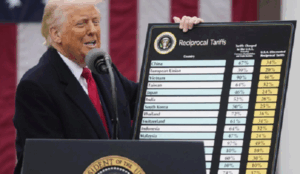
There is also the issue of U.S. President Donald Trump’s tariffs on copper imports.
But there is a silver lining.
“They didn’t impose it on the composite,” noted Gratton.
“All the way up until after the refined stage is tariff free, but after that, when you start to get into manufacturing of copper products, then the tariffs kick in, and it’s a problem.”
Canada’s exports are mostly concentrate. Where is it going?
Canada exports more concentrate than refined copper. It produces about two per cent of global copper.
Last year, it exported $4 billion worth of copper concentrate to China and Japan, and $1.8 billion in refined copper, 99 per cent of which went to the U.S.
Canada’s domestic exports of copper and copper-based products were valued at $10.5 billion last year, NRCan told BNN Bloomberg.
At least four smelters have closed or suspended operations in Canada in the last decade, said Gratton.
Now there is one refinery and smelter in Quebec, the Horne Smelter and the Canadian Copper Refinery.
Gratton says it just makes more economic sense to outsource the refining process.
“The country’s too vast. It’s easier to send it across the Pacific on a boat than it is to put it on the train and send it across the country to the Horne,” said Gratton.
He said new federal policy could help address some of these structural gaps.
Latest budget ‘historic’ for mining sector
Gratton said the budget promises to usher Canada into a new era in mining investment.

For years, industry leaders have been calling on the government to lower the purity threshold in the Clean Technology Manufacturing Investment Tax Credit from 90 per cent to 50 per cent, a change that would make more polymetallic mines eligible.
The new budget delivers on that request, said Gratton.
It cut the requirement to 50 per cent and expanded the list of qualifying minerals to include antimony, indium, gallium, germanium and scandium, which could be found with critical minerals like copper.
“I think it’s going to help usher in a similar story for copper that we’ve seen with gold,” said Gratton.
The budget also commits $2 billion over five years to launch a Critical Minerals Sovereign Fund and $371.8 million for a new First and Last Mile Fund to help get near-term mining projects into production.
British Columbia’s plan to extend the Northwest Transmission Line further north could open what Gratton calls the “Copper corridor”.
“We may not have found the same quantities of copper that Chile has, but there’s a lot more in Canada that remains untapped,” said Gratton.
“We’ve lost ground, but we can turn this around. I think we’re going to.”
This article was first reported by BNN Bloomberg