






Holiday Spirit, 365 Days a Year: Inside the Rise of Perpetual Christmas Businesses
From quiet January mornings to the slow summer months, Tinseltown Christmas Emporium has been counting down and stocking up for the holidays. For small year-round Christmas retailers, the winter season can make or break business.
“It’s absolutely the most crucial three months of the year,” said Audy Czigler, owner of Tinseltown Christmas Emporium in Ottawa’s Hintonburg neighbourhood.
Mr. Czigler says the holiday season is when the business secures the funds it needs to cover expenses and prepare for the year ahead. The last quarter is especially important, as customers start thinking about Christmas and holiday shopping.
READ MORE ON OUR DAILY STOCK MARKET REPORTS – North American Markets Rally: AI and Growth Stocks Drive Gains Across TSX and U.S. Indexes
For Flatiron’s Christmas Market, co-owned by Ted Genova, that pressure is familiar. The year-round Christmas store in downtown Toronto draws a steady mix of locals, collectors and tourists, with its curated selection of ornaments: German-made nutcrackers, European glass trinkets, reindeer plush toys and Christmas gnomes.
Many of these products are sourced directly from European manufacturers, which Mr. Genova says has become more challenging amid U.S. tariffs.
Mr. Genova says the store was inspired by a trip through Europe with his friend Ross Short, when the pair wandered into a Christmas shop in Basel, Switzerland. They returned home and opened Flatiron’s Christmas Market in 1986, hoping to bring the old-world holiday spirit to Toronto.

Six months after opening, Mr. Short passed away, leaving Mr. Genova to choose between closing the shop or running it on his own. Nearly four decades later, the shop remains – now run by Mr. Genova and his business partner, Mario Friedrich – drawing new generations of shoppers year after year.
“I’m not doing it to make a lot of money,” he said. “I’m doing it to have a good life.”
Like many boutique businesses, Flatiron’s relies heavily on tourism outside the holiday rush. The pandemic underscored how critical that revenue stream was when the store was forced to close for 170 days. In recent years, Mr. Genova says Toronto tourism has been “booming,” bringing in a steady stream of international visitors drawn to the store’s old-fashioned charm and niche offerings.
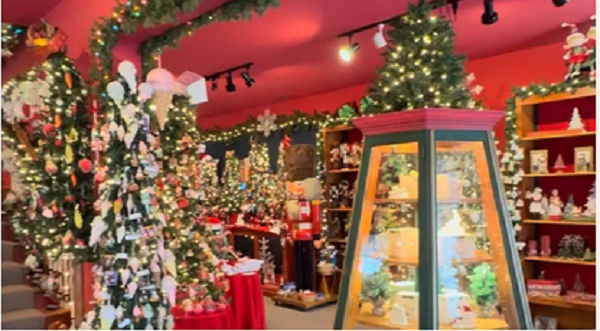
At Tinseltown, Mr. Czigler says much of his tourist traffic is driven by the store’s strong social media presence and its eccentric approach to Christmas décor. Though the shop spans less than 3,000 square feet, it carries over 50,000 Christmas products, making it a popular destination for visitors.
While business typically slows down between February and May, Mr. Czigler says it sustains itself year-round by operating alongside an attached sister store, Marie Antoinette & Co., that sells everyday home décor, encouraging cross-shopping outside the holiday rush.
“Even in the off-season of my two stores – one that sells everyday products and one that sells Christmas products – Tinseltown is still the breadwinner,” he said.
Despite continued tourist interest, both retailers say consumer behaviour has shifted. At Flatiron’s, Mr. Genova has noticed fewer shoppers coming through the door, but higher spending per visit.
“A lot of people come in just to look. It’s entertainment for them,” Mr. Genova said.
Prices at Flatiron’s range from roughly $20 for smaller items and up to $1,000 for larger, handcrafted nutcrackers. Many customers are long-time collectors who return year after year, often purchasing a single piece annually.
At Tinseltown, Mr. Czigler says holiday shopping has also begun earlier, with strong sales activity starting as early as August. Prices at Tinseltown remain consistent year-round, with a single two-month sale to clear remaining inventory each year from Dec. 28 to Feb. 28th.
Beyond shifting consumer habits, rising rent has become one of the most significant pressures facing independent retailers. Flatiron’s pays approximately $5,000 a month for its retail space at King and Lower Jarvis street, a cost that Mr. Genova says is increasingly difficult to withstand.
“What’s crippling small stores right now is rent,” Mr. Genova said. “Condos want a Starbucks or a Shoppers Drug Mart. Small businesses don’t fit any more.”
Facing those pressures, Flatiron’s year-round strategy requires careful inventory planning, steady cash flow and diversification beyond the holiday season.
For Mr. Genova, 72, who is undergoing dialysis after a kidney transplant failure, legacy and tradition are everything. Maintaining a unique, carefully curated and niche shop is intended to keep the business sustainable and draw generations of customers.
“Even when I get sick, I still have a business that can sustain itself without me,” he said. “The grandparents came in the store and now the kids come in the store and we’ve had [return] customers for decades now.”
As the holiday season reaches its peak, both Flatiron’s Christmas Market and Tinseltown Christmas Emporium are banking on the pull of Christmas nostalgia to bring in shoppers. Mr. Genova is confident this season will deliver strong sales.
“I think we’re going to have a good season this year,” he says. “Everybody wants to spend money at Christmas, right? They want a little bit of that Christmas cheer.”
This article was first reported by The Globe and Mail