





Beijing Lifts Tariffs on Canadian Pork and Seafood Under New Trade Pact
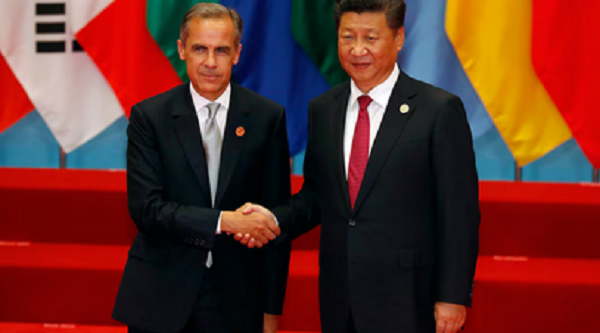
China has agreed to roll back tariffs on about $400-million of Canadian shipments of pork and seafood after a meeting Wednesday in Shenzhen between Prime Minister Mark Carney and Chinese President Xi Jinping.
In return, Canada is opening the door wider to Chinese steel and aluminum imports by extending and expanding remission measures for products that cannot be found in sufficient quantities in this country. Remission allows importers to get refunds on 25-per-cent Canadian tariffs on these products.
The announcements Tuesday, which included a major Canadian trade mission to China in 2027, appear to be baby steps in the new “strategic partnership” Mr. Carney announced in January with Mr. Xi.

The moves suggest a cautious approach as the Prime Minister remains locked in trade negotiations with the United States. A more relaxed policy on Chinese steel and aluminum, however, could anger the Trump administration, which has accused Canada of being a back door for Chinese goods, including metals, to reach the U.S. market.
The announcements were made after Mr. Carney met with Mr. Xi on the sidelines of the Asia-Pacific Economic Cooperation summit.
The tariff-rollback agreement, though small in dollar value relative to the total amount of trade between the countries, helps sectors of the Canadian economy that have been battered by the global trade crosswinds of the past few years.
And it is further evidence that Mr. Carney is making inroads with Beijing after a period of deep distrust between the countries that peaked in 2024 with a public inquiry finding China was a main culprit of foreign interference in Canada.
China’s retaliatory levies on farm products and seafood were imposed in 2024 as relations worsened between Ottawa and Beijing, and as Canada moved in lockstep with the U.S. to slap 100-per-cent tariffs on Chinese electric vehicles and 25-per-cent levies on Chinese steel and aluminum.
Canada under Mr. Carney has since broken with Washington to allow in a modest number of Chinese EVs at a low tariff rate – a source of friction between Ottawa and President Donald Trump’s administration, which has been pressing the Canadian government to align external tariffs with those of the U.S.
The announcement that Canada will be relaxing tariffs on another 32 types of steel and aluminum exports – through refund measures – represents another divergence from the U.S.
In January, Canada agreed to allow in 49,000 Chinese EVs at a low tariff rate, a number that will rise yearly to about 70,000 by 2030.
But, as of Sept. 30, only about 16,200 Chinese EVs had entered Canada under the quota, according to a Global Affairs Canada website. The first quota period runs to Feb. 28 next year.
Ottawa said Tuesday that a Chinese car maker this month fulfilled all Transport Canada requirements and has just started importing vehicles into Canada, with an expected import price of less than $35,000. It did not identify the company.
The Carney government had said it expected significant investment by Chinese EV makers in Canada within three years, but nothing has materialized.
Tuesday’s tariff reductions include $116-million in exports of frozen pork cuts and more than $285-million in fish and seafood exports, covering certain frozen cold-water shrimp and prawns, including Pacific spot prawn; certain mollusks, including geoduck; sea cucumber; and Greenland halibut. The dollar amounts cited in Ottawa’s announcement of the deal are based on 2024 trade values.
These Chinese tariff reductions take effect January 1, 2027 and remain in effect until December 31, 2028, the Canadian government said. That provides more time to reach a permanent solution on these levies, it said.
The tariff-reduction deal comes near the end of a whirlwind trip by Mr. Carney to four international summits from Dublin to Shenzhen as he searches for new foreign investors and trade to help reduce economic reliance on the United States.
It will be exceedingly hard for the Prime Minister to substantially replace the United States with overseas customers. In 2025, Canada sold more than $560-billion of goods to U.S. customers, dwarfing exports to any other country.
Mr. Carney, who has worked to repair Ottawa-Beijing relations after a deep freeze of seven years, told Mr. Xi Tuesday during public comments at the outset of their meeting that Canada is on its way to boosting annual exports to China by 50 per cent, which would mean shipments of about $50.2-billion yearly from $33.4-billion last year.
Mr. Carney praised the transformation of the APEC host city of Shenzhen from a “rustic fishing village” to an innovative “megacity,” calling it a testament to the hard work and ambition of China. He cited the leadership of Mr. Xi’s father, Xi Zhongxun, in the creation of Shenzhen.
He talked of working with China to “shape a global order that benefits all peoples through sustainable, peaceful, and human-centered growth.”
Mr. Xi in return said he considers Canada-China relations restored. “Exchanges and co-operation across various fields between our two countries have fully resumed,” he told Mr. Carney.
The meeting of the two men lasted about 25 minutes.
Canada-China relations suffered as Ottawa in concert with other Western countries sharply criticized Beijing for its crackdown on democracy in Hong Kong, its repression of the Uyghurs in Xinjiang and its menacing of Taiwan. They further worsened when China imprisoned two Canadians in retaliation for Ottawa arresting a Chinese tech executive.
Chris White, president of the Canadian Meat Advocacy Office in Beijing, welcomed the levy relief, saying this removes about half the barriers facing Canadian pork.
China’s 25-per-cent tariff on offal – organ meats – remains in place.
“We look forward to the next round of negotiations,” Mr. White said.
In 2024, before the tariffs, Canadian pork producers exported about $450-million dollars worth of product to China. This year exports might be $250-million, the industry has estimated.
Other elements of the deal announced Tuesday are a new major trade mission to China in 2027; a Canadian contribution of $850,000 for scholarships under the Canada Learning Initiative in China to enable 850 Canadian students to study at Chinese universities; and a Canadian contribution of $8-million to the China Council for International Cooperation on Environment and Development “to mobilize international expertise on environmental issues, including from Canadian researchers, and make science-based recommendations to policymakers.”
Mr. Carney went to China warning that Chinese auto manufacturers could replace U.S. vehicle makers if Canada and the U.S. fail to reach a deal in which Washington substantially scales back its tariffs on Canadian-made autos. A 25-per-cent tariff now applies, with a carveout for the percentage of the vehicle that was made in the U.S.

His caution drew swift scorn from Peter Navarro, a senior adviser to Mr. Trump on trade and manufacturing. In a Monday post on X, Mr. Navarro asked the Prime Minister if he was “really threatening to play China off the U.S.?”
Mr. Navarro, known for his hawkish views on trade, said Mr. Carney’s messaging was “offensive in the extreme” and warned Ottawa it should tread carefully with Beijing. “You should be far more worried China is going to eat Canada alive – as it is already doing,” he said.
The latest agreement builds on the two-year extension of Chinese tariff relief for Canadian shipments of canola meal, lobster, crab and peas announced earlier this month.
Kody Blois, the MP who serves as Parliament Secretary to the Prime Minister, has played a significant role in the evolution of Canada-China relations.
He said guardrails remain in place to fence off certain areas of the Canadian economy from Chinese investment, including critical minerals. Mr. Blois said despite China’s expertise in mining, Canada’s focus on critical minerals will be working with Group of Seven allies.
“We respect the fact that China has created a network around rare earth minerals. But if you look at our work and our co-operation in the G7, we’re actually going the other direction – which is building capacity in the G7.”
This article was first reported by The Globe and Mail