





Canada Prepares Trade Defense Strategy as USMCA Renewal Faces New Hurdles
Prime Minister Mark Carney and the premiers held a virtual meeting Wednesday where the private discussion focused on Canada’s negotiating strategy with the United States just hours after Donald Trump said he’s not looking to renew the North American trade pact.
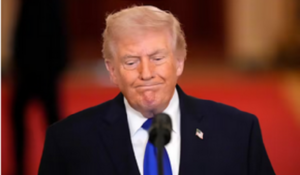
Speaking with reporters in the Oval Office, the U.S. President repeated his past comments that his country doesn’t need “anything” from Canada and Mexico.
“I’m not looking to renew it,” Mr. Trump said of the United States-Mexico-Canada Agreement, the trade pact he signed in his first term to replace the North American free-trade agreement. Canada and Mexico are now both pursuing separate talks with the White House over the future of the USMCA. The agreement, which has eased the flow of goods even during Mr. Trump’s trade war, is up for a mandatory six-year review on July 1.
“I made the deal, and the primary reason I made the deal is that NAFTA was the worst trade deal I’ve ever seen,” Mr. Trump said. “USMCA did one thing that I loved. After six years, it comes up for renewal. I don’t know that I’m going to renew it.”

Mr. Carney did not respond when asked on Parliament Hill about the President’s latest comments. But he did respond when asked Wednesday morning about his meeting with the premiers, saying briefly that the focus would be on “the U.S. and the electricity strategy,” including Canada’s pledge to double domestic electricity generation.
The Prime Minister and the premiers met early Wednesday afternoon.
Together, they talked about next steps in the USMCA negotiations in a discussion that was dominated by trade issues, according to a provincial government source. The Globe and Mail is not naming the source as they are not authorized to speak publicly about internal discussions.
The Prime Minister’s Office said in a statement that Mr. Carney updated the premiers on the continuing trade talks with the U.S.
The office said Mr. Carney underscored the government’s “commitment to protecting Canadian workers and businesses and providing certainty to investors, and reaffirmed the importance of a united Team Canada approach.”
Mr. Trump has previously expressed indifference toward the USMCA, and it was unclear from Wednesday’s comments whether his view of it had shifted
Under the terms of the USMCA, the three countries must decide by July 1 whether to extend the agreement for another 16 years. If they don’t agree to an extension, the deal will still remain in place, but move into a period of annual reviews for 10 years. It’s also possible for any of the three countries to withdraw with six months’ notice.
Officials from all three countries have said they expect negotiations to continue beyond July 1, meaning the annual-review scenario is much more likely than an outright extension.
Mr. Trump threatened to withdraw from NAFTA during his first term in office, but ultimately ended up keeping the U.S. inside a renewed version of the continental trade pact.
Canada-U.S. Trade Minister Dominic LeBlanc has sought to play down the significance of the July 1 deadline, telling reporters earlier this month that it is important “not to set up a cliff that doesn’t exist.” Mr. LeBlanc was in Washington last week to offer proposals to the White House, after a rocky period of negotiations in which Mexico appeared to make faster progress than Canada.
British Columbia Premier David Eby told reporters the conversation at the first ministers meeting was “good and constructive.” However, he added, it was ”obviously overshadowed a little bit by the comments of the President that he is not necessarily looking to renew the CUSMA agreement,” using an alternative name for the USMCA.
“To be blunt, this sequel to The Art of the Deal is pretty lame,” he said, referring to Mr. Trump’s bestselling 1987 book. “For the main dealmaker from the United States to say he’s not even interested in a deal or having the conversations is a fairly significant departure.”
Ontario Premier Doug Ford told reporters that it will be up to the Prime Minister and Mr. Trump to handle trade talks and that negotiations are continuing.

“Where I totally disagree is, we do need each other. Without each other, you know, we have other countries like China coming in,” Mr. Ford said at an event alongside Democratic Pennsylvania Governor Josh Shapiro, where the two signed a memorandum of understanding on economic and energy co-operation.
Mr. Ford added, “We’ve heard these comments from President Trump in the past. We need to stay focused. We need to continue moving the ball down the field.”
The Ontario Premier also addressed The Globe’s report about his cancelled reception in Washington this week with U.S. Chamber of Commerce board chair Ross Perot Jr., which was pulled after the White House complained about the event, according to two American industry sources.
The Globe is not identifying the sources, who were not authorized to speak about internal discussions.
Mr. Ford brushed off the cancellation and said the reception will be rescheduled, calling Mr. Perot a “class act.” Ontario Economic Development Minister Vic Fedeli told reporters that if the reports that Mr. Trump forced the chamber to cancel are true, Mr. Ford “should be wearing that as a badge of honour” because he stood up and “faced truth to power.”
Mr. Shapiro, who called the President’s rhetoric about Canada “reckless and disrespectful,” said he wants to make sure the USMCA is strengthened so that both countries benefit from it.
“It is critically important that we find ways to trade together,” he said.
Saskatchewan Premier Scott Moe told reporters Wednesday that such comments from the President can be expected as part of the negotiations toward a new trade deal.
“There’s going to be a lot of rhetoric that will occur as we go through this review process,” he said in Calgary on the sidelines of the Global Energy Show Canada.
“Our goal is to get to a preferred-nation trade deal with the U.S., preferably looks something like what the CUSMA deal we have today is. That’s our goal. We won’t be responding to daily comments that come out of the White House, or even at times come out of various levels of Canadian leadership.”
Alberta Premier Danielle Smith said in a statement that provinces and territories had the opportunity to voice priorities about trade relationships with the U.S. and Mexico during the meeting.
“We also discussed the importance of a strong Canadian economy as we navigate a period of global uncertainty. There was broad support from across the country for working collaboratively to develop Canada’s energy potential and position our nation as a world-leading energy superpower,” she said.
So far, the Trump administration has chosen to approach the trade talks on a bilateral basis, beginning formal negotiations with Mexico City last month without Canada at the table.

U.S. trade officials have said they are looking to resolve bilateral concerns with Canada and Mexico separately, and to make trilateral changes to the USMCA, with the goal of boosting U.S. content and reducing Chinese parts in North American supply chains.
For the crucial auto sector, the U.S. has proposed raising the North American content requirement to 82 per cent from 75 per cent, and introducing a rule that 50 per cent of a car must be made of U.S. parts to receive preferential tariffs.
The main goal for Canada and Mexico in the trade talks is getting some relief from the sectoral tariffs the U.S. has placed on key industries such as automobiles, steel, aluminum and lumber, while preserving the carve-out from other U.S. tariffs offered to USMCA-compliant goods.
Any resolution could involve separate deals for Mexico and Canada. U.S. Trade Representative Jamieson Greer has said he wants to preserve the “pillars” of the USMCA while layering separate bilateral deals with Canada and Mexico on top.
Canadian Labour Congress president Bea Bruske said in a statement that the talks are about renewing the deal rather than a full renegotiation.
“In my view, there is no urgency to the July 1st deadline,” she said. “We are firmly of the view that no deal is better than a bad deal.”
With a report from Emma Graney in Calgary
This article was first reported by The Globe and Mail