





Canada Proposes Doubling Oil Exports to US to Unlock Trade Agreement
The U.S. ambassador to Canada says that Prime Minister Mark Carney offered to double exports of Canadian oil to the United States as part of a prospective trade deal last year.
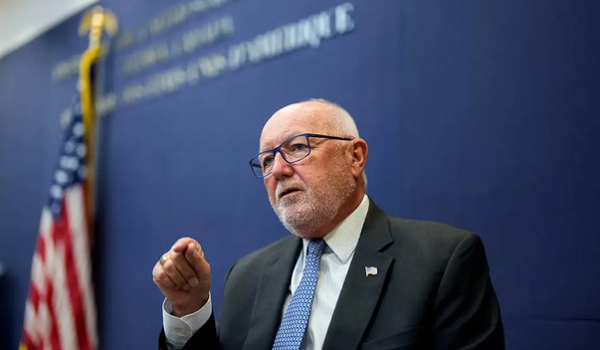
Pete Hoekstra, speaking at a conference in Edmonton on Monday, said that Mr. Carney made the pitch during an Oct. 7, 2025, meeting at the White House. At the time, the Prime Minister was trying to reach an agreement to get U.S. President Donald Trump to drop or reduce his tariffs on Canadian steel, aluminum, autos and other goods.
“The Prime Minister proposed, as part of a preliminary trade agreement, that Canada would be willing to ship three to four million barrels of oil to the United States, additional barrels of oil to the United States,” per day, Mr. Hoekstra said in an on-stage interview with former Alberta cabinet minister Gary Mar at the Pacific Northwest Economic Region annual summit.

Canada currently supplies about four million barrels of oil a day to the U.S., accounting for nearly two-thirds of American imports.
U.S. Interior Secretary Doug Burgum and U.S. Energy Secretary Chris Wright wanted to take Mr. Carney’s offer, Mr. Hoekstra said.
“Doug Burgum and Secretary Wright had to be restrained by the President because they were so eager for getting more oil and getting it from Canada,” he said. Mr. Trump “had to advise them that crawling across the table and shaking Carney’s hand” was “not necessarily the best negotiating strategy,” Mr. Hoekstra added.
No deal was ever reached, as Mr. Trump walked away from talks later that month over an anti-tariff advertisement from the Ontario government.
The global oil supply has subsequently become one of the thorniest problems in Mr. Trump’s presidency. In response to his war on Iran, Tehran blockaded the Strait of Hormuz, reducing the flow of petroleum from the Persian Gulf and driving up prices for consumers in many countries, including Americans.
The Prime Minister’s Office on Monday did not respond to questions about what specifically Mr. Carney proposed last year.
It is unclear how Mr. Carney could deliver on the sort of offer described by Mr. Hoekstra. Canada’s energy sector is made up of largely private oil and gas producers rather than government-owned entities.
Mr. Carney’s Building Canada Act and a memorandum of understanding with the Alberta government are already intended to speed up construction of new oil and gas pipelines, among other infrastructure, by streamlining regulatory approvals. Part of the motivation is Mr. Carney’s effort to diversify Canada’s trading relationships away from the U.S. in the face of Mr. Trump’s tariffs.
The President significantly escalated his trade war against Canada on Monday, announcing a new raft of 50-per-cent tariffs against Canadian alcohol, dairy, hockey sticks and hundreds of other products, to take effect Aug. 19.
The U.S.’s reliance on Canada’s oil is the main reason for Washington’s goods trade deficit with Ottawa, about which Mr. Trump has repeatedly complained. But Mr. Hoekstra said it would be a good idea for the U.S. to import more oil from Canada.

“We want oil, we need oil,” he said. “Probably the region that can make the most compelling case for supplying more oil to the United States would be Saskatchewan and Alberta.”
Alberta Premier Danielle Smith has targeted a doubling of production in the province to as much as eight billion barrels a day in the next decade, much of that predicated on building new pipelines to Canada’s coasts, where oil can be shipped overseas.
One proposal would see a pipeline to the West Coast while another, announced jointly by Ms. Smith and Ontario Premier Doug Ford, would span 3,300 kilometres within Canada to help non-oil-producing regions lessen their dependence on imports.
“I look at these West Coast pipelines as also helping to strengthen the relationship all down the highly populated U.S. West Coast. It also helps us to expand our markets as well,” Ms. Smith said.
She pointed to a proposed cross-border pipeline by Calgary-based South Bow and the U.S.’s Bridger as a conduit for strengthening relations with the U.S.
Mr. Hoekstra said he believed that project would move ahead. “I’m optimistic that the pipe coming down south, the pipe going north, that they’re going to meet at the border, that they’re going to be at the same place,” he said.
Mr. Trump in April signed a permit for the project, which would move 550,000 barrels a day. The pipeline must still receive other regulatory approvals in the United States. South Bow has said it will make a final decision on moving forward in mid-2027.
Mr. Carney spent much of last year trying unsuccessfully to reach a deal with Mr. Trump to mitigate the worst of the U.S. President’s trade war. Negotiations restarted this spring after the White House had frozen them for several months, but so far, they have shown few signs of progress.
Mr. Hoekstra has been one of Mr. Trump’s loudest representatives on the world stage. Shortly after Ontario’s anti-tariff ad, The Globe and Mail reported, Mr. Hoekstra screamed and swore at David Paterson, the province’s representative to the U.S., at a dinner in Ottawa.
At the Monday event, Mr. Hoekstra complained that anti-American sentiment from the Canadian public was making it more complicated to reach a trade agreement. He did not acknowledge that this sentiment arose in response to Mr. Trump’s tariffs and repeated threats of annexation.
“I have a problem,” he said. “Canadians don’t think very highly of the United States right now. It makes it harder for politicians to get to an agreement.”

For the most part, however, he seemed in a jocular mood. He picked up a cane that Mr. Mar was using to walk and asked: “What’s this? Is this a new tool to keep me in line, or what?”
Mr. Mar, who also served as Alberta’s trade representative in Washington and Hong Kong and now runs the Canada West Foundation think tank, took a shot of whisky with Mr. Hoekstra to toast Canada-U.S. friendship at the end of the talk.
“This is a helluva way to start the morning, ambassador,” Mr. Mar said.
This article was first reported by The Globe and Mail