





Carney Urges Provinces to Lift US Alcohol and Procurement Bans Amid Trade Talks
Prime Minister Mark Carney has asked premiers to restock American alcohol and end procurement policies that exclude United States companies, as Canadian and U.S. negotiators continue to haggle over the level of tariffs that will remain in place on key industries.
U.S. President Donald Trump announced on Tuesday that he had reached a tentative trade deal with Ottawa and postponed the implementation of punishing new tariffs on Canadian goods for three days.
The announcement, made less than two hours before the tariffs were set to go into effect, amounted to temporary relief in a tense trade standoff that began last month when Mr. Trump threatened 50-per-cent tariffs on an additional US$20-billion worth of Canadian goods.

But on Wednesday, negotiators were still bargaining over the level of tariff relief key Canadian industries would receive as part of a trade deal, according to premiers Scott Moe of Saskatchewan and Tim Houston of Nova Scotia, who were briefed on the talks by Mr. Carney Wednesday afternoon.
“They’re still working out some of the details on some of the exact tariff amounts,” Mr. Houston said in a news conference after the briefing, referring to sectoral tariffs that were placed on several major Canadian industries last year using Section 232 of the U.S. Trade Expansion Act.
Getting the U.S. to lower these tariffs on steel, aluminum, automobiles and forest products has been the central Canadian trade goal over the past year – and some premiers, including Ontario’s Doug Ford and British Columbia’s David Eby, have said they’ll need to see sectoral tariffs drop significantly before they’re willing to restock U.S. alcohol. Neither Mr. Ford nor Mr. Eby said Wednesday whether they are willing to do so now.
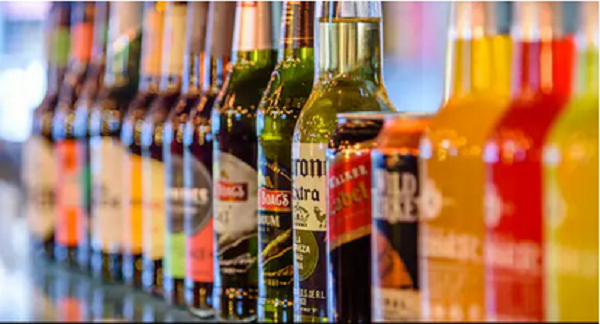
The removal of U.S. alcohol from liquor stores in most provinces and territories has infuriated the Trump administration. Washington has demanded alcohol sales be restored and for Canada to back down on a number of other retaliatory measures if Ottawa wants to land a trade deal and avoid further tariffs.
Both Mr. Houston and Mr. Moe said that Mr. Carney directly asked provincial and territorial premiers on Wednesday to put U.S. alcohol back on shelves and to end procurement restrictions that don’t allow U.S. companies to bid on provincial projects.
“We have more work to do,” Dominic LeBlanc, the minister responsible for Canada-U.S. trade, said in brief remarks after the meeting with the premiers.
Mr. LeBlanc met with his U.S. counterpart Jamieson Greer in Washington on Wednesday morning before returning to Ottawa. Canada’s top negotiator, Janice Charette, remained in Washington on Wednesday. The deadline for Mr. Trump’s threatened 50-per-cent tariffs has been pushed to end-of-day Friday.
Ottawa has released no details about the tentative deal or where sectoral tariffs will ultimately land.
Mr. Trump suggested to reporters in Washington on Wednesday that his administration would offer some relief to Canadian exporters. “They were paying a high number. We’re reducing it a little bit,” he said.
At a later event, Mr. Trump added that “we may bring some of the tariffs down to a level where other countries are, because Canada was paying a higher tariff.”
A source briefed on the talks said the U.S. has agreed to reduce its tariffs on Canadian steel from 50 per cent to 25 per cent. However, the source could not share the specifics, including whether the 25-per-cent rate was the tariff for all steel exports or only for exports above a certain quota.
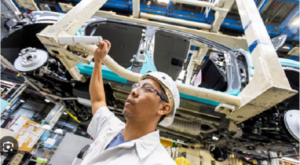
Negotiations about auto tariffs are continuing, according to two industry sources. The Globe and Mail has previously reported that the U.S. has proposed lowering the tariff on vehicles to 15 per cent from 25 per cent, but the two sides have been haggling over whether Canadian content in vehicles should be exempt from the tariffs, as is currently the case for U.S. content.
Auto discussions are complicated by the fact that the U.S. is also in discussions with Mexico about auto tariffs and is trying to triangulate a deal between the three countries.
One source with knowledge of the negotiations said that Canadian officials are in touch with their Mexican counterparts.
The Globe is not identifying the sources, who were not authorized to disclose the details of the talks.
On Tuesday evening, following a meeting with Mr. Greer in Washington, Mexican Economy Minister Marcelo Ebrard confirmed that “we presented something similar” to Canada’s demand that the value of all North American content be excluded from U.S. tariffs.
Both Ottawa and Washington looked to cast the negotiations in a positive light on Wednesday. Mr. Trump said the countries had arrived at a “very fair deal for both sides.” Mr. Carney posted a message on social media congratulating Mr. LeBlanc and Mr. Greer on what he called “significant progress” in trade talks.

The message from the premiers was somewhat more muted. Mr. Houston said he was “pretty content” with what he’d heard from the federal government about the shape of the potential deal, but acknowledged that Canada was negotiating under constraints.
“I do think that what the negotiating team was able to accomplish is pretty good under the circumstances and the best possible deal for our country,” he said.
Mr. Moe said that what constitutes “the best deal” is “relative” and suggested the terms would not be as good as what Canada had before Mr. Trump returned to office.
“We also need to understand that the status quo that we had two years ago was not possible, it was not on,” he said.
Mr. Carney has long said that no deal is better than a bad deal, and Ottawa had refused to pre-emptively address a number of U.S. trade irritants, preferring to maintain leverage for future trade talks. But Mr. Trump’s threat of new tariffs last month appears to have changed Ottawa’s calculus about how much it could hold out for an optimum deal.
One person familiar with the talks said the Carney government is hoping the deal will provide certainty for businesses and allow the country to move on from the trade war to focus on other things.
All provinces and territories except Alberta and Saskatchewan have maintained bans on the sale of U.S. liquor and a number have imposed procurement restrictions in retaliation for Mr. Trump’s tariffs last year.
Mr. Ford of Ontario and Mr. Eby of British Columbia have been the most adamant in recent months that they won’t restore alcohol to the shelves without significant tariff relief.
Mr. Eby did not say on Wednesday whether he would agree to rescind this ban on American booze sales, but after Mr. Carney’s briefing he issued a statement saying his province is confident that Ottawa has made “substantial progress across strategic sectors.”
Mr. Ford’s office did not answer questions on Wednesday about whether Ontario would restock U.S. booze.
Alberta Premier Danielle Smith issued a statement saying the Prime Minister has asked the provinces to “proactively put U.S. liquor back on shelves.” The statement noted Alberta has already taken that step and thanked Mr. Carney for providing premiers with the update Wednesday. A spokesperson for Manitoba did not respond to a request for comment.
On Wednesday, Conservative Leader Pierre Poilievre said based on the expectations the Prime Minister has set for striking a better deal, it should end with no tariffs on any of the sectors currently subject to the American levies.
With Ottawa largely mum about the details of the potential agreement, most of the public commentary about the deal has come from the U.S. side.
In his initial social-media post on Tuesday, Mr. Trump mentioned the possibility of reviving the Keystone XL pipeline proposal, while Mr. Greer said on social media that the deal includes “market access for all American goods, economic security commitments [and] digital trade alignment.”
Mr. Trump said Wednesday that Ottawa had agreed to remove tariffs on U.S. farm products and possibly other goods, but he did not provide details.
“The tariffs will be non-existent for our farmers,” he said. Canada, he said, “called yesterday and gave us the points that we had to have.”
One U.S. demand in the talks was that Canada accept Washington’s interpretation of how licences in Canada’s dairy supply-management system must be allocated. This could result in U.S. dairy farmers having more access to the protected market. But it would not abolish Canada’s entire system of quotas and tariffs on dairy.

The White House declined to specify what had been agreed to in the deal.
Quebec Premier Christine Fréchette said the pause in new tariffs leaves uncertainty in place. “What our workers, farmers and businesses want is stability, predictability and confidence,” she wrote in French in a statement on social media Wednesday.
“Protecting our economy, our jobs, our supply management system and our culture is non-negotiable.” She added that the negotiations must avoid a tariff escalation “without crossing the red lines Quebec has established.”
With reports from Jeff Gray, Bill Curry and Mike Hager
This article was first reported by the Globe and Mail