




Major US Labor Unions Urge Return to Stable Trade Ties with Canada
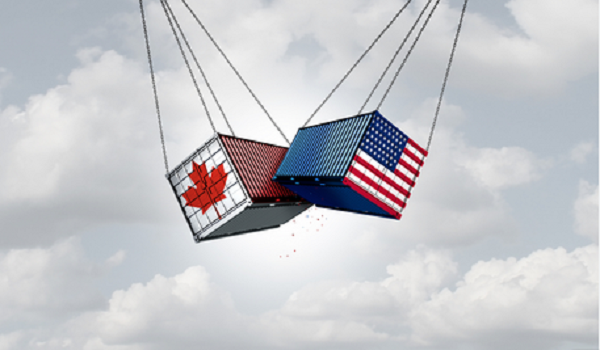
Two major American private-sector unions – representing hundreds of thousands of manufacturing workers – have announced their strong opposition to U.S. President Donald Trump’s new suite of tariffs on Canadian goods, calling on the White House to reverse course.
Roxanne Brown, the international president of the United Steelworkers, and Brian Bryant, the international president of the International Association of Machinists and Aerospace Workers, are warning that Mr. Trump’s new 50-per-cent tariffs on certain Canadian products, set to take effect on Aug. 19, are “unfair trade” and will only serve to drive a deeper wedge between the countries.
Both unions sent a letter to U.S. Trade Representative Jamieson Greer on Tuesday, requesting that the White House reconsider using Section 338 of the Tariff Act to impose the levies, and return the U.S.-Canada trade relationship to more “stable, balanced footing.”
The letter is notable because the USW has often publicly supported Mr. Trump’s trade policies.

“Each country must ensure that trade is fair and that trade irritants are addressed, however the U.S. trade relationship with Canada over the last year and a half has been marked more by division than cooperation,” the letter stated. “Our priority must be to align our trade policies to address the challenges posed by unfair and predatory trade practices of countries like China, not to drive a further wedge between our nations.”
On July 20, the White House announced sweeping new tariffs on nearly US$20-billion worth of Canadian goods. Mr. Trump invoked Section 338 of the Depression-era Tariff Act, which has never previously been used, to issue the tariffs on Canada, in retaliation for what his administration considers “discrimination” against imports of U.S. autos, alcohol and dairy. The levies would affect Canadian exports of machinery, electronics, mechanical equipment, plastic and rubber products, among other items.
USW International represents approximately 850,000 workers across the United States and Canada, mostly employed in metals, mining, pulp and paper, rubber, chemicals and auto supplies – all industries that will be hit hard by the Section 338 tariffs.
But while its Canadian counterpart, USW Canada, has been consistent in its opposition to Mr. Trump’s tariffs since the onset of the trade war in early 2025, the American chapter of the union has on multiple occasions come out in support of tariffs as a tool to rebalance trade relationships.
Specifically, USW has championed the White House’s use of tariffs to curtail China’s alleged steel dumping, an unfair trade practice where foreign manufacturers sell steel products in a country at depressed prices to undercut local markets. The union – like Mr. Trump – is also vehemently opposed to maintaining the United States-Mexico-Canada Agreement in its current form, arguing that it exacerbated the outsourcing of auto parts production to Mexico and failed to compel corporations to raise wages of Mexican workers. (USW also represents auto parts workers.)
Indeed, some USW members in the U.S. have allied themselves closely with Mr. Trump because of his trade policies, believing that tariffs will restore job security to the country’s manufacturing heartland. The group Steelworkers for Trump, led by USW member Brian Pavlack, has garnered thousands of supporters in the past two years, and is frequently featured at Mr. Trump’s rallies.
The country’s biggest auto union, United Auto Workers, has also championed Mr. Trump’s tariffs, seeing them as a means of bringing well-paying unionized jobs back to the U.S., even if it is at the expense of Canadian jobs.

According to Marty Warren, USW Canada’s national director, his union has lost between 1,500 and 2,000 members over the past year as a result of Mr. Trump’s trade war. “We are still hanging on, but the real threat is the insecurity that is felt in so many of our workplaces because of the unresolved CUSMA dispute with the U.S.,” he told The Globe and Mail in an interview, using another name for the USMCA.
Mr. Warren said the Canadian union’s relationship with its American leadership is strong, and both unions are allied in their opposition to Section 338 tariffs. “As Roxanne Brown said, Canada is not the problem, and we should be working together as two countries trying to stop the offshoring of jobs.”
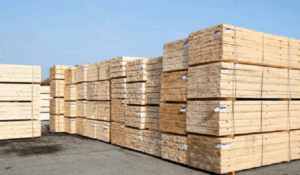
If new tariffs do take effect on Aug. 19, Mr. Warren anticipates that USW workers in the forestry sector – representing roughly 14,000 jobs – will be most affected, given that the tariffs extend to plywood, particleboard, veneer and some paper goods. “Many of these jobs are in remote communities, so holding that job is everything to them,” he said.
Other major Canadian unions have voiced their opposition to the Section 338 tariffs. In a July 21 statement, Unifor national president Lana Payne said the tariffs were intended to inflict economic damage on Canada and force governments into making concessions during trade negotiations. Unifor also represents workers in industries targeted by tariffs, including autos, forestry, manufacturing and paper products, and those not targeted by tariffs, such as potash, energy and critical minerals.
“The targets Trump exempted reveal his hand. He knows that despite his bluster, the U.S. does need things from Canada,” Ms. Payne said.
This article was first reported by The Globe and Mail