





Navigating an Uncertain Horizon: USMCA Approaches Critical Renegotiation Phase
With less than two weeks to go until the formal review of the United States-Mexico-Canada Agreement, one thing has become clear: There will be no 16-year extension of the trade treaty on July 1.
Mexico and the U.S. have already scheduled a third round of negotiations for late July, three weeks after the review date. Canada and the U.S. have yet to even start formal negotiations.
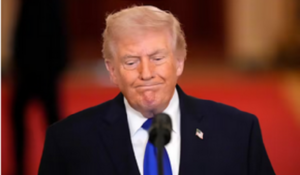
Donald Trump himself can’t seem to make up his mind about the agreement he signed in his first term. “I’d rather leave it unsigned, I’d rather have it terminated,” the U.S. President told reporters this week at the G7 conference in Evian-les-Bains, France. “But I may sign it.”
A failure to extend the USMCA on July 1 does not mean it will suddenly disappear. The treaty was designed with a long exit ramp: It remains in force for a decade and moves into a period of annual reviews. An extension agreement could be struck any time; any party can also withdraw from the treaty with six months’ notice.

What it does mean is that continental trade is heading into a new and unpredictable phase – one that will likely be defined by bilateral deal-making, demands from Washington to align against China and ongoing uncertainty.
Optimistic trade-watchers think some sort of deal, or set of deals, could still be struck in the coming months as Mr. Trump looks to rack up wins ahead of the midterm elections on Nov. 3. Importantly, the President has given no indication that he intends to withdraw outright, according to Mexican secretary of the economy Marcelo Ebrard.
But there are plenty of pessimists who think we’re entering a limbo period, where things could get worse before they get better, and any improvements on the issues that matter most for Canada – namely relief from sectoral tariffs on autos, industrial metals and lumber – could be slow or partial.
There’s also a reasonable likelihood that nothing will be resolved until after Mr. Trump leaves office. Canadian officials laud their “constructive” talks with the U.S. trade team. But any decision about the future of the agreement ultimately lies with the antagonistic and mercurial President.
The challenge for Canada’s trade team – led by chief negotiator Janice Charette, Minister Dominic LeBlanc and ambassador to the U.S. Mark Wiseman – is being ready to strike a deal if the opportunity arises, without giving up too much too early.
“I don’t want to suggest this is easy,” Mr. Wiseman said at an event this week in Toronto. “The irritants … they’re real, some of them are very hard to manage.”
“Maybe I’m old fashioned, but at the end of the day, there’s a mutuality of interest that will get us to the right place. It may take time. It may take more time than we want. And we may have more uncertainty than makes us all comfortable.”
The review of the USMCA is following a much less formal process than the negotiations from 2017 to 2019 that led to the creation of the treaty as a replacement for the North America free trade agreement.
To some extent, the inability to reach an agreement by July 1 is a function of the trade negotiations starting late and receiving little priority in Washington.
Mr. Trump’s trade team at the Office of the United States Trade Representative (USTR) spent 2025 trying to set up a new system of global tariffs, and then much of the first half of this year trying to rebuild parts of the tariff wall that were struck down by the U.S. Supreme Court in January.
Trade talks with Canada and Mexico were punted – especially for Canada, which angered Mr. Trump by retaliating against his tariffs and sounding publicly defiant.
But things are also playing out according to a playbook.
Back in 2020, shortly before the USMCA came into force, Jared Kushner, Mr. Trump’s son-in-law, described the situation we’re now going through in real estate terms.
“Why lock in today’s market rates if you will be able to charge more in the future?” Mr. Kushner, one of the architects of the deal, wrote in a CNBC op-ed. The USMCA is like a 16-year lease, he said, “with a fair market value readjustment clause that is triggered every six years.”
Now that we’re at that six-year-mark, the U.S. is looking to increase the rent. The question for Canada and Mexico is how much they are willing to pay to stay in the apartment.
In practical terms, U.S. demands fall into two buckets.

It wants Canada and Mexico to address a number of bilateral complaints, most recently outlined in March, in its annual National Trade Estimate Report on Foreign Trade Barriers, the bible of U.S. trade grievances.
For Canada, this includes things like online streaming regulations, provincial bans on U.S. liquor and how dairy quotas are allocated. For Mexico, it includes restrictions on energy investments, intellectual property rules and agriculture.
Mexico has spent a year trying to address various irritants. After hanging back, Canada has stepped up its own efforts.
Earlier this month, Ottawa ordered a review of a regulatory decision that would have forced American streaming companies to pay more to produce Canadian content. And it is rushing out legislation to tighten standards around forced labour in supply chains – another U.S. concern.
Mr. LeBlanc, who was in Washington at the beginning of June to meet with his counterpart, U.S. Trade Representative Jamieson Greer, said that Canada’s efforts have been well received.
“We’re doing the important work of answering some of the longstanding concerns that the United States has publicly spoken about in terms of non-tariff barriers,” Mr. LeBlanc said at an event this month in Toronto. “I had a sense that Ambassador Greer and his colleagues saw the progress that they have been looking for.”
In the second bucket, the U.S. wants changes to continental trade rules, with the goal of boosting U.S. content in key manufacturing supply chains and restricting imports from outside the trade bloc, particularly from China.
In its bilateral negotiations with Mexico City – which are much more advanced than with Ottawa – USTR has said it wants to bump the North American content requirement in automobiles from 75 per cent to 82 per cent, and add a new requirement that 50 per cent of a vehicle must be made of U.S. parts.
Washington is also looking for more alignment from both neighbours on external tariffs, particularly on Chinese goods and technology, and tighter foreign investment rules in critical sectors.
This could inch the continent toward some kind of customs union, without heading fully in that direction, said Christopher Sands, director of the Center for U.S.-Canada Relations at Johns Hopkins University.
It could be “a more selective customs union … where we don’t have to all be chained to each other, but with certain countries of concern we can act jointly,” Prof Sands said.
“But the key is really, how much are you giving up [if you’re Canada and Mexico], and then what are you getting in return? And I think what has to happen in return is the bilateral tariff has to be low or zero,” he said.
So far, Washington has chosen to negotiate separately with Mexico City and Ottawa, and there is a growing recognition that the path forward will involve two separate deals.
This is partly a function of Mr. Trump’s preference for bilateral over multi-lateral negotiations. And it’s partly a legal issue: Mr. Trump does not want to take the trilateral agreement back to Congress to approve any changes, and would rather deal with various issues with Canada and Mexico in separate side agreements.
Ottawa and Mexico City have their own reasons for preferring to make changes in side agreements: They’d be easier to undo if the next U.S. president proves more amenable to free trade.
Mr. LeBlanc said he expects there will be ”bilateral arrangements between Canada and the United States, between the United States and Mexico, sort of adjacent to the trilateral framework.”
“If those agreements resolve issues that all three countries are trying to resolve, I’m hopeful that we might at that point have the extension. But if not, we’ll continue to do what’s necessary to preserve the trilateral framework.”
In some ways, Ottawa would be content to kick the negotiations down the road.

As long as the U.S. doesn’t withdraw outright from the agreement, and maintains its tariff carveouts for USMCA-compliant goods, Canada and Mexico remain in a privileged position relative to most other U.S. trade partners.
But there is a major caveat: The sectoral tariffs, known as Sec. 232 tariffs, are strang
ling key Canadian industries – particularly autos and steel. Without some relief, they are at risk of being decimated or even wiped out.
Mr. Wiseman said the Canadian trade team is focusing on addressing the sectoral tariffs. “We’ve got to deal with this as quickly and effectively as we can,” he said.
Last fall, Ottawa and Washington tried to negotiate relief for steel and aluminum, but those talks broke down. At this point, it appears that Sec. 232 conversations have become wrapped up in the broader trade talks.
During the 2018/2019 USMCA negotiations, the U.S. kept tariffs on steel and aluminum on Canada and Mexico until the end of the trade talks as a point of leverage.
There’s also a real risk that U.S. trade policy could become even more restrictive in the coming months.
The U.S. is expected to roll out a new batch of global tariffs on July 24, known as Sec. 301 tariffs, to replace temporary tariffs that were put in place as a stopgap measure after the Supreme Court decision in January.
So far, USTR has said the Sec. 301 tariffs will maintain the USMCA-carveout. But threatening to remove the exemption would be an easy way to ramp up leverage.
Timothy Meyer, professor of international law at Duke University, said Ottawa and Mexico City may be keen to rag the puck. “If I were Mark Carney, I would be thinking I’m probably going to get a better deal on the renewal in 2029 than I am in 2026.”
But Washington understands this dynamic, and will likely look to move things forward on U.S. terms, Prof. Meyer said.
“We’ve got a lot going on here in the United States … so it’s a little bit hard to know the timing around when the U.S. will choose to ratchet up pressure,” he said. “But I would expect the pressure will get turned up suddenly when the President’s attention turns to this.”
With a report from Stefanie Marotta
This article was first reported by The Globe and Mail