





New US Tariffs on Canadian Whey Pressure Global Dairy Markets
Since U.S. President Donald Trump took office last year, his tariffs have gone after steel, aluminum and autos. Next up: Protein.
When the Trump administration last week announced coming 50-per-cent tariffs on hundreds of Canadian products, the list included a range of proteins, such as whey and other dairy proteins. The White House cited specific “discriminatory” rules within Canada’s supply-management system for the duties, which would take effect Aug. 19.
This batch of tariffs would affect more than US$200-million worth of protein exports to the U.S., the majority dairy-based products.

It’s just the latest example of how the U.S. has taken exception to Canada’s supply-management system, a model that curtails production and imports to keep national prices above manufacturing costs.
These measures would affect certain Canadian dairy processors, which U.S. dairy exporters have accused of operating at an unfair advantage in global markets. Canada’s three largest dairy processors – Agropur Inc., Saputo Inc. and Lactalis Canada – all have ingredient divisions producing and distributing protein products.
But in targeting dairy protein, Mr. Trump is also heaping extra costs onto massively popular products at the centre of a cultural craze.
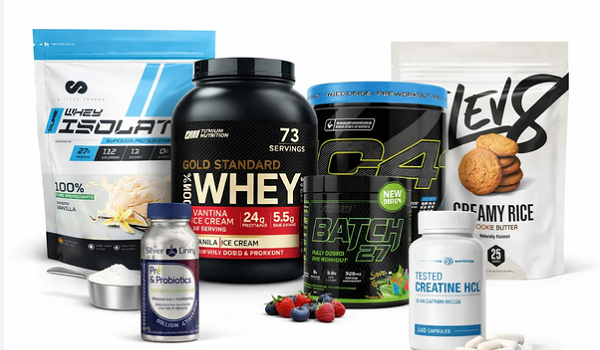
There is a global demand boom for protein, driven in large part by “manosphere” fitness influencers and the introduction of weight loss drugs. Protein supply has been unable to keep up with this demand. According to reports from the U.S. Department of Agriculture, American suppliers of whey are sold out of stocks for the remainder of the year, and prices of high-protein whey have climbed 162 per cent since the start of 2025.
Most popular dairy proteins – including whey – are byproducts of the production of cheese and were, until recently, affordable, readily available products that could be used as supplements in drinks or used to fortify low-protein foods, said Hrvoje Fabek, a professor of food science at the University of Guelph.
In fact, the supply of dairy solids – which includes a wide range of dairy proteins made during the processing of milk – has at times outpaced global demand, driving trade disputes between Canada and the U.S.
After decades of stable growth for dairy proteins, the global market had started to plateau in 2021 as China shored up its national production and its major supplier – New Zealand – encroached on U.S. market share in other countries.
The U.S. Dairy Export Council alleged that Canadian producers were making matters worse by dumping low-priced dairy proteins into export markets, including the U.S.
Canada’s processors were at an unfair advantage because the supply-management system meant they could sell these products at cheap, uncompetitive rates, alleged the U.S. industry in arguments submitted to the U.S. International Trade Tribunal.
Under the United States-Mexico-Canada Agreement, Canada agreed to limit tariff-free exports of skim milk powder, milk protein concentrate and infant formula. But the U.S. Dairy Export Council alleged that processors had simply started adding these proteins to different products, effectively disguising the byproduct as another item in order to bypass export restrictions.
“Canada has used loopholes to evade USMCA disciplines on dairy protein exports,” said a statement from the U.S. Dairy Export Council shortly after Mr. Trump announced the tariffs this month.
But the latest stage of this dispute is taking effect in a market very different to when the dispute first began.


The U.S. and Canada are in the midst of a global protein craze in large part because of weight-loss drugs like Ozempic, said Prof. Fabek. These medications can result in a loss of muscle mass. Doctors and dietitians are recommending high-protein diets as a way to retain lean muscle mass. And dairy proteins are considered “complete”: They have the full chain of amino acids, in the correct order, and they are fully digestible.
Protein has also been politicized – tied to resurgent conservative ideas about food and gender, said Elaine Power, a dietitian and professor at Queen’s University where she studies food and health.
The rise of conservative politics and the delegitimization of left-wing ideology have shifted consumer preferences. Online influencers are pushing diets high in animal proteins, from red meat to dairy.
The trend has been reflected in the Trump administration’s policies on health and nutrition, she added, pointing to the U.S.’s updated dietary guidelines.
In January, Health and Human Services Secretary Robert F. Kennedy Jr. flipped the national food pyramid upside down – recommending a diet high in protein, specifically red meat and dairy. The new recommendations almost doubled the protein intake to a range of 1.2 to 1.6 grams per kilogram of body weight.
There are strong commercial interests behind the gendered fitness and wellness movement, said Emma Grundtvig Gram, a public-health researcher at the University of Copenhagen who has studied the effects of male fitness influencers on consumer trends.
A number of the high-profile fitness influencers who were key proponents of the Trump administration have founded, owned or advertised on behalf of supplement companies that sell dairy-based protein powders. A prominent example is Onnit Labs Inc., co-founded by Joe Rogan, a popular and controversial podcast host who endorsed Mr. Trump shortly before the 2024 U.S. election. (Mr. Rogan’s support for Mr. Trump has wavered since this endorsement.)
Supplies of whey protein, which used to be part of a niche market, mostly for athletes and body builders, have tightened as mainstream corporate actors also seek to capitalize on the trend, said Prof. Power.
The number of high-protein shakes and drinks on the market rose by 122 per cent between 2020 and 2024, according to a report from Innova Market Insights, and brands from Starbucks to Buffalo Wild Wings have launched high-protein lines. The latter introduced an “espresso proteini” in March – a beverage with 10 grams of protein and a Buffalo Dry Rub rim.
The average U.S. supermarket now stocks upward of 38,000 products that advertise protein content, according to the Associated Press, citing a market firm research report from NielsenIQ.
Large food and beverage companies moving into this space have been bad news for those who have been marketing whey protein from before the protein-maxxing moment. For example, producer of high-protein baking and beverage mixes, HelloAmino, was cut off from its supplies of whey protein at the beginning of May. The Alberta-based company had been marketing high-protein products since before the current trend took off, said founder Aelie Swift.
“Literally no one wants to do business with us,” she said. “If you’re not ordering a million-dollar truckload, you can’t even get a hold of someone.”
HelloAmino has pivoted to a different dairy protein formulation, but it is costing them 50-per-cent more to get supplies.

And whey producers will not be able to scale up production quickly.
Because whey is a byproduct of cheese production, a processor cannot increase production without the risk of flooding the cheese market, said Prof. Fabek. Processors will instead be focusing on ways to get more protein from every litre of liquid milk, but these investments take time.
“Since every kilogram of cheese generates a certain amount of liquid whey, there needs to be a demand for both, and that’s where you’re finding a big issue and a big challenge.”
With files from Jason Kirby
This article was first reported by The Globe and Mail