




Ottawa Evaluates Auto Tariff Proposals While Pressing U.S. for Reprieve
Canadian officials are weighing a proposal that would see Ottawa accept reduced U.S. auto tariffs of 10 to 15 per cent and drop all retaliatory levies on American-made cars, according to three sources on both sides of the border.
Under the proposal, the United States would also maintain a tariff exemption on the value of American content in cars exported from Canada.
One U.S. industry source and one Canadian industry source with knowledge of the bilateral trade talks unfolding in Washington this week said the plan has been discussed by negotiators from the two countries.

The Canadian source said the 10-to-15-per-cent figure was a U.S. proposal and that Ottawa’s officials had pitched a broader exemption that would cover the entire value of car content made within Canada, the U.S. or Mexico. A provincial source said the figure has been discussed between Canadian officials and industry representatives.
The Globe and Mail is not identifying the sources because they were not authorized to publicly discuss the top-secret talks.
Such a deal would mean Canada agreeing to U.S. tariffs on a marquee industry while Ottawa would impose none of its own. The upside for Canada is that the tariffs would be lower than the current 25-per-cent levies imposed by U.S. President Donald Trump last year.
Prime Minister Mark Carney has promised a deal that will reduce Mr. Trump’s tariffs on autos, steel, aluminum and forest products. Canadian officials are hunkered down in the U.S. capital, rushing to meet the Aug. 19 deadline to make a deal, after which Mr. Trump has threatened to impose 50-per-cent tariffs on another US$20-billion worth of Canadian exports.
But even as the contours of an agreement on steel and aluminum came into view last week, auto proposals remained murky. Not only is the industry central to the bilateral relationship, it is politically crucial. The U.S. wants Canadian provinces to lift their bans on American alcohol as part of a deal, which would require the agreement of Ontario Premier Doug Ford, whose province contains most of Canada’s auto industry.
Now, the first details of what has been discussed regarding autos are emerging.
Under the proposal, according to the U.S. and Canadian industry sources, Mr. Trump’s auto tariff, imposed under Section 232 of the Trade Expansion Act of 1962, would be roughly cut in half from its current 25-per-cent rate on all Canadian auto exports that comply with the United States-Mexico-Canada Agreement.
In addition, all U.S. content in Canadian-made autos would continue to be excluded from the tariff calculation. So if a Canadian-made car contains 50-per-cent U.S. content, the tariff is charged on only half the value of the car.
The Canadian industry source said Canadian officials have also proposed having the tariffs apply only to content that originated outside North America. Mexican negotiators have made a similar proposal in their separate talks with the U.S., an industry source from that country said. Their pitch is that this would incentivize more auto investment in the trade block.
Both U.S. and Canadian sources said officials from the two countries exchanged written proposals Tuesday, when Dominic LeBlanc, the Minister Responsible for Canada-U.S. Trade, and chief negotiator Janice Charette met with U.S. Trade Representative Jamieson Greer at his office in the Winder Building near the White House.
It was their third sit-down in as many weeks. Canada had previously given the U.S. written proposals, and Mr. Greer gave Mr. LeBlanc and Ms. Charette feedback on them at their previous meeting last week, the U.S. industry source said.
The Canadian industry source said the U.S. appeared to have held back on negotiating auto tariffs because they are its most powerful point of leverage. The source, however, expected that autos will be part of the deal, even if they aren’t nailed down until the end.

Two other sources directly briefed on the talks said Canadian negotiators have been consulting with industry leaders to determine concessions they could live with.
One of these, a provincial source, said that, in the case of the auto sector, the industry has said it could survive a tariff of 10 to 15 per cent if U.S. content were not subject to the levy. Because of the two countries’ integrated supply chains, the source pointed out, about 50 per cent of a Canadian-made car originates in the U.S.
Flavio Volpe, head of the industry group representing Canadian auto parts makers, said a 10-to-15-per-cent tariff “does not work for car makers or parts makers.”
Mr. Volpe, who was in Washington on Wednesday, said he had spoken with both Canadian officials and U.S. industry representatives. “I’m still optimistic that we can do a deal, but there’s a long shadow between optimism and concurrence, and there’s a lot that still has to be worked out,” he said.
Lana Payne, the head of Canada’s largest private-sector union, argued that Ottawa should not agree to U.S. auto tariffs in this deal, as it would lay the groundwork for Washington to push for them to be written into the USMCA.
“If you give concessions, the government in the U.S. will come back looking for more and more and more and more,” said Ms. Payne, the national president of Unifor, which represents 40,000 auto workers.
Mr. Trump’s tariffs are already hammering Canada’s auto industry, Ms. Payne said, and Ottawa accepting that levies be written into an agreement will guarantee long-term plant closures and layoffs. “As soon as you face the tariff, it increases the price of the goods, and you have to ask yourself: Why would you assemble cars in Canada any more?”
Opposition from figures such as Ms. Payne underscores the difficulty Mr. Carney will have selling more Canadian concessions to a public already fuming at Mr. Trump’s tariffs and annexation threats.
Gabriel Brunet, a spokesperson for Mr. LeBlanc, declined to comment on the auto proposal. Mr. LeBlanc remained in the U.S. capital Wednesday. Ms. Charette has been holed up for days at the Canadian embassy with officials and experts seeking a path to an agreement.
The U.S. is demanding that Canada agree to a long list of trade concessions in exchange for reducing, but not eliminating, Mr. Trump’s Section 232 tariffs on autos, steel, aluminum and forest products.
Last month, Mr. Trump unveiled a plan to hit more Canadian goods – including electronics, alcohol and dairy – with tariffs under Section 338 of the Smoot-Hawley Tariff Act of 1930. That threat lit a fire under the previously sluggish talks between the two countries.
Mr. Greer has said that he wants “interim” deals with both Canada and Mexico before moving onto a larger, trilateral overhaul of the USMCA, which would include auto content requirements. In talks with Mexico, Mr. Greer has already demanded that Mexico accept a 50-per-cent U.S. content requirement.
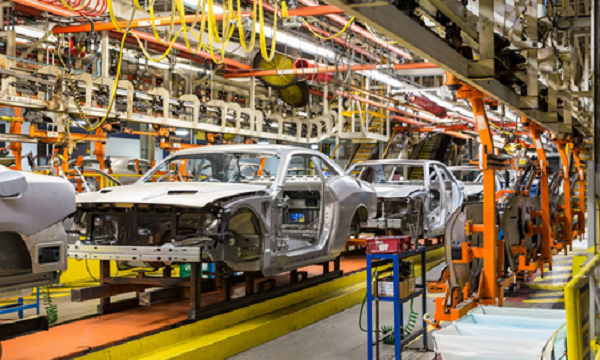
A new report from the Canadian American Business Council concludes that since the U.S. and Canada began integrating their auto industries in 1965, the close connection has helped the North American industry maintain its competitiveness against Asian and European manufacturers.

The report, prepared by Oxford Economics, points out that since single components cross the border as many as eight times before a vehicle is completed, Mr. Trump’s tariffs are damaging the economy in both countries.
Beth Burke, the group’s chief executive officer, said her organization commissioned the report as part of an education campaign to soften the ground in Washington for a renegotiated trade deal. It has also launched games targeted at everyday consumers to raise awareness of how integrated the two countries’ economies are.
“Canada isn’t just a neighbour or a trading partner. For many states, it’s their most important customer,” Ms. Burke said.
This article was first reported by The Globe and Mail