





Reaching a New Floor? Toronto Condominium Prices Fall Below 2017 Benchmarks
One has a concrete pillar in the middle of the living room, another a balcony that faces a wall of other condos in a neighbouring building. A third spent months on the market.
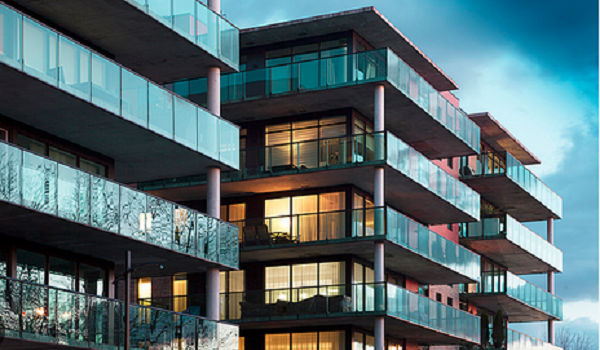
They are all small downtown Toronto condos, at under 700 square feet, that recently sold for tens of thousands of dollars less than what they went for in 2017 and 2018.
While the average condo price is up over the last 10 years, these sales show just how far the market for smaller generic units has tumbled, real estate professionals say, erasing roughly a decade of potential gains.

“Absolutely there’s a lot of condos that are selling for 2018, 2017 levels,” said Andrew Harrild, co-founder and broker at condos.ca and Property.ca.
“We saw incredible growth from 2017 till the spring of 2022 and all of that has pretty much been reversed.”
After years of historically low interest rates, the region is seeing the biggest price correction since the 1990s. Average prices have dropped almost 20 per cent since the peak in February 2022, according to the Toronto Regional Real Estate Board (TRREB).
Tom Storey, a real estate agent at Royal LePage Signature Realty, said most condos he’s selling this year are going at “roughly middle 2019 prices.” But units under 600 square feet without parking are “the most difficult” to sell.
“These condos were always sold from investor to investor, and now the investor is not the buyer,” Storey said.
People who are buying condos want to live in them, so they are more picky and have more options, meaning they can get something bigger for not that much more money, he added.

Harrild said condos are the most “vulnerable” part of the market as typical purchasers, often first-time homebuyers, are more impacted by changes in interest rates than people who already own their homes.
“We are seeing a lot of buyers sitting on the sidelines,” he said, adding they’re “trying to time the market” and figure out where the bottom is.
No one knows the answer to that question and factors like the ongoing war in Iran will impact whether prices plateau or continue to go down, he added.
According to TRREB, in the first quarter of 2017 the average price for a condo in the region was $489,551 compared to $618,484 in the first quarter of this year, an increase of 26 per cent.
In 2017, the Toronto market was booming. Prices had gone up about 24 per cent from the first quarter of 2016.
“Developers were focused on building smaller units in the last 10 years, they were building one-bedroom units, and units that were easier to sell,” Harrild added.
But now the market is “flooded” with smaller units at or around500 to 600 square feet in generic buildings.

Brittany Kostov, industry relations officer at Zoocasa, noted that in most neighbourhoods condo prices have increased since 2017.
Based on a Zoocasa analysis of TRREB numbers from the first quarter of 2026 versus the first quarter of 2017, average condo prices rose by about $186,000 in the Toronto E10 market district (West Hill and Centennial Scarborough) and about $305,000 in C04 (Bedford Park, Nortown, Lawrence Park, and Forest Hill North).
They also went up in the downtown entertainment district of C01 by about $116,000 over the same period.
But they were down in C03 (Forest Hill South and Oakwood Village) by about $31,000, and in C09 (Rosedale Moore Park) by about $118,000.
The market is “hyper local,” said Kostov. “Square footage, specific location, all of that plays a factor.”
Still the losses for individuals are big.
For example, an under 700-square-foot waterfront one-bedroom-plus-den condo went for $582,000 in April of 2026, $26,000 less than the $608,000 it got in June of 2017. Those numbers don’t include realtor fees or legal closing costs.

Grace Chan, a realtor with Forest Hill Real Estate in Yorkville, agrees that larger units are holding value: “If you have a good location and a good layout, that will help.”
So what happens to the unwanted condos?
Some of them will be snapped up by large investment firms, Chan said. Family-owned global real-estate firm Jesta Group announced plans to purchase up to $500 million worth of unsold Toronto condo units, rent them and eventually sell them when the market goes up again, in May
But the fate of many is still up in the air.
“I think the real answer is, nobody really knows,” Chan said.
This article was first reported by The Star