






Regulator Urges Canadian Banks to Leverage Excess Capital for Expanded Small Business Lending
Canada’s banking regulator said banks have the capacity to boost lending to small- and medium-sized businesses and called on the sector to follow the lead of a U.S. bank that committed more than $1-trillion dollars to its country’s economy.
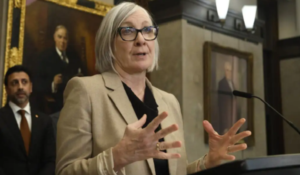
Banks should adjust their business models and risk appetites to “support hardworking entrepreneurs,” Peter Routledge, Canada’s top banking regulator, told a Senate committee. The country’s banking sector has been criticized for failing to provide small- and medium-sized enterprises with access to capital, which has become especially critical as Ottawa seeks to bolster the economy.
Mr. Routledge, who leads the Office of the Superintendent of Financial Institutions, pointed to a U.S. bank that recently committed “up to $1.5-trillion to support the growth of the U.S. economy as it adapted to a world of AI and cyber risk and energy strains.”
In October, JPMorgan Chase & Co., the world’s biggest bank, said it will dole out US$1.5-trillion over the next 10 years to invest in industries that bolster the country’s economic security and resiliency. In April, the lender expanded the initiative to invest in Europe.

“Well, wouldn’t it be great if we had some Canadian banks step up and make the same commitment to Canada?” Mr. Routledge said during a meeting of the Senate committee on banking, commerce and the economy on Thursday.
The committee is conducting a study on access to credit and capital markets for SMEs and the implications for growth and productivity in the Canadian economy. The issue has come under increased scrutiny, with the Competition Bureau launching its own study of the competitive landscape of financing options for SMEs, as well as barriers that discourage banks from lending to the group.
OSFI has been exploring ways to make it easier for banks to lend to SMEs by lowering risk weightings – the different levels of risk assigned to certain types of lending.
Banks must hold more capital against loans that are not backed by significant tangible assets. For example, a bank must allocate less capital for mortgages or loans that are backed by property than those that involve other types of collateral. That can be a disadvantage for SMEs, Mr. Routledge said.
“That’s a fair criticism of our system in that it could unintentionally lead to misallocation of capital,” he said. “It’s something we’ve worried about for the last few years.”
Last year, OSFI lowered risk weightings for loans to SMEs at smaller banks. It is currently considering lowering requirements for Canada’s six largest lenders – Royal Bank of Canada, Toronto-Dominion Bank, Bank of Nova Scotia, Bank of Montreal, Canadian Imperial Bank of Commerce and National Bank of Canada.

But even without those changes, Mr. Routledge said the banks have the capacity to boost lending as they are collectively sitting on $60-billion in excess capital above the minimum amount the regulator requires them to hold.
While OSFI is open to making the necessary changes, the banks bear the burden of the responsibility for increasing lending, he said.
For example, if a farmer needs a loan of up to $1-million for equipment, the process could take weeks, he said.
“That’s a product of choices made by the senior management of banks and how they adjudicate credit. They themselves can do more and do better.”
The banking sector has pointed to high capital requirements as a major hurdle to boosting lending. The Canadian Bankers Association, which represents more than 60 domestic and foreign banks operating in the country, has said that these measures influence the type of lending banks can undertake.
The United States is considering lowering capital requirements levied on banks, and the changes could release billions of dollars for lending, dividends and share buybacks.

In March, National Bank chief executive officer Laurent Ferreira said Canada should move faster in making more targeted reductions to risk weightings for SMEs.
In response to a question in the Senate committee about the pace of change, Mr. Routledge said moving too quickly could inadvertently introduce more risk into the financial system.
“It’s fair to criticize that and say that we could be bolder, but our gut feeling is that if we did too much too soon, we might create the opposite problem, which is a wave of capital that gets misallocated to the small business sector and that would work out unfavourably, and who knows what the consequences would be,” he said.
This article was first reported by The Globe and Mail