




Rethinking Global Aid: Canada Scales Back International Funding
The world’s wealthiest countries, Canada among them, have chopped foreign aid in recent years as they grapple with weaker economies, worsened by protectionist U.S. tariffs.
The Organization for Economic Co-operation and Development said 2025 marked a historic decline in aid flows.
Official development assistance by countries that are part of the OECD’s Development Assistance Committee, as well as associates that are not members, fell more than 23 per cent in 2025. Combined aid now stands at US$174.3-billion. Germany, the United States, Britain, Japan and France accounted for more than 95 per cent of the drop, it said.
“It is the largest annual contraction on record and a second consecutive year of decline,” the OECD said in a statement when the numbers were released in April.
Prime Minister Mark Carney’s government last November announced it was cutting $2.7-billion from Canada’s International Assistance Envelope over four years. Ottawa made these cuts despite Mr. Carney’s pledge during his 2025 election campaign that he would not cut foreign aid.

The government defended its reductions, saying they were part of an expenditure review, and noted that this spring, it has contributed more to help developing countries adapt to the effects of climate change. “We remain firmly committed to supporting those most in need, especially as global challenges intensify,” said Shanti Cosentino, director of communications for Randeep Sarai, Secretary of State for International Development, in a statement.
Stephen Brown, a professor of political science at the University of Ottawa whose expertise includes international assistance, describes 2025 as the year foreign aid “fell off a cliff.” Last year’s cuts include the Trump administration shutting down the U.S. Agency for International Development – which delivered foreign aid to about 130 countries – eliminating most of its programs and folding what little remained into the State Department.
Should Canada be increasing foreign aid? Peter Boehm, a Canadian senator and former diplomat who once served as deputy minister of international development, said spending more on foreign aid is not the solution. He said Ottawa should look carefully at the effectiveness of the funding it disburses.
Mr. Boehm added, however, that Canada could have donated more in the latest replenishment of the Global Fund to Fight AIDs, Tuberculosis and Malaria.
As of the OECD’s 2025 count, Canada ranks ninth in absolute dollar amounts among members of the organization’s Development Assistance Committee, a group of more than 30 major donor countries that have defined and measured what counts as foreign aid.
The amount of assistance Canada gave in 2025 that qualifies as foreign aid under DAC rules was US$7.24-billion, or about $9.9-billion, according to the OECD. (Canada’s total international assistance for the 2024-25 fiscal year was more than $13.3-billion, including items that are not counted in the DAC measurement.)
But in 2025, Canada ranked 16th among the DAC when it came to international assistance as a share of gross national income. That’s the total income earned by a country’s residents and businesses – including income from foreign sources.

Canada’s 2025 aid was 0.32 per cent of its gross national income, according to the OECD. Part of Canada’s aid to Ukraine – which jumped significantly after Russia invaded in 2022 – also qualifies as international assistance under this measure.
Canada has consistently failed to meet the UN’s foreign-aid benchmark of 0.7 per cent of GNI since it was set in 1970, spending less than half that amount almost each year since the mid-1990s.
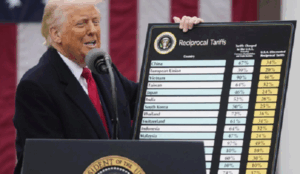
Prof. Brown said the Trump administration’s protectionist tariffs on foreign imports have hit a lot of developing countries very hard. Aid cuts by the U.S. and Britain have compounded the pain. Fuel and fertilizer prices driven up by the Iran war are in turn boosting the cost of food.
“The needs are greater than ever, so this is not the time to be cutting, this is the time to actually be increasing,” Prof. Brown said.
“If Canada wants to be seen as a leader in the world, it shouldn’t be through just speeches – you also have to put your money where your mouth is,” he said.
Mr. Boehm said while some may call for Canada to raise foreign aid to hit the 0.7 per cent target, he predicted “that will not happen.” Canada alone cannot fill the gaps left by USAID, he said.
Don Drummond, a former senior official in the federal Department of Finance who also served as chief economist for TD Bank, said the amount that Canada donates is a “rounding error relative to our national wealth,” so Canadians shouldn’t pretend it’s a generous contribution.

But Mr. Drummond said he doesn’t think Canadians would support increasing overseas aid given the country’s current fiscal challenges.
“We’re just scraping the barrel to fund our health care and our education – and borrowing madly just to do that.”
More foreign aid would require taking on more debt or making even tougher choices, Mr. Drummond said. “You’d have to raise taxes, or you’d have to cut other spending going to Canadians,” he said. “I think I could tell you the results if you asked this on a survey.”
This article was first reported by The Globe and Mail