




Stalled Trade Dialogue Leaves Markets Bracing for Canada’s Impending Countertariffs
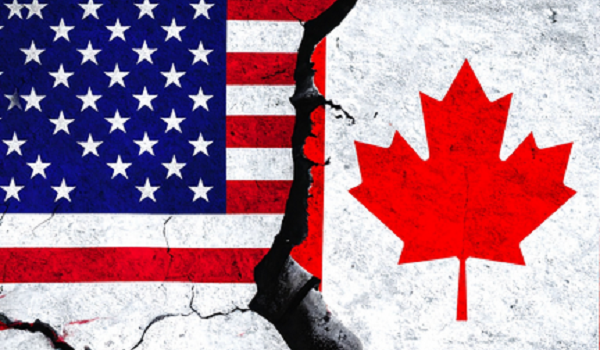
Talks between Canadian and American officials remained at an impasse Sunday, with Ottawa saying that there have been no formal meetings to avert the imposition of fresh retaliatory tariffs.
Prime Minister Mark Carney’s government has pledged to impose levies on $28-billion worth of U.S. imports effective 12:01 a.m. Tuesday. The policy will hit a range of products from steel and aluminum to textiles, stoves and hundreds of other goods.
The planned tariffs are a response to new 50-per-cent levies that President Donald Trump imposed on Canada after Mr. Carney withdrew from trade talks on Aug. 21.

In the lead-up to those U.S. tariffs, Canadian and U.S. officials held near-daily meetings as they tried to strike a deal to avert the levies and reduce others that the White House had previously imposed. This time though, there has been no last-minute rush to avoid additional economic pain from the new Canadian tariffs.
Instead, Canada-U.S. Trade Minister Dominic LeBlanc is spending the Labour Day weekend back in his home province of New Brunswick, a federal official said. Mr. LeBlanc, the official said, has had no formal talks with his U.S. counterparts this weekend and none are scheduled.
The official said that the last time any formal talks took place was Aug. 21 – the day the negotiations in Washington fell apart.
Similarly, Canada’s top trade negotiator, Janice Charette, has had no formal talks with her American counterparts and none are planned, a second official said.
The Globe and Mail is not identifying the officials, who were not authorized to release the information.
Mr. Carney’s office said the Prime Minister has not spoken with the President since the week formal trade talks ended.
Finance Minister François-Philippe Champagne’s office said Canada’s plan for countertariffs remains whole and they will come into effect as planned on Tuesday.
The new tariffs are aimed at shoring up the domestic market for Canadian companies hit by U.S. tariffs while also ramping up political pressure south of the border.
But the tariffs can also hurt Canadian businesses that rely on imported material and products from the U.S.
Canadian Manufacturers and Exporters, an industry group representing manufacturers of all sizes, has repeatedly warned that countertariffs will increase costs for businesses reliant on American inputs, particularly smaller manufacturers with little ability to quickly change their supply chains.
The association has called for the federal government to continue providing tariff remission for companies that cannot competitively source other input alternatives.
“The ultimate objective must remain the removal of U.S. tariffs and a durable agreement that restores certainty for manufacturers and workers on both sides of the border,” said Dennis Darby, president and CEO of CME, last week.

The Trump administration has already pledged to retaliate if Canada goes ahead with its countertariff response.
On Friday, The Globe reported that White House officials are hoping to hit back against Canada’s retaliation no later than Wednesday. The Trump administration is considering banning imports of Canadian alcohol, dairy products, and possibly steel, The Globe reported based on a source.
Debate continues within the Trump administration on how tough the measures should be, with some in the President’s orbit calling for even more punitive actions. What those would consist of remained unclear.
Late last week, Mr. Trump suggested in a social-media post that the trade war between the two countries would lead to Canada’s economic collapse. The ramifications will be “worse than anything that has ever happened to a Canadian Politician. Just watch!” he threatened.
Over the weekend, Mr. Trump and his officials continued to attack and deride Canada. The President’s social-media page again posted about the renaming of Lake Ontario to Lake America and Treasury Secretary Scott Bessent compared Canada to a “yippy dog.”
He argued that Canada’s countertariffs will have a negligible effect on U.S. prices.
“It is not much of a hit to us, if any,” he told Fox News.
In the past few weeks, the Prime Minister has repeatedly said Canada will only return to the negotiating table when the U.S. changes its attitude.
“When the Americans stop doing memes, stop throwing shade, stop trying to be tough and start being serious about having those discussions, we can have those discussions,” Mr. Carney said on Sept. 1.
U.S. House of Representatives Speaker Mike Johnson told reporters last week that he was confident the trade war would ultimately end with a negotiated deal.
“That’s where this is going to wind up – the sooner, the better,” Mr. Johnson said.
Canada’s retaliatory tariffs are increasing political pressure on Republicans by targeting industries in states that are vulnerable in this fall’s midterm elections.
For example, the state likely to suffer the single biggest hit from Canada’s tariffs is Republican-run Ohio, where Democratic candidates are mounting competitive gubernatorial and senate campaigns.

Canadian unions, in particular, have been vocal supporters of Mr. Carney’s tariff countermeasures, saying that Canada should fight back against Mr. Trump’s tariffs, which are designed to target Canada’s industrial base, and force concessions.
“The Canadian countertariffs are a good first response, but we need to take action at home to keep workers on the job by fast-tracking procurement dollars, implementing national industrial strategies, and calling on corporate Canada to step up and Buy Canadian,” said Lana Payne, Unifor’s national president, in a statement on Aug. 25.
With reports from Vanmala Subramaniam, Adrian Morrow and Mark Rendell
This article was first reported by The Globe and Mail