





Summer Travel Outlook Improves as Aviation Sector Plays Down Shortage Fears
Three months after the Iran war first sparked fears of widespread flight disruptions driven by fuel shortages, airlines are now assuring customers that fuel supply is stable.
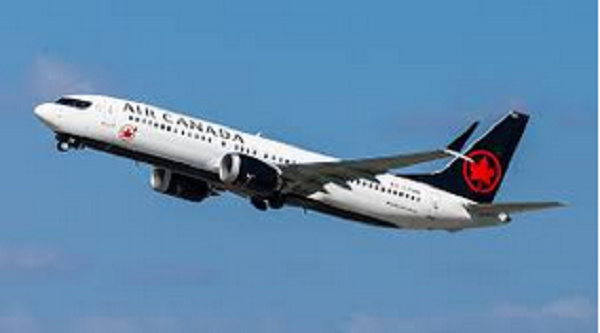
“There is no fuel shortage affecting our operations, including across Europe,” Air Canada said in an e-mail notice to customers on Tuesday. “We do not anticipate any significant impact through the summer.”
The message echoed an online statement made last week by Lufthansa Group’s chief commercial officer, Dieter Vranckx. “Fuel supply is stable so summer’s good to go,” he said. “There are no signs from our suppliers that fuel supply will be at risk this summer.”
Back in April, the International Energy Agency said Europe had about six weeks of jet-fuel supply left. But predictions of mass cancellations and plummeting airline capacity largely haven’t materialized.

According to data from aviation analytics firm Cirium, the supply of seats on summer flights travelling between Canada and major European hot spots (including Britain, France, Germany and Spain), as well as to and from booming Asian tourism hubs such as Japan, remained virtually unchanged in late May when compared with the month preceding the Iran war.
Airline capacity for some destinations, such as Rome and Porto, even saw significant spikes of around 3 and 13 per cent, respectively. In a statement to The Globe and Mail, Air Canada said capacity is up nearly 3 per cent for transoceanic flights, compared with last summer.
“Any reductions in the supply of seats is minimal, even with the increased cost of fuel,” said Mike Arnot, spokesperson for Cirium. Bookings from Europe to Canada and vice versa have held flat compared with last summer, “despite the geopolitical climate, inflation and that the euro has gained marginally on the Canadian dollar,” he said.
This contrasts with bookings from Europe to the U.S., for example, which are down 7 per cent.
Some airlines have cut more transatlantic flights than others, however. WestJet lost about 1.2 per cet of its seats to Europe for summer 2026 since the start of the war, according to Cirium data. Though small, it was the largest change among major Canadian carriers flying to the region.
WestJet did not respond to a request for comment or confirm whether reduced capacity was because of fuel shortages.
Lufthansa’s Mr. Vranckx said in last week’s statement that fuel imports from North America and Africa, along with increased jet-fuel production at European refineries, helped to mitigate some of the strain on fuel supply out of the Middle East.

Such workarounds have helped offset the blows dealt by U.S. and Israel’s war on Iran. The war put a chokehold on a critical passageway for 20 per cent of the world’s oil and natural gas trade and 75 per cent of Europe’s imported jet-fuel supply. But some say these are stopgap solutions to save the crucial summer travel season for airlines, and will come at a steep cost down the line.
“Airlines have learned the fuel is still available from other sources, but expensive and harder to find,” said Mehrdad Pirnia, associate professor in management science and engineering at the University of Waterloo. This has created a “slow-motion supply crunch” rather than an abrupt shortage.
Sourcing jet fuel from other locations demands more complex supply routes and higher transport costs, Mr. Pirnia said, adding that it would ultimately trickle into higher airfare costs. In the months since the start of the war, airfares to travel hot spots such as Lisbon and London have risen year-over-year as much as 16 and 18 per cent, respectively, according to data from Kayak, an airfare comparison tool.
There are also indirect consequences from these workarounds. “Refineries are pushed to max out their jet-fuel output by diverting output from diesel or gasoline, hence the higher gas prices,” Mr. Pirnia said.
In addition, many routes had already been cut before the summer. Lufthansa, for its part, already permanently closed its German regional subsidiary, CityLine, in April, cancelling 20,000 flights as the Iran war doubled jet-fuel prices.
Seat capacity also isn’t always a reliable indicator of whether airlines have cut flights. Some companies may be cutting routes made unprofitable by fuel costs while offering the same number of flights overall, or offering more flights, but with fuller planes.

Still, travellers can find some comfort in the expectation that further summer cancellations related to fuel shortages are unlikely.
“The widespread travel disruption some were concerned about earlier this spring has largely not materialized,” Flight Centre Travel Group Canada spokesperson Amra Durakovic said.
“As for fuel specifically, that conversation has already shifted,” she said. “Earlier this spring, travellers were asking whether fuel issues could ground their trips. Today they’re asking about price, value and flexibility.”
This article was first reported by The Globe and Mail