





Singapore Positions as Neutral Tech Hub Amidst US-China AI Tension
Singapore is transforming from East-West gateway to neutral ground for the AI sector, with Chinese startups hoping to operate beyond government reach while U.S. firms seek foreign talent without the headache of stricter visa regulations.
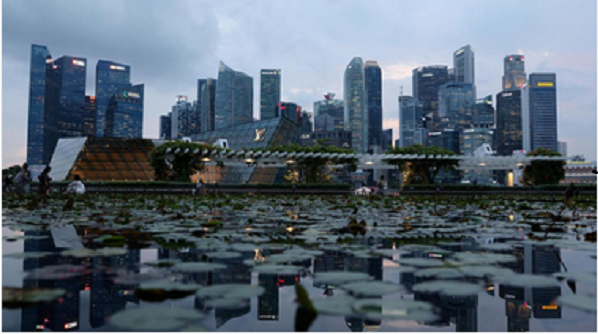
The city-state, a longtime darling for its business-friendly stance and bilingual population, is increasingly being seen as a place to keep both China and the U.S. at bay, rather than acting as a bridge, as the superpowers vie for technological superiority through avenues such as export and talent control.
Setting up in Singapore “gives a lot of comfort” to international clients that a startup’s intellectual property is on the island and therefore not subject to controls from either China or the U.S., said Kerry Goh, CEO of Kamet Capital.
Goh advised two former executives of Chinese tech leader Alibaba (9988.HK), seeking investment to establish AI video business Topview in Singapore in anticipation of international clients’ wariness of Chinese government oversight.
Read More On Our Daily Stock Market Reports – Markets Lower as U.S.–Iran Talks Remain Stalled
“Your clients are not Chinese. This product is not available in China,” therefore setting up shop in Singapore increases the chance of selling to the U.S., Goh said of Topview, which has received over $8 million in Kamet investment since 2024.

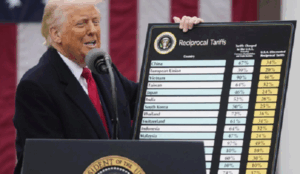
U.S. President Donald Trump brought Sino-U.S. tech rivalry to the forefront during his first term with talk of security risks, leaving tech firms to steer through tit-for-tat measures that intensified in his second term with the spread of AI.
Complicating matters, tech firms have had to contend with Trump’s overhaul of H-1B visas for highly skilled workers, shaking firms that routinely brought or sent workers to the U.S.
Such developments have bolstered Singapore’s ambition to be the most AI-powered economy, with initiatives like a visa for AI talent and tax breaks for registering intellectual property.
Its “ecosystem enablers” have attracted investment from firms of different sizes and geographies, said an Economic Development Board spokesperson.
They have also attracted companies from China hoping to distance themselves from political preconceptions by appearing more Singaporean, and from the U.S. seeking engineers without visa hurdles, industry executives and analysts said.
China imposed a travel ban on founders of AI startup Manus, the Financial Times reported, after Manus shifted to Singapore from China last year and was bought by U.S. tech giant Meta.
It also told MiroMind not to send talent abroad after the startup moved out of China and opened offices in Singapore, Japan and the U.S., the Washington Post reported.
When contacted by Reuters, MiroMind parent Shanda said only that it develops AI projects across countries.
Shanda CEO Chen Tianqiao, on LinkedIn, said going global was challenging for AI firms when “regulation, geopolitics, and public scrutiny are changing faster than most companies can adapt”.
China’s Ministry of Commerce and the U.S. Department of Commerce did not respond to written requests for comment.
“Given increasing demands from the U.S. and Chinese governments to keep their tech stacks separate, there is a risk that Singapore is seen as a grey space for technology transfers – including people moving to new firms – that one or both major governments disallow to take place,” said National University of Singapore political scientist Chong Ja Ian.
“That could result in restrictions being placed on Singapore.”
For a Chinese founder, setting up in Singapore only works if they no longer hold a Chinese passport, do not employ engineers in China, and if their company’s revenue, data and headquarters are not in China, said Tan Yinglan, founding managing partner of Insignia Ventures Partners.
SINGAPORE’S ‘VERY FRIENDLY’ VISA PROCESS
Sino-U.S. challenges facing technology companies are legion. For instance, China’s obligation for companies to surrender data on request sits uneasily with foreigners, while a capricious U.S. government keeps investors on edge.

“The (U.S. visa) process has become more unpredictable with longer processing times, stricter screening, and higher fees, which makes planning harder for startups and mid-sized AI companies that rely heavily on global talent,” said Circular Technology’s Gastwirth.
Entry to Singapore is “very friendly” with employment passes sometimes approved within three days, said Huang Lin, founder of corporate services provider Link-da, which has helped about 50 Chinese AI-related firms set up in Singapore since 2024.
Indonesian AI engineer Vincent Tatan called Singapore “very welcoming” when he moved there from the U.S., where his employer initiated then cancelled an application for permanent residency.
“I can fight for it, but is it worth the fight and the wait?” Tatan said.
Reporting by Claire Fu, Xinghui Kok and Fanny Potkin; Editing by Miyoung Kim and Christopher Cushing
This article was first reported by Reuters