







Dow Jones Hits Record High as Nasdaq Regains Key Technical Levels
The Canadian Vanguard Stock Market Report Monday July 6, 2026 Edition
.
The Toronto Market
Monday’s Toronto Market Index
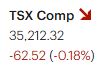
The S&P/TSX Composite Index declined 0.88% on Monday to close at 35,274.84, snapping a three-session winning streak. The benchmark index opened modestly above Friday’s close but encountered steady selling pressure throughout the session, remaining in negative territory for the remainder of the trading day. Although the market weakened consistently, it recovered from its intraday low before the close, with the index holding above the psychologically important 35,000 level throughout the session.
Despite Monday’s pullback, the TSX continues to exhibit a constructive technical profile. The index remains comfortably above its 25-day, 50-day, and 200-day moving averages, indicating that the prevailing intermediate- and long-term uptrend remains intact. As long as these key technical support levels continue to hold, the broader market outlook remains favorable, and investor confidence is likely to remain supported in the near term.
Monday’s decline should also be viewed in the context of the market’s recent strength. The TSX has advanced in four of the past six trading sessions, suggesting that the latest weakness represents a pause within an otherwise positive short-term trend rather than a meaningful deterioration in market momentum. Investors will now be watching to see whether buyers return at current levels and whether the index can resume its advance toward new record highs.
Monday’s TSX Market Statistics
Market breadth on the TSX was modestly negative on Monday, with declining issues narrowly outnumbering advancing issues. A total of 1,162 stocks declined, compared with 1,136 advancing issues, resulting in a decliner-to-advancer ratio of 1.02:1, while 122 securities closed unchanged. Although decliners held a slight edge, the narrow margin suggests that selling pressure was relatively limited across the broader market.
The TSX recorded 184 new 52-week highs and 22 new 52-week lows, compared with 220 new 52-week highs and 17 new 52-week lows in the previous trading session. While the number of stocks reaching new annual highs declined from the previous session, new highs continued to outnumber new lows by a wide margin, indicating that the market’s underlying technical strength remains intact.
Total trading volume reached 440,117,797 shares, representing a 158.4% increase from the 170,343,004 shares traded in the previous session. The sharp increase in trading activity largely reflects a return to normal market participation following the unusually light volume recorded ahead of the U.S. Independence Day holiday. With U.S. markets reopening after the July 4 holiday, cross-border trading activity returned to more typical levels, bringing TSX trading volume back within its normal daily range, although it remained modestly below the 50-day average.
Overall, Monday’s session exhibited a mildly bearish tone compared with the strong performance of the previous trading session. Market breadth weakened slightly, and fewer stocks reached new 52-week highs. Nevertheless, the continued dominance of new highs over new lows, combined with the normalization in trading volume, suggests that the broader market backdrop remains constructive despite the day’s pullback.
.
Monday’s Toronto TSX Market Wrap-Up Report
The Toronto equity market posted a modest pullback on Monday, with the S&P/TSX Composite Index declining 0.88% to close at 35,274.84, ending a three-session winning streak. The index opened slightly above Friday’s close before encountering steady selling pressure throughout the day. Although the market remained in negative territory for the entire session, it recovered from its intraday low and successfully held above the psychologically important 35,000 level.
Despite the day’s weakness, the TSX continues to maintain a constructive technical profile. The benchmark index remains comfortably above its 25-day, 50-day, and 200-day moving averages, suggesting that the broader intermediate- and long-term uptrend remains intact.
Sector Performance
Market weakness was broad-based, with eight of the ten major TSX sectors closing lower. Financials and Industrials were the only sectors to finish the session in positive territory, highlighting continued investor preference for high-quality cyclical and financial names.
- Financials: +0.96%
- Industrials: +0.68%
- Information Technology: -0.69%
- Energy: -0.92%
- Telecommunication Services: -0.96%
- Utilities: -1.03%
- Health Care: -1.32%
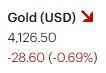
- Materials: -1.98% (session’s weakest sector)
The sharp decline in the Materials sector weighed heavily on the broader market, reflecting weakness across many precious metals and mining stocks.
.
Market Breadth and Trading Activity
Underlying market breadth was modestly negative. Declining issues narrowly outnumbered advancing issues, with 1,162 decliners versus 1,136 advancers, while 122 securities finished unchanged. Although sellers maintained a slight advantage, the narrow decliner-to-advancer ratio of 1.02:1 suggests that the weakness was not widespread across the entire market.
The TSX recorded 184 new 52-week highs compared with just 22 new 52-week lows. Although fewer companies reached new highs than in the previous session, the strong margin between new highs and new lows continues to indicate healthy underlying market leadership.
Trading activity also returned to more normal levels. Total volume reached 440.1 million shares, up 158.4% from the previous trading session, as market participation normalized following the U.S. Independence Day holiday. Volume finished close to its recent 50-day average, suggesting that institutional participation returned after the holiday-shortened trading period.
.
Financials Continue to Provide Leadership
Financial stocks remained the market’s strongest area, with all of Canada’s Big Six banks finishing higher.
Leading the group was Royal Bank of Canada, which gained 1.69%. National Bank of Canada rose 1.49% to a new 52-week high of $226.75, with approximately 1.42 million shares changing hands. Most of the major banks advanced by more than 1%, while Bank of Nova Scotia and Toronto-Dominion Bank posted more modest gains of 0.90% and 0.77%, respectively.
Outside the banking sector, Manulife Financial Corp. was little changed, slipping 0.03%.
The continued strength in financials helped cushion the broader market decline and remains an encouraging sign, given the sector’s significant weighting within the TSX Composite Index.
.
Bombardier Extends Its Rally
Among non-financial stocks, Bombardier Inc. was the standout performer.
Investor sentiment toward the aircraft manufacturer remained positive following last week’s announcement that the company had redeemed all outstanding C$150 million principal amount of its 7.35% Debentures due 2026, further strengthening its balance sheet.
Both Bombardier Class B Subordinate Voting Shares (BBD.B) and Class A Multiple Voting Shares (BBD.A) reached fresh 52-week highs during Monday’s session. The more actively traded BBD.B shares gained 6.07% to close at $344.72, with approximately 395,500 shares traded, making Bombardier one of the strongest-performing large-cap stocks on the TSX.
.
Resource Stocks Weigh on the Market
The resource sector underperformed throughout Monday’s session, contributing significantly to the weakness in the Materials sector.
Among notable decliners:
- Franco-Nevada Corp. (FNV) fell 3.36% to $302.59.
- Wheaton Precious Metals Corp. (WPM) declined 2.57% to $163.94.
- SSR Mining Inc. (SSRM) retreated 2.99% to $43.53, surrendering part of the strong gains recorded in the previous trading session.
The weakness across precious metals and mining stocks offset much of the strength generated by financial and industrial companies.
.
Key Takeaways for Traders and Investors
Monday’s decline appears more consistent with a healthy consolidation following several strong trading sessions than the beginning of a broader market reversal. The TSX remains technically well positioned, trading comfortably above its key moving averages while maintaining a healthy ratio of new 52-week highs relative to new lows.
Financial stocks continue to provide important leadership, supported by renewed buying interest in Canada’s major banks. In contrast, weakness in the Materials sector suggests that investors are selectively reducing exposure to resource stocks after recent gains.
The return of trading volume to near-normal levels following the U.S. holiday is encouraging, as it indicates renewed institutional participation in the market. Going forward, traders should monitor whether the TSX can continue to hold above the 35,000 level while watching for renewed strength in market breadth and leadership from financials and industrials. A sustained recovery in the Materials sector would further strengthen the outlook for the broader Canadian equity market.
.
The US Markets
Monday’s U.S. Market Indexes
U.S. equities posted broad-based gains on Monday, with all four major benchmark indexes closing higher as investors resumed trading following the Independence Day holiday weekend.
The Dow Jones Industrial Average advanced 155.84 points (0.29%) to close at 53,055.91, marking another record close and, for the first time, finishing above the 53,000 milestone. The S&P 500 gained 54.19 points (0.72%) to end the session at 7,537.59, while the Nasdaq Composite led the major indexes with a 288.49-point (1.12%) rally, closing at 26,121.16. The Russell 2000 Index also posted a solid gain, rising 13.43 points (0.45%) to 3,009.54.
The Nasdaq’s strong rebound was particularly noteworthy, reversing the previous session’s weakness and restoring positive short-term technical momentum. The technology-heavy index climbed back above its 25-day moving average while remaining comfortably above both its 50-day and 200-day moving averages, reinforcing the strength of its longer-term uptrend.
The Dow Jones Industrial Average continued to demonstrate relative strength among the major U.S. indexes. In addition to extending its recent advance, the blue-chip benchmark achieved another historic milestone by recording its first-ever close above the 53,000 level. Strong performances from heavyweight constituents, including IBM, provided meaningful support for the index’s latest record close.
The S&P 500 also delivered an encouraging performance, closing decisively above the 7,500 level. Despite Monday’s gain, the benchmark remains approximately 45 points below its record closing high of 7,582.77, set on June 2, indicating that the broader U.S. market remains within striking distance of new all-time highs.
Overall, Monday’s session reflected renewed investor confidence, with strength extending across large-cap, technology, and small-cap stocks. The broad participation in the rally, coupled with the continued resilience of the major indexes above their key long-term moving averages, suggests that the prevailing bullish trend in U.S. equities remains firmly intact. Investors will now be watching to see whether the S&P 500 and Nasdaq can build on Monday’s momentum and challenge their record highs in the sessions ahead.

Monday’s U.S. Market Statistics
New York Stock Exchange (NYSE): Market breadth on the New York Stock Exchange (NYSE) was decisively positive on Monday, with advancing issues comfortably outnumbering declining issues. A total of 2,900 stocks advanced, while 1,636 declined, and 438 issues finished unchanged. This resulted in an advancer-to-decliner ratio of 1.77:1, or nearly two advancing stocks for every declining stock, reflecting broad-based buying interest across the market.
The NYSE recorded 302 new 52-week highs and 76 new 52-week lows, compared with 318 new highs and 111 new lows in the previous trading session. Although the number of new highs eased modestly, they continued to outnumber new lows by nearly 4-to-1, indicating that underlying market leadership remains healthy despite the slight moderation in momentum.
Total NYSE trading volume reached 5.13 billion shares, an 8.0% decline from the 5.57 billion shares traded in the previous session. Despite the lighter volume, Monday’s strong market breadth suggests that investor sentiment remained constructive as buyers continued to dominate trading activity.
NASDAQ: The Nasdaq also experienced a broadly positive session, with advancing stocks outnumbering declining stocks by a comfortable margin. The exchange reported 3,046 advancing issues and 1,902 declining issues, while 357 securities closed unchanged, producing an advancer-to-decliner ratio of 1.60:1.
The Nasdaq recorded 233 new 52-week highs and 115 new 52-week lows, compared with 321 new highs and 106 new lows in the previous trading session. While the number of companies reaching new annual highs declined noticeably, new highs continued to exceed new lows by approximately 2-to-1, indicating that positive market leadership remained intact even as upside momentum moderated.
Trading activity totaled 8.16 billion shares, representing an 17.8% decline from the 9.93 billion shares traded in the previous session. Volume also finished below the Nasdaq’s recent 50-day average, suggesting that the advance occurred without exceptionally strong trading participation.
.
Market Overview: Overall, Monday’s internal market statistics reinforced the positive tone reflected in the major U.S. equity indexes. Both the NYSE and Nasdaq recorded solidly positive market breadth, with advancing stocks significantly outnumbering decliners, indicating that buying interest extended well beyond a handful of large-cap companies.
Although both exchanges reported fewer new 52-week highs than in the previous session and trading volume declined following Thursday’s activity, the continued dominance of new highs over new lows points to a market that remains fundamentally healthy. The combination of positive breadth, strong participation across sectors, and major indexes trading near record highs suggests that the broader bullish trend in U.S. equities remains firmly intact, even as market momentum shows signs of modest consolidation.
.
Monday’s U.S. Market Wrap-Up Report
U.S. equities began the week on a strong footing, with all four major benchmark indexes closing higher as investors returned following the Independence Day holiday weekend. The Dow Jones Industrial Average advanced 0.29% to a record close of 53,055.91, finishing above the 53,000 level for the first time. The S&P 500 gained 0.72% to 7,537.59, while the Nasdaq Composite led the market with a 1.12% advance to 26,121.16. The Russell 2000 also participated in the rally, rising 0.45%.
From a technical perspective, the Nasdaq regained positive short-term momentum by moving back above its 25-day moving average while remaining comfortably above both its 50-day and 200-day moving averages. Meanwhile, the S&P 500 closed decisively above the 7,500 level and remains within approximately 45 points of its record closing high, underscoring the resilience of the current bull market.
Sector Performance
Sector performance reflected renewed investor confidence, with six of the eleven major sectors ending the session in positive territory. Technology and Financials led the advance, while defensive sectors generally lagged.
- Information Technology: +1.62%
- Financials: +1.44%
- Communication Services: +0.40%
- Industrials: +0.28%
- Materials: +0.02%
Among the weaker sectors:
- Consumer Discretionary: -0.93%
- Health Care: -1.04% (session’s weakest sector)
The leadership from Technology and Financials provided the primary engine behind Monday’s advance, while the weakness in Health Care had only a modest impact on the broader market.
.
Market Breadth and Trading Activity
The underlying market internals remained constructive throughout the session.
On the New York Stock Exchange, advancing stocks outnumbered declining stocks by 1.77-to-1, with 2,900 advancers compared with 1,636 decliners. The exchange also recorded 302 new 52-week highs versus only 76 new lows, demonstrating that market leadership remains broad despite a slight decline in the number of new highs from the previous session.
On the Nasdaq, advancing issues exceeded declining issues by 1.60-to-1, with 3,046 advancers and 1,902 decliners. Although the number of new 52-week highs eased to 233 from 321 in the previous session, new highs continued to outnumber new lows by roughly 2-to-1, suggesting that the market’s longer-term upward trend remains intact.
Trading volume declined modestly on both exchanges compared with the previous trading session. NYSE volume fell 8.0%, while Nasdaq volume declined 17.8% and remained below its recent 50-day average. Even so, the positive market breadth indicates that buying interest was broad-based rather than concentrated in only a handful of large-cap stocks.
Technology Stocks Rebound
Technology shares staged a solid recovery after Thursday’s sharp selloff, helping propel the Nasdaq to the strongest gain among the major indexes. Semiconductor stocks recovered early in the session, although some surrendered a portion of their intraday gains before the close as investors locked in profits.
SanDisk (SNDK) rallied strongly in early trading before giving back nearly all of its gains to finish essentially unchanged, slipping 0.03% after reaching an intraday high well above its closing price. Micron Technology (MU) followed a similar pattern, ending the session 0.96% higher after surrendering part of its earlier advance.
The day’s strongest semiconductor performers came from other industry leaders. Advanced Micro Devices (AMD) surged 6.61% on heavy trading volume of approximately 30.7 million shares, extending its recent period of relative strength. Astera Labs (ALAB) also delivered an impressive performance, climbing 6.48% on approximately 4.1 million shares traded.
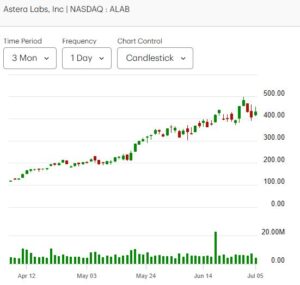
The continued strength in AMD and Astera Labs suggests that investors remain willing to accumulate selected semiconductor names, particularly those demonstrating strong earnings momentum and favorable artificial intelligence-related growth prospects.
Financials Extend Their Leadership
Financial stocks also provided important leadership, with large U.S. banks broadly outperforming the market.
Goldman Sachs Group Inc. (GS) rose 3.32% to close at $1,054.93, making it one of the strongest performers among the major financial institutions.
Other notable gains included:
- Citigroup Inc. (C): +2.79%
- Bank of America Corp. (BAC): +1.98%
- Wells Fargo & Co. (WFC): +2.28%
The strength across the banking sector reflects continued investor confidence in large-cap financial institutions as expectations for corporate earnings and economic growth remain supportive. In addition to their capital appreciation potential, these banks continue to offer attractive dividend income, enhancing their appeal for long-term investors.
Key Takeaways for Traders and Investors
Monday’s trading session reinforced the constructive outlook for U.S. equities. Record highs in the Dow Jones Industrial Average, the Nasdaq’s recovery above its 25-day moving average, and the S&P 500’s continued proximity to its all-time high all point to a market that remains technically strong.
Market breadth on both the NYSE and Nasdaq was decisively positive, indicating that buying interest extended across a broad range of stocks rather than being concentrated in a small group of mega-cap companies. Although trading volume moderated following the holiday period and fewer stocks reached new 52-week highs, new highs continued to significantly outnumber new lows, suggesting that the underlying trend remains healthy.
For traders, continued leadership from Technology and Financials will be an important indicator of whether the current rally can extend to fresh record highs. Investors should also monitor the semiconductor industry closely. While profit-taking remains evident following recent sharp advances, strong relative performance from companies such as AMD and Astera Labs suggests that institutional demand for high-quality AI and semiconductor stocks remains firmly in place.
Overall, Monday’s session reflected a healthy continuation of the prevailing bull market, with broad participation, resilient technical conditions, and renewed leadership from sectors that have driven much of this year’s market advance.
.
NOTICE TO READERS
The Canadian Vanguard Stock Market is about empowering you to build and manage your wealth by yourself. There is certainly no magic in managing finances or wealth but one needs to know what to do and commit to doing what is needed. When you are ready to start the journey to Take Charge and Put Your Destiny In Your Own Hands, start with reading The Canadian Vanguard every market day. If and when you need more related information or to advertise your business products or services in The Canadian Vanguard, Contact Us
Our readers are strongly advised to conduct their own research into individual stocks before making a purchase decision. In addition, investors are advised that past stock performance is no guarantee of future price appreciation. Any recommendation is not a guarantee of any particular stock’s future prices, and The Canadian Vanguard accepts no responsibility or liability for investors’ or readers’ purchases.
Stocks In The News/ Stocks To Watch and Market Strategy will soon be available only to Paying Subscribers. The dollar sign “$” in the Toronto Market section in the articles only stands for Canadian dollar and in the US market section “$” stands for US dollar.
(c) This article is published by The Canadian Vanguard on July 6, 2026