






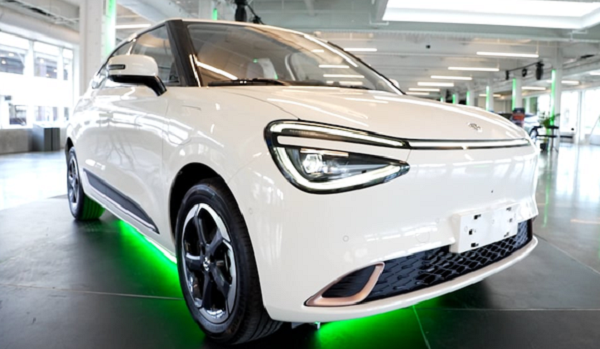
Chinese Automaker Showcases Next-Gen EV Lineup in Montreal Debut
A Chinese auto manufacturer showcased six of its EV models at a splashy VIP cocktail to preview cars it hopes will soon hit Canadian roads. Dongfeng Motor Corp is aiming to make its way into the Canadian market next year, with its Vigo mini-SUV and the Nammi Box 01 subcompact, both expected to have price tags under $35,000.
The event gathered hundreds of people in the Port of Montreal and was designed to boost buzz surrounding a Chinese car brand less familiar to drivers in the country.
“We are working hard to have the models that we think are affordable for the Canadian market,” says Julie Mazorra Fernandez, director of North World Industry which is set to distribute Dongfeng vehicles in Canada. “The idea of bringing the models here is to have comments from Canadians on what they think of the cars which is very important.”

Dongfeng is headquartered in Wuhan and is one of the big five auto companies in China. It started in the EV business 20 years ago and has produced vehicles for more than six decades. The Chinese manufacturer operates in more than 100 countries and sold more than 1.2 million cars and SUV’s last year. Dongfeng is now working to certify its vehicles for sale in Canada, which is becoming a hotspot for Chinese manufacturers.
“The Dongfeng cars are very popular in Europe,” says Fabio Moretti, president of North World Industry. “They are growing in the market very fast because the quality is good, the price is good. When people start to test the vehicle they say, ‘wow this is good.’”
The Chinese automaker has partnered with automakers including Nissan and Stellantis in the past and says it is looking at potentially manufacturing in Canada and building commercial ties, something Ottawa has been pushing. Dongfeng says it could set up shop in Quebec which is home to the largest share of EV drivers in Canada.
“Quebec doesn’t have a car maker,” says Mazorra Fernandez. “And it was the first province open to the idea of EV cars.”
Sales of EVs surge in Canada
New Statistics Canada numbers show sales of zero-emission vehicles rose almost 20 per cent in May as compared to May of 2025, with 18,000 more on Canada’s roads this year. Sales have been spiking since the federal government revived incentives for the purchase of some EV’s in February. The war in the Iran which has pushed up gas prices, has also drawn more customers.
Prime Minister Mark Carney and Chinese President Xi Jinping struck a deal in January to reduce Canada’s 100 per cent levy on EV’s in exchange for China dropping duties on agricultural products. The agreement allows 49,000 Chinese EV’s to enter Canada this year at a 6.1 per cent tariff.
Last week, Lotus – a company owned by the Chinese Geely Group,- announced the shipment of its first Eletre EV’s to Canada under the deal, with more cars expected to hit dealership showrooms and city streets in coming months. This marked the first time Chinese-owned and Chinese-built EV’s were made available for sale in Canada.
More Chinese EVs may be knocking at the door
Chinese companies BYD and Chery are also expected to head to Canada soon, with BYD already securing what is called “Appendix G approval”, a pre-clearance program allowing foreign vehicle manufacturers to import new cars that comply with Canadian Motor Vehicle Safety Standards. BYD has been testing how vehicles perform on Canadian roads in the country’s harsh weather conditions.

Montrealer’s Leif Quraeshi and Gaelle Everard got a sneak peak at BYD ownership. They live part of the year in Mexico and purchased a Shark, a plug-in hybrid in that country where it has been available since May 2024.
“We’re just really impressed with how seamlessly it fits into our lives,” says Quraeshi. “There’s always an excitement about having a new brand, something different from the main auto manufacturers that we have grown up with. So, when all these new models and companies are coming onto the scene, the allure of this is very enticing.”
They have owned the car for a month and a half now and say that when they drive their car with Mexico plates in Canada, it draws a lot of attention.
“It’s definitely an oddity and it feels kind of like we have celebrity status with people stopping us,” says Quraeshi.
Intelligence and cybersecurity experts have warned potential chinese car owners in Canada that the vehicles could pose national security and privacy concerns, likening them to smartphones on wheels, collecting data such as cell phone contacts, driving data and recordings from vehicle cameras.
“For us it has never entered the equation because with all our connected lives as it stands now, I think we have crossed the Rubicon on that point, where I think it is already out there, and I don’t think this poses an additional privacy invasion that we are not under,” says Quraeshi.
Dongfeng is already selling EV’s in markets like Spain, with strict data privacy laws and intends to comply with all Canadian regulations.
Global Affairs numbers show 6,531 China-made EV’s have arrived to Canada since March 1. While details as to the specific models that have arrived in the country are not available, Tesla models built at the American carmaker’s Gigafactory Shanghai, had been entering the county before Canada imposed 100 per cent tariffs in 2024.

Ottawa has said it wants half of the Chinese EV’s imported into Canada to cost less than $35,000 by 2030. But of those imported so far, 2,430 are EV’s selling for under $35,000 dollars, while the rest are cars and SUVs above that price point. That is the price when the vehicle is loaded onto ships in China, not including other costs like freight, insurance and duties. Ottawa has said it wants half of the Chinese EV’s imported into Canada to cost less than $35,000 by 2030.
Dongfeng is using a step-by-step approach to selling its cars to Canadians. The VIP cocktail in Montreal was part of the first phase, which is to build brand awareness and gathering comments from the public.
This artyicle was first reported by CTV News