




LNG Canada Owners Draw Strong Bidding Interest from PE-Backed Insurers
LNG Canada co-owners Shell PLC and Mitsubishi Corp. are poised to take advantage of soaring demand for infrastructure assets from the insurance arms of massive private-equity funds.
In January, Shell and Mitsubishi were reported to each be working on the sale of a portion of their stakes in the $18-billion liquefied natural gas export facility in Kitimat, B.C.
The most aggressive bidders on the asset are a handful of PE funds, with New York-based Apollo Global Management Inc. perceived as the front runner, according to two sources familiar with the sales process. The Globe and Mail is not identifying the sources because they are not permitted to speak publicly about the bidding.

Apollo, Shell, Mitsubishi and LNG Canada declined to comment on the sales process.
Domestic pension-fund managers are also doing due diligence on potential investments in LNG Canada, the sources said.
Apollo and other PE funds are targeting the consistent, long-term returns from infrastructure such as LNG Canada as they invest on behalf of their recently acquired insurance subsidiaries.
Global asset managers such as Apollo are kicking tires at LNG Canada, the most expensive corporate-based infrastructure project in the country’s history, as Prime Minister Mark Carney targets $500-billion of private-sector investment across the country over the next five years and attempts to boost energy exports to Asia.
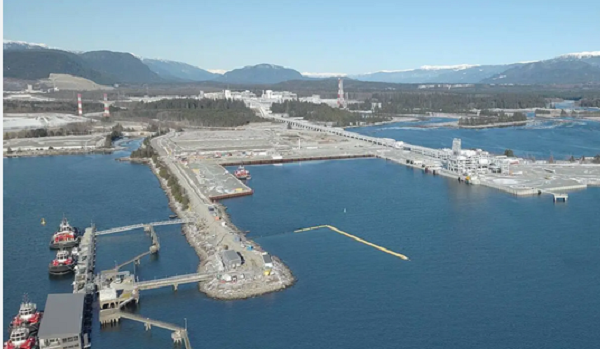
LNG Canada operates the country’s first natural-gas export terminal, opened in June, 2025. Shell is the largest shareholder, with a 40-per-cent stake, while Mitsubishi owns 15 per cent. Shell has hired Rothschild & Co. while Mitsubishi is using RBC Capital Markets as its financial adviser on the potential sale.
Both companies are attempting to raise money from the first phase of the project ahead of committing to a $33-billion expansion of the facility, a decision expected by the end of the year.
In analyst calls, Shell chief financial officer Sinead Gorman has said that the company is open to selling “midstream natural gas” infrastructure as it invests in “upstream” assets such as oil and gas properties.
In April, Shell bid US$16.4-billion for Calgary-based ARC Resources Ltd., a major natural-gas producer. At the time, Shell chief executive officer Wael Sawan said: “This establishes Canada as a heartland for Shell while furthering our strategy to deliver more value with less emissions.”

Since LNG Canada began filling tankers last year, new investors have shown an interest in the project.
On Tuesday, five First Nations announced that they will pay up to $1-billion for a majority stake in a massive storage tank planned for LNG Canada’s second phase. The entire facility is located on the Haisla Nation’s traditional territory.
Shell and Mitsubishi decided to potentially sell down their stakes in LNG Canada, which took four years to obtain permits and seven years to build, after seeing PE funds acquire insurers and look for relatively low-risk places to invest their capital.
Insurance fund managers target high-single-digit returns, which gives them a competitive advantage when bidding for infrastructure against traditional PE funds that target double-digit returns.
In 2021, Apollo acquired life insurance and annuity provider Athene Holding Ltd. for US$11-billion. Since then, the fund manager has made a number of investments in infrastructure controlled by companies, a structure similar to what exists at LNG Canada.
Two years ago, Apollo invested US$11-billion for a 49-per-cent holding in Intel Corp.’s computer chip manufacturing operations. In 2020, the fund manager paid US$3-billion for a 49-per-cent stake in the beer can manufacturing division of Budweiser parent Anheuser-Busch InBev SA/NV. (INBev subsequently bought back the stake from Apollo this year).
The list of other PE fund managers that own insurers includes Toronto-based Brookfield Asset Management Ltd. and U.S. companies Blackstone Inc., KKR & Co. Inc., and Carlyle Group Inc.
In 2024, Blackstone led a consortium of domestic pension funds that paid $7-billion for a minority stake in Rogers Communications Inc.’s wireless infrastructure, topping a rival offer from Apollo.

In private-equity circles, investing money for insurers creates what is known as a flywheel, with premiums from customers going into assets that compound in value over time, which in turn draws more premiums. Insurers can hang on to investments for long periods, while traditional PE funds typically sell their holdings within a decade of their purchase.
Malaysia’s state-owned Petronas owns 25 per cent of LNG Canada. Last September, U.S.-based MidOcean Energy paid an estimated US$3-billion for a 20-per-cent interest in key Petronas assets in Canada, including natural-gas operations in northeast B.C. and its stake in LNG Canada.
This article was first reported by The Globe and Mail