




Rising Bond Yields Threaten U.S. Equities as Earnings Season Closes
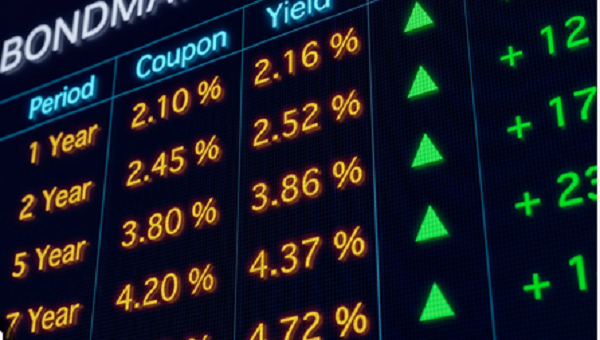
U.S. stock investors are warily watching the rise in Treasury yields as a stumbling block for Wall Street’s record-setting rally, with particular trouble seen if the benchmark 10-year yield jumps abruptly toward 5%.
Higher bond yields pose a number of obstacles for stock performance. These obstacles include stiffer investment competition and pressure on equity valuations, as well as higher borrowing costs, which can eventually stymie economic growth.
So far, rising yields have not inflicted serious damage on stock prices. The 10-year Treasury yield has risen over 80 basis points since the start of March to 4.79% late on Tuesday, yet the S&P 500 (.SPX) is up more than 11% in 2026.

Stocks fell on Tuesday as yields rose anew, but the S&P 500 was only about 2% below its August 13 record high.
Massive profit growth demonstrated by U.S. companies this year has so far overshadowed risks that include rising yields, investors said. With a blowout second-quarter reporting season ending, however, Wall Street’s focus could change.
“I do think the market’s attention now focuses more on these macro factors because you have less of that buffer from the earnings season because it’s in the rear-view mirror,” said Keith Lerner, chief investment officer at Truist Advisory Services. “So I do think this will come more to the forefront.”
WATCHING FOR A 5% 10-YEAR YIELD
The rise in Treasury yields, which move in the opposite direction to prices of bonds, stems from a mix of factors, including worries about inflation and the ballooning fiscal deficit, along with a solid economic backdrop.
The 10-year yield this week hit its highest level since January 2025. A sell-off in global bond markets deepened on Tuesday as oil prices jumped after renewed U.S.-Iran attacks, while markets factored in higher odds of near-term U.S. interest rate hikes following a speech from new Federal Reserve Chair Kevin Warsh.
“Sticky inflation, heavy government borrowing and growing private investment needs give little reason for pressure on yields to fade,” strategists at the BlackRock Investment Institute said in a note on Monday.
The 10-year yield, which guides mortgage rates and other loans, last reached 5% in October 2023, a period that coincided with broad stock weakness. It looms as a “psychological level… that could be a go-to excuse for traders and investors to de-risk a little bit,” said Anthony Saglimbene, chief market strategist at Ameriprise.
A yield above 5% also “has attracted a lot of interest in bonds historically,” said Mitch Schlesinger, chief investment strategist at Evermay Wealth Management. “Companies that are very dependent on financing…will start to feel the pinch at around that level.”

“We’re probably getting close to where the stock market does start to get worried,” Schlesinger said.
HIGHER RATES RAISE STOCKS’ ‘BURDEN OF PROOF’
Higher yields reduce the current allure of future profits in many standard equity valuation models. Stock prices can be vulnerable to quick rises in yields. The 10-year yield rose sharply from low levels in 2022, as the Fed hiked rates to fight inflation, a year that also saw stocks tumble.
“It’s essentially an environment where higher rates generally means the discount rate for stocks goes up,” said Kevin Shea, senior equity analyst at BNY Wealth. “Those that generate cash flow in the future have a greater burden of proof to show that they can sustain that growth.”
The current market could be more sensitive to such valuation risk, given the extent of equity performance tied to optimism about future profits stemming from massive investments in AI, said Noah Weisberger, head of equities at BCA Research.
“There’s a lot of duration risk embedded in the parts of the equity market that have been doing well,” Weisberger said. “Any perturbation from the bond market can really hit valuations.”
VALUATIONS COULD SEE PRESSURE FROM HIGHER YIELDS
The forward price-to-earnings ratio for the S&P 500 was at 19.7 on Monday, according to LSEG Datastream, making the index appear less expensive than at the start of 2026, when it traded at 22.2.
The lower valuation may somewhat reflect rising yields, investors said, along with concerns such as doubts about the sustainability of AI spending. Strong corporate earnings have tempered valuations and made stocks look more reasonably priced.
But the S&P 500’s valuation remains above its long-term average of 16, and investors said further increases in bond yields could increase pressure or at least stop valuations from expanding.

“Higher yields can put a cap on P/E expansion,” said Angelo Kourkafas, senior global investment strategist at Edward Jones.
So far, investors said, the increase in yields has been orderly, allowing companies and investors to adjust.
But if “you start to see a pretty sharp backup in rates, that can really severely punish the forward multiple in the market,” said Matt Stucky, chief portfolio manager, equities, at Northwestern Mutual Wealth Management. “People start to question the sustainability of earnings growth in a tighter monetary environment.”
Reporting by Lewis Krauskopf; additional reporting by Laura Matthews; editing by Megan Davies and David Gregorio
This article was first reported by Reuters