






The Cost of Strained Diplomatic Ties on U.S.-Canada Trade
Another week, another attempt by U.S. President Donald Trump to manufacture a shock to the Canadian economy. Another swing and a miss.
This time, the President’s sights were set on Canadian potash, which has long sustained U.S. agriculture. He flaunted a “massive deal” in the works to import the fertilizer from Belarus, which could wipe out billions of dollars in Canadian export revenue.
It made no sense, Belarus being a sanctioned, landlocked country 6,000 kilometres away, run by an authoritarian dictatorship with no spare supply of potash and few options to ship it, even if it existed.

Within two days, the plan flamed out.
Mr. Trump returned to power nearly two years ago with a clear desire to bend Canada to his will. But every attempt to apply economic force seems to collide with America’s own interests. Once you see it, the pattern is clear.
It has played out in a similar way on a number of fronts: the Venezuelan oil grab putting the Canadian energy sector “on notice,” the Belarusian potash deal doing the same, the threats of crippling blanket tariffs on Canadian goods flowing across the border, and the campaign to kill Canada’s auto sector.
It’s almost as though the two economies have become so intertwined through decades of co-operation that severing perfectly functional trade relationships would be reckless and prohibitively expensive. Who could have known?
There is much Mr. Trump could hypothetically do to imperil the Canadian economy. Broad import bans. Forcing a breakdown of the United States-Mexico-Canada Agreement. Restricting Canadian banks operating in the U.S. But the closer the President gets to causing Canada serious harm, the more he strikes at the connective infrastructure between the two economies.
A closer look at the evidence shows how Mr. Trump keeps testing Canada’s limits only to find his own.
The attempt to sideline the Canadian potash industry ran into a quick reality check
Canada is the world’s biggest potash producer by far, the vast majority of it flowing from Saskatchewan to the United States. Without it, U.S. agriculture could not function effectively.
American farmers are facing sharply higher costs for some types of fertilizers, largely because the war in Iran has disrupted supplies. But not potash. The Canadian supply is reliable, consistent and is shipped on a cross-border rail network to the U.S. Midwest.
Belarus, which is under sanctions for helping the Russian invasion of Ukraine, would likely have to ship its potash through Russia before crossing the Atlantic, en route to the eastern seaboard. Some industry estimates floating around suggest the shipping costs alone would exceed the price of Canadian potash. That’s if Belarus had the supplies, which it does not.
Trump wants more Venezuelan oil, but replacing Canadian supplies is another matter
The scheme to take control of 65 billion barrels of Venezuelan oil reserves officially put “Canada on notice,” Mr. Trump said in August.
Again, we have the President attempting to replace a long-standing, proven, cost-effective relationship with one that is riskier, unproven and more expensive. Canada supplies nearly four million barrels of oil per day to the U.S., at discounted prices. It travels by pipeline to the Midwest and Gulf Coast, where refineries are specifically tooled to handle it.
The Venezuelan oil sector is a mess. Getting back to the country’s peak production of three million barrels per day would require at least US$150-billion in new investment over the next 10 to 15 years, according to a Rystad report.
Effective tariffs levied on Canadian goods never come close to what’s threatened
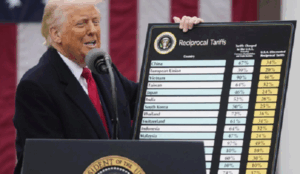
Mr. Trump vowed a blanket 25-per-cent tariff on Canada within days of being re-elected in 2024, later raising the threat to as high as 100 per cent. The actual tariff rate never came close to that. Even after his latest salvo, Canadian goods are being hit with an average effective tariff rate of only 5 to 6 per cent, according to a recent RBC estimate.
Clearly, he is not punishing Canada as much as he would like to. It might have something to do with the fact that regional U.S. economies, particularly border states, are being harmed in the process. Big surprise, you raise import prices and inflation goes up.

Earlier this month, Maine Senator Susan Collins, who is a Republican, said she made the case that tariffs on Canadian cement and road salt were costing businesses and communities in her state. Both products were then exempted from tariffs.
The costs of disentangling the continental auto supply chain are becoming clear
For the past 60 years, the auto sector expanded around the idea that the border was non-existent, and the free flow of parts could allow an ecosystem of specialists to enhance the industry’s competitiveness. It worked, American economist Justin Wolfers wrote in a recent blog.
“Now run a tariff wall through the middle of it. American factories can’t get the parts they need at the price they need, so they use costlier parts, or worse ones. Canadian factories lose their American customers. Both sides get weaker,” he wrote.
In a little over a year, starting with Mr. Trump’s second inauguration, tariffs have cost the big automakers at least US$35.4-billion, according to an Automotive News report from March.
What do these examples tell us? How senseless this trade war is, for starters. But also, the reason Mr. Trump can’t seem to break Canada is because the costs of doing so cut both ways.
This article was first reported by The Globe and Mail