






Yukon Requests Federal Aid to Modernize Aging Power Infrastructure
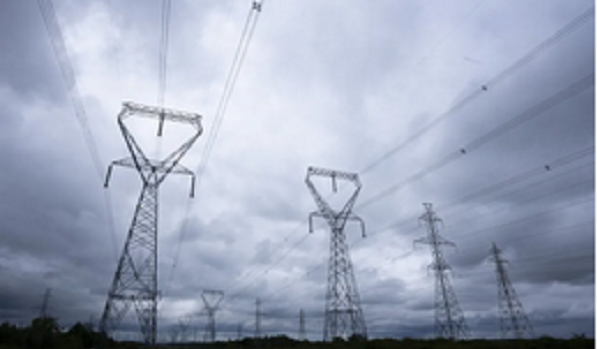
Yukon’s government is urging Ottawa to help pay for urgent upgrades to the territory’s aging power grid, warning that residents face massive rate hikes absent federal intervention.
Ted Laking, the territory’s Minister of Energy, Mines and Resources, has asked the federal government to pay three-quarters of the cost of upgrading Yukon’s grid, a scheme dubbed the Arctic Sovereignty Grid Plan; his government would cover the rest.
“We cannot afford to make these investments on our own, and neither can our ratepayers,” Mr. Laking testified before the House of Commons Standing Committee on Indigenous and Northern Affairs last week.

“It would be unreasonable to expect a small northern population that’s half the size of Sault Ste. Marie to shoulder those full costs on their own.”
Earlier this year, the Yukon Energy Board approved rate increases of 34 per cent over a three-year period. Mr. Laking estimates rates must rise an additional 53 per cent to pay for urgent repairs and upgrades.
Mr. Laking told The Globe and Mail he submitted a collection of energy projects dubbed the Arctic Sovereignty Grid Plan to the federal government for consideration as a project of national interest. But whereas other project proponents hope the Major Projects Office can speed up regulatory approvals, he’s more interested in accessing funding across disparate federal sources.
“We’ve received, I would say, encouraging feedback.”
But it’s just one of a deluge of power projects vying for federal support, from nuclear power plants in Saskatchewan and offshore wind farms around Nova Scotia.
The list of needed repairs and upgrades for Yukon’s power grid is lengthy and growing. Mr. Laking noted that the territory bears responsibility for not intervening sooner, and vowed to change how the government plans work on existing and future assets.
“If you know something was built in the 1950s, you shouldn’t be surprised that in 2026 it’s getting to the end of its life,” he said.
“If these costs had been addressed a decade ago, or planned more appropriately, we wouldn’t be dealing with as urgent a situation.”
Yukon’s generation capacity is only about 160 megawatts, smaller than single power plants found in many provinces. Three hydroelectric dams account for most of it: Whitehorse, Aishihik and Mayo. Yukon Energy also has 65 megawatts of diesel generators in Whitehorse, Faro, Mayo and Dawson, some of them rented.
All this faces rising stress. The territory’s population grew by more than one-quarter between 2014 and 2024. Demand is rising further as electricity replaces fossil fuels for heating and transportation, a trend Yukon Energy, the Crown generation and transmission utility, expects will continue. Its grid is isolated from the rest of the continent, meaning it cannot import electricity during shortfalls.
Yukon’s power demand is nearly three times higher in winter than summer. It reached a record high during a December, 2025, cold snap, rising above 90 per cent of generating capacity. Rolling blackouts were averted after standby diesel generators kicked in, and residents and mining operations shifted power consumption to off-peak periods.
The Mayo hydro facility, commissioned in 1952, is in dire condition. According to filings from Yukon Energy, its spillway has deteriorated beyond repair; engineering studies have found that it’s at risk of imminent failure, which could cause serious, potentially life-threatening flooding in nearby Mayo, a village of about 200 residents. Mr. Laking estimates the total repair bill at $400-million.
Yukon Energy planned to connect a $35-million Whitehorse battery-storage system to the grid this year, describing it as “crucial” for improving grid stability. But the batteries froze during last December’s cold snap after generators that had been keeping them warm failed. In early October, Yukon Energy reported that the manufacturer, LG Energy Solution, was testing the batteries to assess the damage.
“We believe that there is something that’s salvageable there, but of course this is not ideal,” Mr. Laking said.
It’s a reminder that technologies designed for lower latitudes can struggle in extreme northern environments.
Energy think tanks, such as the Pembina Institute, promote adoption of renewable generation throughout the North to replace diesel generators. But the Yukon government says it has already reached the limits of its ability to incorporate renewables.
Mr. Laking said the territory’s solar facilities actually drew more power than they generated during the cold snap, owing to the energy used to heat them. Wind generation “works fine in the cold,” he added, but Yukon can’t rely on it because it’s not necessarily generating power when power is most needed.

Yukon’s immediate plans include building more diesel generators in Whitehorse, with the first expected to enter service in 2028. All told, its plan would add 150 megawatts of fossil fuel capacity, at an estimated cost of $560-million.
Yukon also wants to hook up to the North American grid. The government’s preferred solution: a high-voltage transmission line running roughly 800 kilometers from Bob Quinn Lake, B.C., north into the Yukon. The government estimates the cost of the Yukon-B.C. Grid Connect at $4-billion.
Earlier this year, Ottawa unveiled a national electricity strategy that emphasized connecting provinces and territories through new and expanded transmission lines. In June, the government identified the Yukon-B.C. Grid Connect among five prioritized intertie projects.
But Mr. Laking said the intertie would likely take at least a decade to construct, in part because Yukon’s antiquated grid does not meet continental standards.
“It doesn’t get us out of these short- and medium-term challenges that we have right now,” he said.
This article was first reported by The Globe and Mail