






Business-Friendly Policy: Carney’s Approach Sparks Debate Over Who Benefits
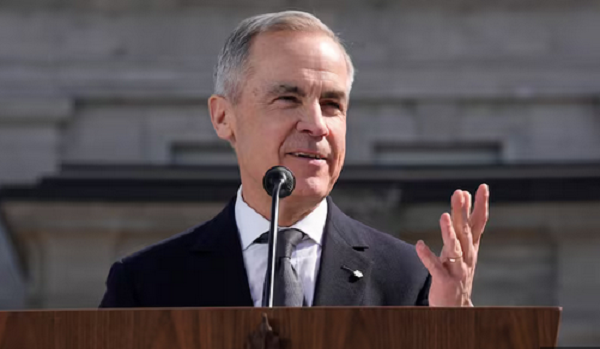
Ensconced in the exclusive company of corporate investors and big money bankers, Prime Minister Mark Carney was in a safe place. And he had an announcement to make.
Canada, his Canada, wants to haul in capital from leading institutions of finance, both public and private, domestic and far-flung. The cash should flow to oil and gas infrastructure, ports, mining projects, new homes, airports run by pension funds — all to “build Canada strong” as it faces a trade crisis, a capricious United States, and a warping world order.
So, at September’s global investment summit, Carney unveiled his government’s “mega deduction.” At an anticipated cost of $36 billion over five years, the newly generous tax break is the most expensive policy Ottawa has proposed since last spring, according to Parliament’s budget watchdog. It is designed to spur businesses, from fossil fuel companies to heavy manufacturers, to put money into expanding their operations now, thereby juicing economic activity and the almighty GDP.

After Carney spoke, the VIP-only room at a downtown Toronto hotel broke into applause.
A short time later, Goldy Hyder’s inbox pinged with a new message. The head of the Business Council of Canada, a lobby group made up of executives from more than 170 major corporations, checked to see what it said.
It was from his counterpart at Australia’s business council.
“It said, ‘Do you even need to work anymore?’” Hyder recalled this week with a laugh.
It’s funny because, with Carney in the Prime Minister’s Office, that’s basically how it feels.
Days ahead of the second federal budget since Carney took office, his ambition for Canada’s economy is clear.
Through a series of reforms, his government has tilted Canadian policy in favour of business. Oil and gas companies have welcomed the rollback of climate policies imposed when Justin Trudeau was in power. Billions of dollars in tax deductions are on the table to make private investment more profitable. New authorities are written into federal law and legislation to shepherd development projects to completion faster, and the proposed Pacific Link oil pipeline from Alberta to the British Columbia coast is the first to get the special treatment.
It doesn’t stop there. A rolling review of “red tape” inside the federal government is lifting hundreds of millions of dollars in expected compliance costs for businesses, according to federal officials. Regulatory “sandboxes” have been created and proposed, so companies can be exempt from government rules to test new products. And taxes Ottawa planned or implemented under the Trudeau administration, from the consumer carbon price to a levy on the revenues of online giants, now lie in the policy scrap heap.
Much of this has been met with approbation, especially from those who saw in the previous Liberal government muted enthusiasm — or even antipathy — to the interests and desires of business. Yet it is also proving controversial, with environmentalists, Indigenous nations and union leaders decrying how they believe the government is trampling their priorities in the name of speed and economic growth.
But those are undoubtedly the priorities of this Carney government, and by all accounts the Nov. 5 budget will press on in that direction. The question, both for Canadians and the staying power of the prime minister’s popularity, is whether this agenda is truly — or sufficiently — to the benefit of the broad public.
“We have got the perfect business playbook, written to the letter just the way it was in the 1980s,” said Armine Yalnizyan, an economist and fellow at the Atkinson Foundation, referring to the prominence of a “more market, less government” philosophy during the heyday of Margaret Thatcher and Ronald Reagan.
“When you want more money, this is what you have to do,” she said.
For Hyder, the changes are like a cool and refreshing breeze from Parliament Hill — especially after the “challenging” decade of the Trudeau government.
“You have at the top someone who understands how investment works,” Hyder said. “He’s sort of become Canada’s best salesman to bring capital into our country, to build the infrastructure and create the jobs that are necessary.
“This is a win-win situation,” he added. “It’s not happening at the expense of anybody. It’s happening because we should have been doing this a long time ago.”
Yet to economists like Katherine Scott, a senior researcher with the Canadian Centre for Policy Alternatives, Carney appears to be marching in lockstep with a way of thinking she argues is discredited: that gearing public policy to the benefit of big business will also benefit everyone else.
What’s more, the focus on economic growth appears to put social policies lower down the ladder of federal priorities, Scott said. She pointed to lingering questions about the future of federal pharmacare coverage that the Carney government has not yet expanded, and a recent stopgap decision to extend money for mental health and long-term care for one year while provinces raise concerns about a coming “fiscal cliff” in health care funding.
“I think the central banker has really turned up to govern,” Scott said, referring to Carney’s past as the head of the Bank of Canada and the Bank of England.
That economy-first outlook isn’t just decipherable in the big announcements. Quiet changes, published online without fanfare, have also been made in favour of businesses.
One example is a proposal to ditch federal requirements on cannabis retailers to track and report shifts in their inventories, which the government says could save the sector more than $110 million in compliance costs over 10 years. A bill tabled Oct. 7 could save businesses another roughly $250 million over that time span through a range of proposed “red tape” changes, like making it easier for railroads to renew existing exemptions to federal regulations, and recognizing foreign assessments for seeds and animal health products.
Dan Kelly, head of the Canadian Federation of Independent Business, said the push to remove red tape is helpful, and that, taken together, can be a big lift for small- and medium-sized firms.
But Kelly said there is still a sense that Ottawa is preoccupied mostly with bigger businesses, with policies like the mega deduction and the fast-tracking of major projects. Data from his own agency has found several quarters running now where more businesses are closing than new ones are opening, he said, suggesting an “entrepreneurial drought” that is still dragging the economy.
“The Carney government has certainly been focused more on the economy and more on business than the Trudeau government was on its best day. But that has been, to this point, focused on the large, corporate side,” Kelly said.
The overall economy also has challenges. Citing inflation driven largely by the spike in energy prices with war in the Middle East, the Bank of Canada raised interest rates this week, and expects prices to keep rising at an annual rate of 3 per cent for much of the next year. The ongoing trade war with the U.S., with Trump threatening to double tariffs on Canadian autos on Jan. 1, is also a source of uncertainty that the Bank of Canada says could “weigh on growth” if businesses decide to delay expansion plans or hiring decisions.
On Friday, Statistics Canada reported economic growth flatlined in August, the second straight month when GDP was “essentially unchanged.”
For David Pierce, vice president of government relations with the Canadian Chamber of Commerce, it is clear that Canada must make changes so that it can beat out other countries in the competition for investment in which Carney is playing.
He sees hope in Carney’s major project push, as well as legislation like Bill C-39, which seeks to create new powers to more rapidly approve other development projects while creating rules for the use of a controversial legal provision that allows Ottawa to force striking workers back to talks with employers.
“The paradigm has shifted,” Pierce said, describing the global contest for investment as trade flows are roiled by Trump’s tariffs and jurisdictions jockeying to be the most attractive to private money.
“If we’re not competitive, we aren’t even in the conversation,” he said.
A recent survey of 346 businesses by KPMG found almost half of businesses will make capital investments larger or sooner because of the government’s mega deduction, but there are still questions about whether Ottawa must go further, possibly with corporate income tax cuts, said Brian Ernewein, a senior adviser and tax expert with KPMG Canada.
“Under the previous government … taxation was a stick,” Ernewein said, pointing to policies like the carbon tax designed to drive down emissions that cause climate change.
“It did not seem very pro-business. And then I think the current government is really attempting to signal a change in that direction.”
For Bea Bruske, head of the Canadian Labour Congress, that change risks overlooking needs she sees as urgent in a stuttering economy — like increasing jobless benefits and making them more widely available to people without work.

But she also believes that decisions of recent months reveal the character of the current administration. Bill C-39, which is meant to transform federal project assessments to make them faster, also reduces the “leverage” of workers in seeking better wages and job conditions by enshrining Section 107 of the labour code with new rules around its use, Bruske said.
The provision — which the Conservatives, NDP and Bloc Québécois recently voted to remove — allows the federal government to intervene to stop labour disputes.
“They don’t want any speed bumps to getting their agenda through,” Bruske said. “And workers are seen to be speed bumps in exercising their right to strike.”
Scott, from the CCPA, said the public mood now may favour Carney’s direction. But significant changes are afoot, she said, and the outlook could easily change if concerns like the cost of living, health funding and the climate crisis sharpen before the government takes them more seriously.
That’s especially the case if policies to boost business, like the $36-billion mega deduction, mean other federal programs will take a back seat.
“Do Canadians know what’s coming?” Scott asked. “I don’t think the enormity of what that means has come into focus yet.”
This article was first reported by The Star