




Chief negotiator signals no immediate return to U.S. trade talks
Canada’s chief trade negotiator with the United States said she’s still communicating with her U.S. counterparts, but there’s no timeline for returning to formal trade talks.
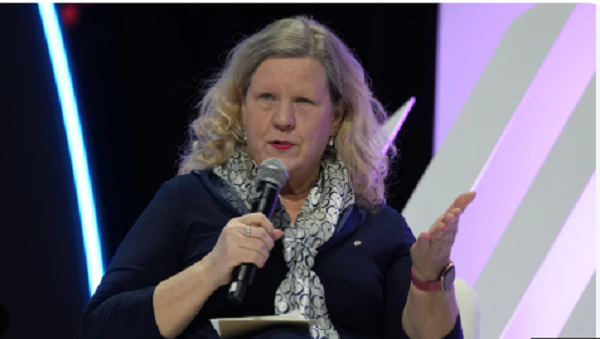
Speaking to a Toronto audience on Thursday, Janice Charette said the lines of communication between Ottawa and Washington have remained open since trade talks collapsed in August. However, there’s no clear path back to the negotiating table, she said.
“We’re having conversations to see whether or not we can come back to the table for a set of detailed negotiations. We don’t know exactly when that’s going to happen,” Ms. Charette said at the Toronto Global Forum conference.

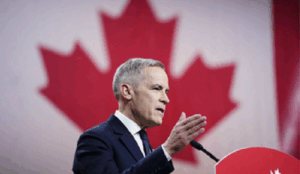
She pointed to a call that Prime Minister Mark Carney had with U.S. President Donald Trump this week, and said that Canada-U.S. Trade Minister Dominic LeBlanc “has regular and frequent conversations with some of his counterparts in the United States.”
“We’re trying to stabilize the relationship because we are not in a position where it is stable right now. It’s certainly not predictable,” she said.
Ms. Charette had been in intense negotiations with the Trump administration over the summer in a bid to reach a deal that would have lowered U.S. tariffs on some Canadian goods and prevented new levies from coming into force, in return for Ottawa removing some of its trade countermeasures.
These talks broke down in late August when Mr. Carney walked away from the negotiating table minutes before the deadline. Washington then imposed new tariffs on around $28-billion worth of Canadian goods, and Ottawa responded with countertariffs on a similar value of U.S. products.
Mr. Carney has cited several reasons for ending the talks, including Washington’s refusal to grant tariff relief to Canadian medium- and heavy-duty trucks, and what the Prime Minister has said were U.S. demands around the discoverability of French-language content online and measures to limit Canada’s ability to make trade deals with other countries.
U.S. officials have disputed Ottawa’s characterization of the latter two issues. Ms. Charette offered no additional details on Thursday about why the talks broke down.
“I have said publicly that pens are down and the doors are open,” she said. “Canada stands ready to continue discussions towards actually trying to achieve our objectives around stabilizing the relationship.”
Last month, U.S. Trade Representative Jamieson Greer said that the Trump administration is in no hurry to restart talks with Ottawa.
“We’re still getting what we need from them in terms of oil, gas, potash, all of these things,” Mr. Greer said in an interview with CNBC. He added that agricultural products are also being shipped “back and forth across the border, so there’s still a lot of strong trade between the two countries.”

The U.S. is currently focusing on trade negotiations with other countries, including Mexico. Earlier this week, Mexican President Claudia Sheinbaum said she was “very close” to a deal with Washington that would lower tariffs on Mexican steel, aluminum and automobiles, although she said that some issues remain unresolved.
Over the past year, both Ottawa and Mexico City have negotiated with Washington along two lines. They’ve been aiming for interim deals that would lower sectoral tariffs, while preparing to renegotiate aspects of the United States-Mexico-Canada Agreement, which governs continental trade.
Ms. Charette said on Thursday that the path to stabilizing the Canada-U.S. trade relationship will likely involve more than one step. “We’re going to enter into the formal USMCA review and renewal process. We haven’t done that officially yet, so there’s at least two steps, and there could be more along the way.”
At the same time, she warned that it’s unlikely Canada and the U.S. are ever going back to the kind of free trade that existed before the second Trump administration.
“We’re not going back to the world, as much as we would like to, of that kind of tariff-free existence – if for no other reason than you look at the amount of revenues associated with tariffs going into the United States Treasury. That’s a very significant form of how the government is financing programs and services right now in the United States,” she said.
This article was first reported by The Globe and Mail