





Surging Sales Mark EV Comeback: Why Pre-Owned Electric Cars Are the Best Deal in Canadian Autos
After more than a year of depressed sales, the EV market in Canada has bounced back — especially for used electric vehicles.
Jolted by new government subsidies that have reduced purchase costs and high gasoline prices that have prompted people to think twice about buying a gas guzzler, new electric vehicle sales have surged almost 150 per cent this spring.
This “looks like a major comeback year for EVs in Canada,” said Joanna Kyriazis, director of Policy & Strategy at Clean Energy Canada.
Read More On Our Daily Stock Market Reports – Wall Street Rises on Technology Strength as TSX Slips
EV sales more than doubled from just over 8,600 vehicles in January to more than 21,500 in March, the latest month for which Statistics Canada data is available, as new policies and economic factors have helped to boost sales.
What’s behind the EV sales rebound?
Sales of EVs collapsed in January 2025 after the federal government abruptly ended its electric vehicle rebate program, and they stayed low throughout the year, even as EV sales skyrocketed worldwide, setting a record of more than 20 million vehicles sold globally.

“Last year, Canada was one of the only major markets in the world that saw EV sales decline, and we knew that Canadians weren’t uniquely disinterested in EVs. There were just a lot of factors that were getting in the way of sales,” Kyriazis said.
While the U.S. trade war with Canada sent jitters throughout the entire economy, it particularly undermined the auto industry’s EV plans, she said, prompting a series of setbacks in the race to build North American EVs. Kyriazis says uncertainty around the rebate exacerbated reluctance to buy an EV even more.
“I think there were just a lot of buyers that were sitting on the sidelines waiting to hear if the rebate was going to come back or not,” she said.
But when Prime Minister Mark Carney reintroduced an EV subsidy this February, sales turned around quickly, rising more than 70 per cent in a month.
And it’s not just new EVs. Used EV sales have also reached an all-time high, according to AutoTrader.
Used EV sales on autotrader.ca surged more than 16 per cent in March, after the U.S. started bombing Iran and international oil prices surged.
“There’s a direct correlation between gas prices and EV interest,” said Baris Akyurek, vice-president of Insights & Intelligence at AutoTrader. “If you look at the market as a whole, we see an uptick in EV sales both for new and used vehicles.”
What have gas prices done to the EV market?
Despite having a large domestic oil industry, Canadian gasoline prices surged following the blockade of the Strait of Hormuz, rising 22 per cent in March and another 10 per cent in April, more than any other G7 country except the U.S, according to the Financial Times.

The last time gas prices were this high, in the spring of 2022 after Russia invaded Ukraine, AutoTrader recorded its highest ever consumer interest for EVs in its annual survey of the auto market. Back then, 68 per cent of non-EV owners said they would consider buying an EV, a proportion that dropped to 56 per cent in 2023, then 46 per cent and 42 per cent in the following years.
With gas prices spiking again this year, interest in buying an EV interest has bounced back to 49 per cent.
Normally, surging demand would drive up prices, Akyurek said, but listing prices for both new and used EVs have come down over the last year thanks to healthy supply. AutoTrader had more than 50,000 EVs on sale in mid-May — a record high — 19,000 of which were used.
Some EV manufacturers have reduced prices below $50,000 so they would qualify for the federal rebate, Clean Energy Canada’s Kyriazis said, while others may be anticipating competition from Chinese EVs, which are set to come to Canada soon.
Finding the ‘best deal in the Canadian car market’
The used market has been flooded by the big wave of EVs first sold in 2021-22, which are now coming off their leases and being traded-in to dealers.
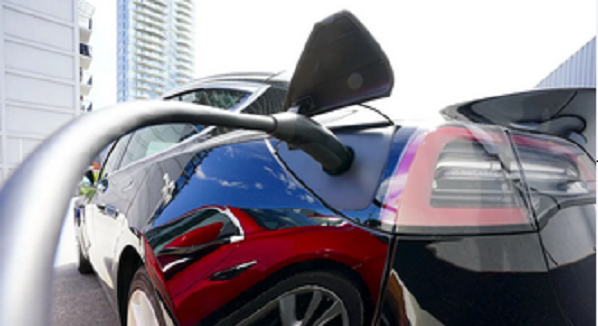
Used EVs are particularly attractive because they don’t have the price premium of new EVs, while still retaining the low maintenance and fuelling costs when compared to gas-powered cars.
“This is really the used EV moment,” Kyriazis said. “A used EV is the best deal in the Canadian car market.”
“If you go online now, there is a wealth of EV options priced between $10,000 and $20,000,” she said. “You’ve got a low upfront price and then you’re also saving thousands of dollars per year on fuel because you can fill up that battery at home.”
When gas is at $1.80, a Honda Accord’s 56 litre tank costs $100 to fill up. A Tesla Model 3’s 60 kWh battery costs only $5.98 to fully charge overnight at home in Toronto. With the ultralow overnight rate offered by Toronto Hydro, that charging cost drops to $2.34 — a 98 per cent savings on fuel.

While Autotrader found that on average used EVs were listed for a higher price than used gasoline-powered cars (they don’t collect data on actual sales price), American EV research firm Recurrent Auto found used EVs were a better deal, as newer models with lower mileage were going for the same price as older, higher-mileage gas-powered equivalents.
Worries about the longevity of EV batteries — that they would lose charge like a cellphone battery over time — have proven unfounded. With hundreds of millions of kilometres of real-world data, EV batteries are holding up far better than expected, losing less than 1 per cent of their range per year, according to Recurrent Auto.
As affordability concerns continue to dominate in the uncertain economic climate in Canada, more people are turning to used cars, which make up 60 per cent of all auto sales, according to market intelligence company Ken Research.
“This is the time when everyday Canadians can start to get their hands on high quality, low price EVs that start saving them money the day that they drive it off the dealership lot,” Kyriazis said.
This article was first reported by The Star