




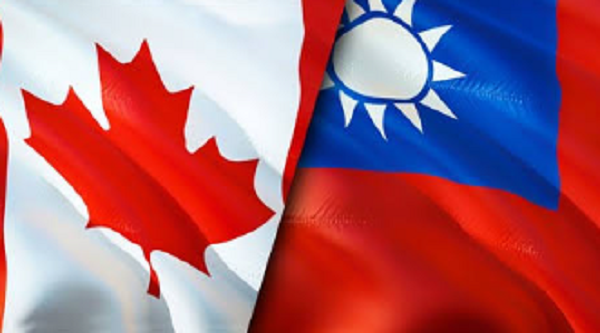
Taiwan Eyes Role in Ottawa’s Trade Shift as ‘Middle Power’ Partner
Taiwan’s deputy foreign minister says Canada shouldn’t overlook the self-governing Asian democracy in Prime Minister Mark Carney’s push to diversify trade relations.
Chen Ming-chi, visiting Canada this week, is pitching Canadians on the idea that the island of 23 million people should be part of Ottawa’s trade expansion strategy.
Mr. Carney’s push to reduce Canada’s reliance on the United States is driving him to build new and deeper relationships around the world – not only with Europe, but with autocrats, single-party states and countries where democracy is in decline.

Taiwan more closely resembles Canada. The electoral democracy is rated 93/100 by civil liberties watchdog Freedom House. It was the first Asian jurisdiction to legalize same-sex marriages, and it has embarked on major reconciliation efforts with its significant indigenous population.
“Trading with Taiwan is not going to compromise your values,” Mr. Chen said in an interview.
Canada and Taiwan do not have formal diplomatic relations, after Ottawa recognized the Communist Party-led People’s Republic of China in 1970. Canada nevertheless maintains informal ties with Taiwan, despite Beijing’s displeasure at any official dealings with an island that it claims as a breakaway province. Ottawa even maintains an unofficial embassy in Taipei.
In 2025, the federal government told Members of Parliament that a trade agreement with Taiwan had been finalized, but Taiwanese officials recently raised concerns about delays. Ottawa said last week that it still intends to complete the deal, even as it rekindles relations with China after a deep freeze.
Earlier this month, Canada announced the conclusion of trade negotiations with the Philippines, a country with a gross domestic product substantially smaller than Taiwan’s.
In 2024, Taiwan was Canada’s 15th largest trading partner and its sixth largest in Asia. Canada’s two-way merchandise trade with Taiwan totalled $6-billion that year, and two-way services trade was $1.9-billion.
While Mr. Carney is trying to boost exports to China, Taiwan has been reducing its economic reliance on the Asian country.
Taiwan’s exports to China and Hong Kong as a share of its total exports declined to 26.6 per cent in 2025, from 43.9 per cent in 2020, according to a Taiwanese government ministry release issued in July.

Mr. Chen said China is one of the “great powers” that Mr. Carney alluded to in his “rupture” speech at the World Economic Forum in Davos, where he talked of how big countries are using economic coercion to bully smaller nations.
The deputy foreign minister warned that China will exploit the trading relationship if Canadian exporters grow too reliant on the Chinese market.
“When your Prime Minister talks about how middle powers should come together, China is not a middle power. It’s a superpower with ambition.”
China is not a free market but a market controlled by the Communist Party that seeks to dominate supply chains, he added.
“But we are a middle power,” he said of Taiwan. “We are small. We are a democracy. We share the values with Canada. We have a common interest.”
The diplomat proposed that Canada and Taiwan work together to build drones and create a supply chain that is not dependent on China. Drones rely on semiconductors, and Taiwan is the world’s bigger producer of advanced chips.
“You have a lot of good ideas and we are good at bringing those ideas to market.”
If Ottawa’s pending trade accord follows past deals with the island, it will be an arrangement not an agreement and it will not be legally binding, given that Canada doesn’t recognize Taiwan as a sovereign state.
This article was first reported by The Globe and Mail