





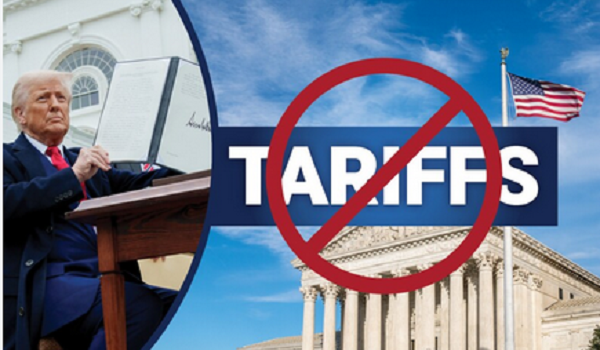
Tariff Refund Battle Set to Be Lengthy and Complex, Trade Experts Warn
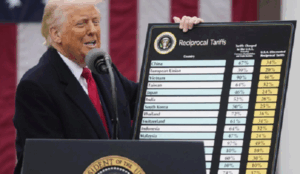
Canadian businesses should brace for a long, messy battle to recover money paid under U.S. President Donald Trump’s “illegal” tariffs, an international trade lawyer says.
Companies that paid tariffs imposed under Trump’s International Emergency Economic Powers Act (IEEPA) are owed refunds after the U.S. Supreme Court deemed them illegal last week, says Lawrence Herman, a former Canadian diplomat and international trade lawyer at Herman and Associates.
But the process of getting those refunds could drag on through years of court battles, he says.
“It’s not just a matter of filing an application and saying, ‘Hey, pay me the money back,’” says Herman.
He says companies will need detailed documentation to identify exactly how much they paid and which products were hit, and then follow a strict set of procedures to seek repayment.
He says the striking down of the tariffs has also brought internal chaos in the U.S.
“It is a mess…it is very complex, very unstable, very uncertain. It’s chaotic,” says Herman.
May have to go to international trade court
Herman says the U.S. executive branch said it will not contest refunds.

The challenge, he says, will be navigating the administrative and legal requirements tied to how the money was processed by U.S. Customs and Border Protection.
He explained that U.S. Customs and Border Protection collected the duties, and some payments are still within an adjustment window that allows importers to file complaints or request corrections through customs.
However, if the funds have already been “liquidated,” meaning the duty assessment has been finalized, companies may have to pursue refunds through the U.S. Court of International Trade instead.
“When lawyers get involved, there’s always a lot of money that it costs for parties, and that’s going to continue,” says Herman.
Large companies are better positioned to absorb legal costs
Herman says big companies are better positioned to absorb the legal costs to pursue refunds.
Smaller importers may not have the same resources but he doubts many will simply walk away from money they believe they’re owed.
“They’re going to want to get their money back,” Herman said, even if it means paying legal fees and waiting through a lengthy process.”
Uncertainty with Section 122
Herman says uncertainty is likely to continue as the Trump administration looks to other tools, such as Section 122, which is a provision meant for short-term action to address immediate balance-of-payments problems
He says many trade lawyers believe tariffs imposed under that section can still be litigated and that raises doubts about whether any new Section 122 tariffs would withstand legal challenge,
“So even section 122 is going to be under assault, and who knows where that is going to lead us,” says Herman.
“The point is that while Mr. Trump has said he’s a tariff man, and he loves tariffs, and tariffs are the basis of his trade policy, the right of the executive to apply those tariffs almost on a whim in an undisciplined manner, is questionable.”
With files from Hue Pham, BNN Bloomberg
This article was first reported by BNNBloomberg