





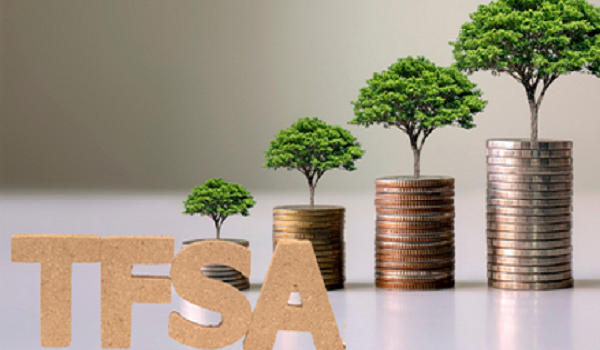
How Smart Planning Turned a TFSA Into a $775,000 Portfolio — and What You Can Learn
If you don’t have a Tax-Free Savings Account (TFSA), you may be missing out on one of the best ways for Canadians to save, invest and grow their money. It’s exactly as it sounds: earnings are 100 per cent tax-free for life — even on withdrawals — providing you follow the rules.
The biggest misconception about the TFSA is that it’s just for saving. “Savings implies that you’re just going to put cash in there,” says Dan Bortolotti, portfolio manager at PWL Capital. The TFSA is actually a container, like an RRSP, that you can hold many different types of investments in, including many that are designed for long-term growth.
In fact, a better name for the TFSA would be Tax-Free Investment Account, says Bortolotti. For example, in addition to cash, you can hold guaranteed investment certificates (GICs), stocks and mutual funds within a TFSA.
The TFSA was introduced by the Canadian government in 2009 to help Canadians save and invest their money — tax-free — for any purpose throughout their lifetime. The biggest benefit is that you don’t pay tax on the growth or even on your withdrawals, and you can take the money out any time.
Minyoung An, a Toronto resident who came to Canada from Korea 12 years ago, started with around $5,000 when he opened his first TFSA back then. Today, he has two TFSAs worth a total $775,000. “I believe investing in the market is superior to traditional saving for long-term wealth,” An says about his decision to invest through his TFSAs.
Contributions to TFSAs are made with after-tax income and are not tax-deductible, meaning they don’t reduce your taxable income or provide a tax refund, but there are limits to how much you can put in and take out each year. This year, the annual TFSA maximum contribution amount is $7,000.

If you don’t use all that room, it accumulates for future years. For example, if you opened a TFSA for the first time in 2026 and you were at least 18 in 2009 when the TFSA was introduced, your total contribution limit would be $109,000 as of Jan. 1. The investment income earned in your TFSA and changes in the value of your investments do not affect your TFSA contribution room for current or future years.
You can withdraw funds from your TFSA at any time, for any reason, without affecting your eligibility for federal benefits and credits. Just remember that withdrawing funds doesn’t immediately create new available contribution room — the amount you withdraw will only be added back as available contribution room on Jan. 1 of the next calendar year.
Here’s how three Canadians are making the most of their TFSAs, plus expert tips on maximizing contributions and investing for the long run.
Understand management and commission fees
An opened his first TFSA and invested in a mutual fund at a bank after a teller explained the benefits of the account. After learning about the high management fees associated with mutual funds, An moved his TFSA over to Wealthsimple so he could manage his own portfolio.
Bortolotti confirms that exchange-traded funds (ETFs) and mutual funds often come with fees known as management expense ratios (MERs). “You can get some very good, well-diversified ETFs for about 0.2 per cent in fees, which is $20 a year on every $10,000 invested. You want to be able to keep those fees in that ballpark,” Bortolotti says, adding that if you’re paying 1.5 or two per cent in annual fees on your investments, they will grow significantly slower.
Bortolotti recommends using a brokerage that allows you access to stock exchanges and purchase investments such as ETFs or stocks through a TFSA. If you open a TFSA through your bank, he says, you may only be able to hold cash and GICs in that account. You can access long-term investments through a TFSA through brokerage arms of major banks (RBC Direct Investing, for example) and alternative brokerages, such as Questrade and Wealthsimple.
Most brokerages allow you to manually buy and sell stocks and ETFs, or you can use a robo-adviser (software that chooses investments for you based on your risk tolerance).
Typically, there are no account or administrative fees associated with a TFSA, but if you’re buying stocks or ETFs, you’ll typically have to pay a commission every time you buy and every time you sell, Bortolotti says. Commissions are typically $10 or less, he says, but many brokerages offer no-commission trading.
If you are paying commission fees, Bortolotti says to make sure it’s worth it. “You don’t want to place a trade for $300 and pay a $10 commission,” he explains. “It’s just too high of a percentage.” If, on the other hand, you pay a $10 dollar commission fee when you buy something for $10,000, Bortolotti says, then it’s small enough that it’s the price of doing business.
Individual stocks can pay off …
Once An switched to a self-directed portfolio, he invested in ETFs for a couple of months, but ultimately decided to take a bigger risk. “I said, ‘I’m very young and I still have a long time to recover if something goes wrong,’ so I changed to all individual stocks,” he explains.
An chose to invest in Apple and Tesla. “My strategy is strictly buy and hold,” he says. “For instance, I maintained my position in Tesla even when it was down 40 per cent.” Six years later, An’s returns from his Apple and Tesla investments made up most of a $300,000 down payment he made on a house in Toronto.
Jason Fahandazh, a 30-year-old computer science student and educational assistant in Ottawa, also chose to take more risk. He opened his first TFSA through Questrade in 2021 and invested $6,000 on Palantir stock. Confident in his decision, he doubled down, opening a second TFSA with Wealthsimple and investing an additional $4,000 in the company. Fahandazh says his Palantir stocks were up 1,412 per cent as of January. His investments in other companies such as Kraken Robotics have also been successful.
Fahandazh now has more than $200,000 in his TFSAs and was able to pay off his tuition with his income and investments. By the time he graduates this summer, he estimates his TFSAs will be worth $400,000 to $500,000, and he plans to withdraw $150,000 to $200,000 for a down payment on a condo in Ottawa.
… but diversification is key when it comes to risk management
An knows he took a risk and it worked out for him. “I was lucky, that’s all I can say,” An says.
If your goal is to get very wealthy in a very short period of time, Bortolotti says, concentrating your investments in a few stocks offers the opportunity to do that, but the risk is extraordinary. “You may as well buy a lottery ticket,” he says. “The stories you’re not hearing are the people who lost everything.”
He adds that if you lose money with your investments in a TFSA, you’ll never get that contribution room back, and you also can’t use the capital loss to offset other gains you might have earned in your portfolio. “Risk always cuts both ways,” Bortolotti says.

Instead, Bortolotti advises those who are investing for the long term to diversify their portfolios. He suggests purchasing an ETF through a TFSA that allows you to invest in hundreds (or even thousands) of stocks. There’s still risk involved, he adds, but you won’t end up with nothing.
Feeling behind? There are ways to catch up
Don’t panic if you feel like you’re too late to benefit from a TFSA. “The TFSA is flexible,” says Janine Rogan, a CPA and personal finance expert. “It’s OK to have years where you don’t contribute, as long as you have a plan to get back on track.”
Rogan is turning 35 this year and has come up with a nine-year plan to boost her own TFSA savings. She turned 18 the year the TFSA was created and in her 20s, she opened a brokerage account to purchase stocks and ETFs with a goal of maxing out her TFSA. Any tax refund she received as a student went straight to her TFSA.
Then, in her 30s, Rogan and her husband purchased a home and had a baby. Her contributions fell behind, but Rogan was grateful to have money in her TFSA that she could withdraw when needed, whether it was to pay for a down payment, closing costs, bills during maternity leave, or daycare.
Now, Rogan has around $224,000 in her TFSA with $60,000 of contribution room available. She invests in equities and growth-oriented ETFs, which has resulted in an average of 13 per cent annual returns. This year, Rogan plans to contribute $36,000 to her TFSA. In 2027, she plans to contribute $13,200; for 2028, $15,400 and for 2029, $17,000. By 2030, she’ll be caught up on previous contribution room and plans to focus on maxing out the annual limit until 2035.
If Rogan follows her plan, her TFSA will be worth $7 million in 30 years, she says — and that’s if she never contributes another dollar. “That’s the power of compound interest,” she says. “If I can turn $109,000 in contributions into a seven-figure portfolio, I think that really illustrates the magic of it,” she says.
This article was first reported by The Star