





Ontario’s Bottle Return Program Could Expand to All Beverage Containers
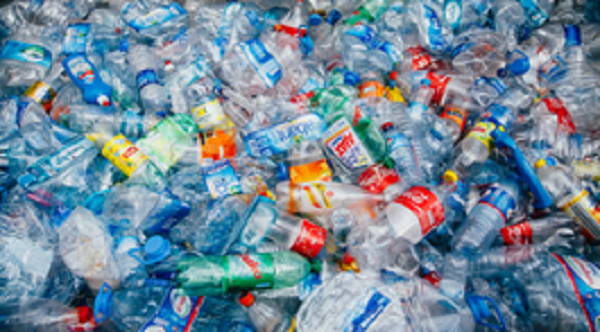
Peel Region has joined a growing chorus of municipal groups calling for mandatory deposits on all non-alcoholic beverages sold in Ontario as a way to reduce the number of plastic containers going to landfill or ending up as litter in waterways.
Peel Region councillors recently passed a unanimous motion urging the province to “immediately implement a deposit-return program for non-alcoholic beverage containers.”
Similar motions have been passed by the City of Waterloo, the Association of Municipalities of Ontario, which has more than 440 member municipalities, and the Great Lakes and St. Lawrence Cities Initiative, a coalition of more than 350 municipal and Indigenous leaders working to foster environmental and economic health.
Read More On Our Daily Stock Market Reports – Dow Jones Leads Gains as Small-Caps Pull Back Modestly
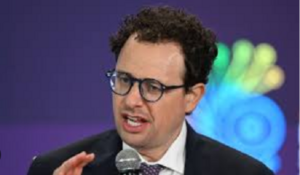
“We are way, way behind other provinces,” said Alvin Tedjo, a Mississauga councillor who sits on Peel Region council, and who introduced the motion.
Ontario is one of only two provinces in Canada without a comprehensive deposit system on all beverage containers. These programs achieve 80 per cent return rates or higher in other provinces compared to the 50 per cent or so of containers captured by Ontario’s Blue Box recycling program.
Drink manufacturers say a deposit program is the only way the industry can capture enough used containers to meet the 80 per cent recycling target set by the Ontario government for 2032.
“As we see across the country, when we get a deposit return system, we get more of our materials back” to recycle, said Krista Scaldwell, president of the Canadian Beverage Association (CBA), a trade association representing manufactures and distributors of non-alcoholic drinks.

“Our members, many of them have made global sustainability commitments,” said Scaldwell. “And in Ontario, the common collection system that we see today just hasn’t increased our rate beyond 53, 54 per cent.”
The beverage industry also says that if it has to create a parallel recycling program to capture enough containers to meet the provincial target, it would be more expensive than a deposit program — costs that are ultimately downloaded onto consumers.
Scaldwell said the beverage association continues to look at the data and costs associated with existing deposit return programs in other provinces, which the CBA believes is the best way forward. A deposit return program in Ontario for non-alcoholic beverages would need provincial approval as well as regulatory changes.
The Retail Council of Canada however, which represents the interests of grocers, has opposed deposits on non-alcoholic beverages.
“A deposit-return system is not free,” said Michael Zabaneh, the council’s vice president of sustainability, in an email.
Zabaneh noted that although deposits are refundable, under B.C.‘s deposit program, consumers pay a separate non-refundable container recycling fee that ranges from two cents to 30 cents per container depending on type.
“For a 24-pack case of bottled water priced around $3, that would add $2.40 in deposits and $1.68 in non-refundable CRFs, bringing the checkout price to roughly $7, with only the deposit refundable,” said Zabaneh.
The retail council has argued a deposit system would add significant costs for small businesses and families.
The Ontario government formed a working group to study the implementation of a deposit program in 2023, a move that was supported by the Canadian Beverage Association, but the government suddenly scrapped the plan a year later stating that the cost of the deposit program would be too high.

The province’s opinion hasn’t changed since then.
“Our government’s focus remains on keeping costs low while improving recycling outcomes across Ontario,” said the Ministry of Environment, Conservation and Parks, in an email to the Star. “As we continue to look for opportunities to strengthen recycling in Ontario, the blue box system will serve as a strong foundation to build on.”
The retail council agrees and wants to see more money put into Blue Box technology, such as robotics and optical sorters, to capture more containers.
But the cost of residential recycling in Ontario has already ballooned since it was fully privatized at the end of last year, from $172 million, when producers — the companies and manufacturers who contribute material to the Blue Box — shared the cost equally with municipalities, to an estimated $740 million in 2026, according to the retail council.
Yet, despite the increased costs, there hasn’t been a corresponding increase in the proportion of used drink containers captured.
“We’ve seen no real significant increase when we go through the common collection system,” said Scaldwell, referring to the Blue Box.
Tedjo, the Mississauga councillor, also notes that the province amended recycling legislation so that no new multi-residential buildings or townhomes will be included in the Blue Box program until 2031.
“That’s another huge gap,” said Tedjo.
The province also deferred expanding collection to schools, and specified long-term care homes and retirement homes, as well as multi-residential buildings that weren’t previously part of the Blue Box program, until 2031.
Ontario already has two deposit programs: one for empty beer containers, and the other the Ontario Deposit Return Program for all other alcohol containers, with both programs being run by The Beer Store.
Those deposit programs capture 75 per cent and 71 per cent of empties, respectively, but return rates have been falling in recent years.

The Beer Store recently announced the launch of a new campaign called “Take Back What’s Yours” to remind Ontarians “that when they neglect to return their alcohol empty containers they are in fact leaving money on the table.”
In the meantime, The Beer Store has also closed more than 120 locations, giving consumers fewer options for where to return them.
The beverage association said it could work out a plan with The Beer Store to take deposit returns for non-alcoholic containers or use solutions that have been successful in other provinces, such as reverse vending machines, which are automated recycling systems that accept empty beverage containers and return deposits.
Tedjo said asking the province to expand Ontario’s existing deposit programs “is an easy thing to do to try and get better results for consumers, for residents who care about the environment as well as for the producers.”
This article was first reported by The Star