





Escalating Iran Conflict Triggers Significant Volatility in Global Bond Markets
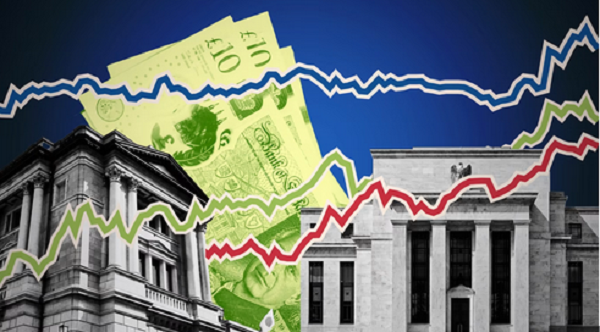
The Iran war rocked global bond markets again in May, sending yields to multi-decade highs as traders priced in central bank rate hikes – only for signs of progress in peace talks and weak economic data to bring them sharply lower again.
Although a clear end to the conflict would bring immediate relief and lower government borrowing costs around the world, May’s moves underscore how investors are twitchy about inflation and growing public debts.
TREASURY TANTRUM
The 30-year U.S. Treasury yield soared to around 5.2% on May 20, its highest since 2007, as the Iran war roiled the $28 trillion U.S. government bond market.
Signs that peace talks were stalling, which pushed oil prices back above $110 , and hot U.S. price data were among the triggers for the global debt sell-off.

British yields hit their highest in two or three decades , some Japanese yields reached record highs , and Germany’s 10-year yield hit its highest since 2011 .
“The market’s concerned that inflation may be here a bit longer than we had anticipated,” said Franklin Templeton’s head of European fixed income David Zahn.
GROWING PAINS
Borrowing costs then fell back along with oil prices as the U.S. and Iran reported progress in talks, and weak economic data — particularly in Europe — tempered the case for dramatic rate hikes.
Euro zone economic activity shrank at its sharpest rate in two-and-a-half years in May as the bloc grappled with rising energy costs, data showed last week.
“With this level of yields it’s becoming attractive for an investor,” said Nicolas Forest, chief investment officer at Candriam. “We have a slowdown of the economy and that’s supportive for the bond markets.”
U.S. GOES ALONE
Whereas energy-importing economies such as the euro zone, Britain and Japan had previously borne the brunt of the bond selloff, the U.S. was the notable underperformer in May.
U.S. 10-year yields rose 6 bps from April 30 to May 29, while German yields fell 6 bps.
While European data tempered rate hike expectations, the U.S. economy has remained strong, helped by an AI spending boom.
Traders fully scrubbed out bets on any Federal Reserve rate cuts this year and briefly priced in a full 25 bps rate hike by December.

Data on Thursday showed the Fed’s preferred inflation measure up 3.8% year-on-year in April, its fastest rate in three years.
GILTY CONSCIENCE
May was another hair-raising month for the UK gilt market, highly susceptible to selloffs since the Liz Truss crisis of 2022.
Yields on 30-year gilts jumped to their highest since 1998 at 5.87% in mid-May as the global rout combined with fears that a successor to embattled Prime Minister Keir Starmer might ramp up spending.
Gilts then rallied as peace hopes grew, UK economic data weakened, and frontrunner Andy Burnham pledged to stick to the government’s fiscal rules.
From April 30 to May 29, 10-year gilt yields outperformed Germany and the U.S. to fall around 21 bps, though they remain up 58 bps since the war started.
“If we look at Bank of England pricing, we’ve gone from two cuts at one point to nearly three hikes, so that’s been the main driver (of UK bonds),” said Matthew Amis, investment director at Aberdeen.
“But also in the background the political volatility has clearly not helped.”
FISCAL AND FED FEARS
Longer-dated debt, which is more influenced by economic and fiscal concerns than shorter bonds, bore the brunt of the mid-May sell-off.

Inflation-adjusted ‘real’ yields also rose in the U.S. and Europe, showing price pressures were not the market’s only concern.
Bank of America analysts said they thought a key driver of the U.S. Treasury selloff was “ever-worsening fiscal dynamics”.
And although the Fed makes its decision by committee, some investors said doubts about the independence of new Fed Chair Kevin Warsh, who was appointed by U.S. President Donald Trump, were also a factor.
“Let’s imagine that he decides to cut rates despite higher inflation,” said Forest. “That’s not very supportive for U.S. Treasuries.”
Reporting by Harry Robertson and Yoruk Bahceli; editing by Dhara Ranasinghe and Gus Trompiz
This article was first reported by Reuters