





Ottawa Bets on 10 New Nuclear Reactors to Boost the Candu Brand
The federal government wants to dramatically scale up the use of nuclear power and the export of Canadian-owned reactor technology through a new strategy that sets a goal of increasing by more than 50 per cent the number of large-scale reactors in Canada.
In a policy document to be released on Monday by Energy Minister Tim Hodgson, and obtained by The Globe and Mail, the government positions nuclear power as a triple threat for Canada’s economy, energy transition and sovereignty.
The strategy prioritizes bolstering the domestic supply chain for the Candu reactor, the Canadian-made technology used to build and operate nuclear-generating stations in the country since the 1960s, and reinvigorating a sales and export strategy for the reactors that has been largely dormant for decades.
The strategy is the latest move by Prime Minister Mark Carney’s government to diversify exports and reduce Canada’s reliance on the United States for its economic growth. It also coincides with a surge in global interest in nuclear power.

“The global nuclear renaissance is creating a time-limited window. Other countries are moving quickly, investing heavily, and competing for the same markets and partnerships that Canada is well positioned to secure,” the strategy argues.
“Hesitation is not a neutral choice; it is a decision to cede ground that will be difficult to recover.”
Power generation and electrical grids are the sole domain of the provinces and territories. Ottawa is hoping to use its bully pulpit, and pre-existing funds and investment tax credits, to spur the premiers in the direction of more nuclear power.
The strategy has no new funds attached to it. A federal official noted that it is being released between budget cycles and Ottawa hasn’t ruled out putting more cash on the table.
The Globe is not identifying the official because they were not authorized to disclose the internal deliberations.
Nuclear reactors are notoriously expensive and difficult to build, and have long been deprioritized because of those hurdles. But the power source is now getting more attention around the world as a reliable, non-emitting option.
Ottawa’s new strategy is being released ahead of Mr. Hodgson’s meetings with his provincial and territorial counterparts in Yellowknife this week.
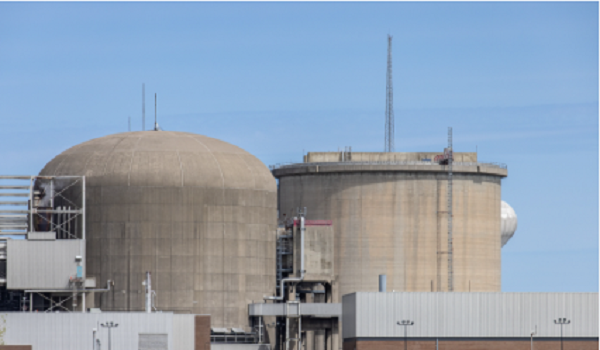
The policy document puts an emphasis on building more large-scale nuclear reactors and doesn’t set a target for small modular reactors, or SMRs, which the federal government has promoted for most of the past decade as cheaper and faster to construct. It also puts priority on the Candu reactor as a homegrown technology that also benefits from an entirely Canadian supply chain. The Candu reactor doesn’t require enriched uranium, which Canada doesn’t make.
The strategy makes the case for the Candu reactor in part because the Canadian technology would better insulate the power source from geopolitical upheaval, boost Canada’s energy independence and security, and enable it to export more of the same technology abroad.
The federal government retains ownership of Candu technology through Atomic Energy of Canada Limited, the federal Crown corporation that developed it. The sole licensee is AtkinsRéalis Group Inc., formerly SNC-Lavalin.
Candu technology has competition from American reactor developer Westinghouse, which is co-owned by New York-headquartered Brookfield and Cameco, based in Saskatoon.
In its strategy, Ottawa champions a “fleets-based approach,” arguing that using the same technology across multiple grids would help drive economies of scale and keep costs under control. However, the strategy also floats the possibility of “a limited number of designs per application case,” language which could nonetheless lead to several different reactor designs being supported, not just reactors from Candu.

The document proposes doubling the nuclear work force by 2050 and doubling uranium exports by 2035, with new mine production entering service by the same year.
This year, the Canadian Nuclear Safety Commission approved two new uranium mines in Saskatchewan. Denison Mines Corp. received approval for its Wheeler River Project and NexGen Energy Ltd. got the greenlight for its Rook I Project.
Ottawa’s plan positions the federal government as responsible for de-risking nuclear projects and enabling their progress. As part of that, Ottawa is proposing streamlining the regulatory process and completing federal reviews within two years.
In the nuclear strategy document, the government says it wants to enable construction of up to 10 new large-scale reactors in Canada. Two of those, it says, should be under construction by 2035 and another five planned or under development by 2040.
The ambitious number would be a dramatic increase from the current landscape. Canada currently has 17 operable reactors, according to the World Nuclear Association. Canada’s last large reactor was completed in 1993.
In the strategy, Ottawa says it also wants to see at least one new nuclear deployment (either large-scale or SMR) outside of Ontario by 2035, and a microreactor – some of which could be small enough to be transported by truck or barge – deployed to remote communities by the late 2030s.
While Alberta and Saskatchewan have both begun talking about nuclear power, neither has committed to any new builds. Those two provinces are the most likely outside of Ontario to make investments in nuclear. New Brunswick is also considering building new reactors at its Point Lepreau plant.
In April, Mr. Hodgson committed $40-million to explore the possibility of using microreactors to power remote military outposts in the Arctic. The strategy to be released on Monday says the microreactor will be demonstrated for military use by 2035 and subsequently deployed for civilian use.
The strategy includes no new federal spending but promises to rely on existing funds and to release a draft nuclear power financing policy by April, 2027. It says that plan will rely on things like green bonds, the Canada Infrastructure Bank and loan guarantees.
Ottawa also says it wants to scale up private financing of new nuclear reactors, with a particular focus on pension and sovereign wealth funds. It did not specify whether they would be Canadian funds or international.
Funds are already placing their nuclear bets. For example, Caisse de dépôt et placement du Québec announced last year it will invest in Britain’s Sizewell C nuclear plant. Traditionally, nuclear projects have been financed largely by governments, and institutional investors have been wary of them.
As it seeks to diversify exports, the federal government views the sector as ripe for the picking because selling a reactor is not just one point of sale but marks the start of a decades-long reliance on Canadian technology and expertise, the strategy argues.

“Canada’s nuclear export posture will therefore be treated as a direct expression of foreign and industrial policy,” the strategy states.
Canada exported Candu reactors abroad from the 1960s through the early 2000s, to South Korea, Romania, Argentina and China. Those efforts received strong financial support from the federal government, including financing from Export Development Canada. The strategy sets a goal of winning at least four new international markets by 2040.
To maintain Canada’s competitiveness, the strategy promises Canada will develop a modernized version of the Candu reactor by 2030. Last year Canada offered AtkinsRéalis a $304-million loan over four years to finance half of the design project for the modernized reactor. However, no loan agreement was executed. AtkinsRéalis committed to have the preliminary engineering for a modernized version of its Candu 850 (dubbed the Monark) completed by 2027.
This article was first reported by The Globe and Mail