






Finance Minister Signals Tax Overhaul Tailored for Small Businesses
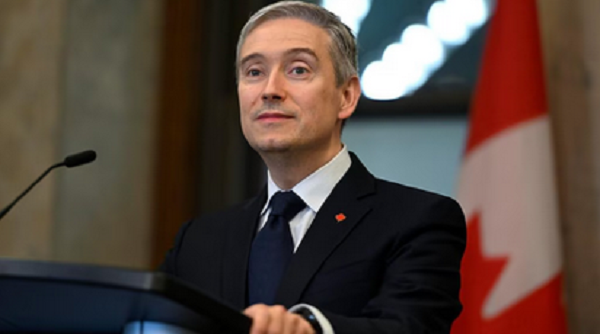
Thursday’s federal budget will include new measures to support small and medium-sized businesses, Finance Minister François-Philippe Champagne told a business audience in Toronto, suggesting the budget could involve efforts to simplify some tax matters.
Canada, with its triple-A credit rating, has the fiscal room to make investments that support long-term economic growth, Mr. Champagne told the Canadian Club in a budget overview speech on Monday morning.
But when pressed for more specifics during a brief question-and-answer session, Mr. Champagne said the budget will be “going further” on the small-business front.

It’s for entrepreneurs, innovators and creators, he said.
“I think you will see in this budget a journey to fixing a number of things, to make things more simple. To simplify the life of small and medium-sized businesses. And I think that on Thursday, those who represent small businesses will see themselves in that budget,” he said.
The Globe and Mail reported last week that expectations were mounting that this year’s budget would include new measures for small businesses.
Canadian Venture Capital and Private Equity Association chief executive Benjamin Bergin told The Globe last week that his members are cautiously optimistic the budget will include further tax measures, including capital-gains incentives for startups and tax changes aimed at retaining entrepreneurs.
Bank of Nova Scotia economist Rebekah Young, a former Finance Department official, released a detailed report on Oct. 29 that said the budget could include a targeted tax review.
She said the government could announce plans to study the various breaks known as tax expenditures, which are also referred to as boutique tax cuts.
Such a review would fall short of the broad-based tax reform many business groups and economists have long called for.
During his speech, Mr. Champagne also said the budget will include new details on some of the government’s major policies, including the Canada Strong Fund investment vehicle announced in April and recent plans to “modernize” the ownership structure of the country’s largest airports.
“Our pension funds – and I like to say ours, as Canadians – are managing airports abroad with the best possible expertise. Why can’t they do it at home?” he said.
Mr. Champagne also spoke at a similar event Monday evening near Parliament Hill hosted by the Canadian Club of Ottawa.
The minister did not provide new details about the budget, repeating his assertion that the government has the fiscal strength to deliver on its economic plans.
“We have been very disciplined in how we have managed public finances, and I think you will see that on Thursday,” he said. “This is giving us the possibility to make choices that will support Canadians at a time of need.”
Private-sector economists have said they expect the budget will show stronger revenue growth than previously projected, thanks in large part to higher energy prices. However, economists also expect that most, if not all, of those gains have essentially been spent in recently announced initiatives.
The budget will be the second since Mark Carney became Prime Minister last year, replacing Justin Trudeau.
The government’s first budget, tabled last November, was primarily focused on funding various programs and initiatives Mr. Carney had promised during that year’s election campaign.
Now the government is focused on ways to accelerate its commitments to grow the economy by attracting more investment and diversifying its trading relationships.

Much of the government’s agenda under Mr. Carney has been driven by trade tensions with the United States, which has included higher tariffs on a range of Canadian goods. U.S. President Donald Trump’s policies have been a key campaign issue south of the border in the runup to Tuesday’s U.S. midterm elections.
Mr. Carney opted to pre-announce what is likely to be the biggest item in the budget: a Productivity Mega Deduction that expands the ability to immediately write off investments in eligible capital assets.
The Prime Minister announced the plan, worth $36-billion over five years, at an international investment summit he hosted in Toronto in September. The government’s plan to attract private investment to Canada’s four largest airports was also announced at the event.
On Sunday, Conservative Leader Pierre Poilievre released an open letter to Mr. Carney, outlining the Official Opposition’s proposals for the budget.
He said the government should cut wasteful spending, reduce debt and deficits, and eliminate fuel taxes.
“You should reduce the deficit until the budget is balanced. But you have made that unrealistic until there is a change in government,” Mr. Poilievre wrote. “So the bare minimum is that you keep your word. Reduce the debt and the deficit as a share of our economy.”
This article was first reported by Reuters