





Tariff tensions keep Canadian farmers in limbo
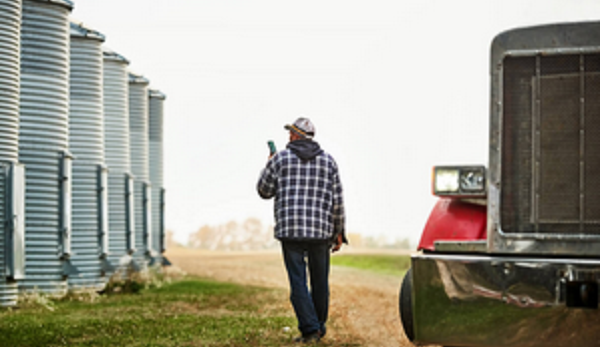
Ian Smith, a farmer near Argyle, Man., has been raising pigs on his farm north of Winnipeg since 1969.
Trade uncertainty with international markets, like China and the U.S., has benefited him.
He says he’s seen heightened interest in his product over the last few months.
“People are on the bandwagon of eating local,” he said. “And that’s fine with me, and I can supply it for them.”
While more people are demanding his product, he said it hasn’t come without its challenges.
“The tariffs have affected me,” he said, “in regards to parts, getting steel, machinery, fertilizer and chemicals and all your other inputs for the ag industry. It does affect me in some ways.”


Smith says his mechanic has been inundated with requests to fix machinery, but due to tariffs, some parts are not readily available.
Up until this point, Smith has avoided any major malfunctions of his farm equipment, but says it could happen at any time, which would gravely impact his farm.
“When you have a breakdown, or something like that in ag here, it’s hour by hour,” he said. “With weather conditions, every hour you’re down, it’s costing you money. When it goes from hours, to days, to weeks before you get parts and repairs, it hits your bottom line.”
And it’s something Smith is keeping an eye on.
“Just because I am a small quarter-section farmer in Argyle, doesn’t mean I’m not concerned,” he said. “I’m concerned for myself and concerned for others, too.”
Canadian hog farmers are highly reliant on the U.S. market, especially those in Manitoba, which is the largest pig-producing province in the country.
Manitoba exports between 3-3.5 million live pigs to the U.S. every year, bringing about $200 million in trade annually.
“We don’t know what’s going to be happening one month from now, six weeks from now,” said Cam Dahl, the General Manager for Manitoba Pork in Winnipeg.
He says there is a lot of concern amongst pork producers right now.
“It’s global uncertainty, market uncertainty, tariff uncertainty and political uncertainty,” he said.
And that uncertainty, Dahl calls scary.
“If a producer is thinking about expanding their operation, or refurbing their operation, they are going to think twice about a $15 million investment right now,” he says. “That uncertainty is having an impact on the industry, and of course, we are also facing 25 per cent tariffs going into China.”
The levies from China were in response to a 100 per cent surtax Canada placed on Chinese-made electric vehicles, steel and aluminum.
Earlier this month, Prime Minister Mark Carney said his government is urgently working to remove these tariffs, which are not just impacting pork, but canola products too.
“It’s an issue of concern and risk,” says Rick White, the President and CEO of Canadian Canola Growers Association.


Canola growers in Canada are facing ongoing 100 per cent tariffs on canola oil and canola meal, but warn that if the canola seeds get levied, that will pose a major issue.
“It would certainly cause a financial impact, certainly at the farmgate level here,” he says.
Canola is Canada’s most valuable crop, contributing billions towards the economy every year.
“Longer term, we hope to clear the hurdle and get out of these tariffs or avoid them. Farmers really are good at growing canola. It’s economically viable for them. It’s agronomically sustainable for them from an agronomic perspective and their crop rotations,” says White.
“We have been in contact with the Canadian government and are urging them to get into a real discussion with China because we can’t have two markets at risk – China and the U.S.”
This article was first reported by CTV News