





Tariffs and Economic Volatility Intensify Hardship for At-Risk Canadians
Canadians who are experiencing financial hardship are falling further behind on their loans, as tariffs and layoffs affect some of the most financially vulnerable people, according to a new report by TransUnion.
The credit agency’s third-quarter report found that economic disparities are widening between Canadians who can pull themselves out of debt, and those who are continually falling further behind on their loans.
The proportion of Canadians who were 30 days behind on a loan payment decreased year over year by six basis points to 4.4 per cent. However, the proportion of those who were 90 days past due or more on debt payments rose by four basis points to 1.77 per cent.
“The people that are missing payments, there’s fewer of them, but they’re going deeper,” said Matt Fabian, director of financial services research and consulting at TransUnion Canada.
“We’re seeing them go further into delinquency, missing multiple months of payments and continuing on into things like collections.”

By province, Alberta had the highest levels of delinquency, which Mr. Fabian said was likely owing to the cyclical nature of the oil industry.
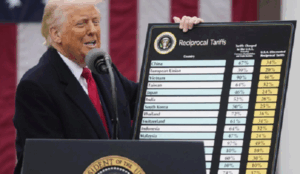
The report found that Ontario’s and Quebec‘s long-term delinquencies of three months or more were on the rise, which indicates that tariffs and economic uncertainty are starting to affect the most vulnerable Canadians.
“We’ve seen a spike in these areas where tariffs would have an impact if you think about auto, steel and aluminum which are concentrated in Ontario,” Mr. Fabian said.
He said it would take months for workers who have been laid off or had hours reduced to use up their employment insurance and slip into long-term delinquency. That means if tariffs continue to affect the job market, delinquencies could rise further.
Credit Canada, a not-for-profit that helps people deal with debt, has also seen a 59-per-cent increase in year-to-date inquiries for assistance in Ontario, and a 40-per-cent increase nationally.
Bruce Sellery, chief executive of Credit Canada, said at least some of that increase can be attributed to a higher awareness of not-for-profit counselling services, which can help people consolidate their debt and make it easier to pay loans back.
“[The TransUnion] numbers are consistent with what we’ve seen, and it’s very concerning,” said Mr. Sellery, who said it is troubling to see that some Canadians are doing better while another group struggles more severely.
He agreed that the increase in delinquencies in Ontario could be the direct result of job losses from tariffs. However, he said the economic gloom that the trade war has created also affects the most vulnerable Canadians, who are losing work hours or shifts as a result of dropping demand and a worsening outlook.
He said Credit Canada also receives a larger proportion of calls in B.C. and Ontario, where steep housing costs are another challenge.
“Our callers aren’t saying they’ve lost their jobs, our callers are receiving a shift less, or they drive for Uber and volume is down,” Mr. Sellery said.

“When you’re living in the margins, those are changes in circumstances that are enough to break down this fragile system.”
Meanwhile, Mr. Fabian said regions such as the Atlantic provinces are seeing improvements in long-term delinquency rates.
Over all, he said this year’s delinquency statistics are better than last year’s, when high interest rates and inflation were causing challenges for a larger number of Canadians missing a payment.
Mr. Fabian said it will likely take a few more months to decipher whether tariffs are having a significant long-term impact on delinquencies.
“There’s usually a long lag, so what we’re seeing is some early symptoms of the trade war, but it will still be a wait-and-see,” he said.
This article was first reported by The Globe and Mail