




Ottawa Signals Openness to Three-Player Telecom Market, Sources Say
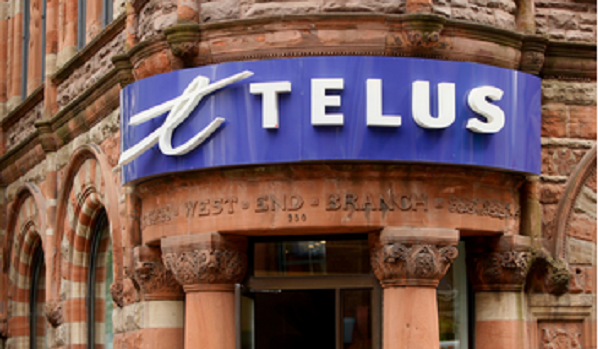
The federal government is willing to consider takeovers that would reduce the telecom sector to three major companies, sources say, reversing decades of policies meant to promote four competitive players, as Ottawa deals with Quebecor Inc.’s QBR-B-T blockbuster proposal to acquire rival Telus Corp. T-T
Prime Minister Mark Carney and Industry Minister Mélanie Joly have publicly said regulators and politicians will take affordability and national sovereignty into account when deciding on any telecom transaction brought forward for approval.
Privately, politicians and civil servants have signalled to industry executives the government is no longer wedded to a four-player structure and is open to a three-company oligopoly in Canada, according to three sources involved in those discussions.
The Globe and Mail is not naming the sources because they are not authorized to speak publicly on the matter.
Bell Canada parent BCE Inc. BCE-T has hired financial and legal advisers and opened talks with Telus, The Globe and Mail reported on Wednesday. Bell and Telus share a national wireless network.
Montreal-based Quebecor effectively put Vancouver-based Telus in play in late June with a $31-billion takeover proposal that it announced publicly on Monday.
The heads of Canada’s largest telecom companies are due to meet with Innovation, Science and Economic Development, or ISED, next Monday to discuss regulatory issues, including infrastructure, cybersecurity, and challenges and opportunities within the sector, according to the sources. The meeting was scheduled well before Quebecor’s public proposal for Telus.
Ms. Joly’s office did not respond to a question about a possible telecom sector structure that would be composed of three major companies. However, it confirmed that she would join the group of telecom CEOs at the end of the day to discuss the importance of connectivity to the country’s sovereignty and security, noting that it is a “pivotal time for Canada.”
Separately on Monday, Quebecor and Telus chief executives Pierre Karl Péladeau and Victor Dodig will meet to discuss the proposal. Quebecor and Bell are considering acquiring Telus after its value declined sharply over the last two years.
On Wednesday, during a trip to China, Mr. Carney was asked about telecom consolidation. The Prime Minister showcased his economics degrees, saying that depending on the market structure, “the form of oligopoly can lead to more competition with fewer players under certain circumstances.”
He added that government would ultimately seek “more competition, lower prices, better service for Canadians.”
Quebecor’s proposal aligns with central elements of Mr. Carney’s policy priorities, which include sovereignty and reducing reliance on the United States.
The Montreal-based telecom said that uniting with Telus would make it better able to compete with Elon Musk’s Starlink, which has emerged as a significant competitor in recent years, offering fast internet service directly to consumers through its low-Earth-orbit satellite constellation.
Canada does not currently have a comparable domestic alternative, and Mr. Carney has said the country should diversify away from dependence on Mr. Musk’s company.
Any merger between Canadian telecom giants would likely require them to make significant divestitures or concessions to secure regulatory approval, industry experts and analysts say.
Should Bell and Telus reach an agreement, the pair “would face a long and challenging regulatory process that would almost certainly require remedies including asset divestitures,” said Bank of Montreal analyst Tim Casey in a note to investors Thursday.
“The latter would likely include wireless and wireline subscribers and possibly infrastructure,” he added. A combined Bell and Telus unit would represent roughly 54 per cent of mobile subscriber market share, and 42 per cent of internet subscriber share, he said.
Quebecor could be the beneficiary of any such divestiture, just as it was when it bought Freedom Mobile from Rogers Communications Inc. RCI-B-T , which was forced to sell the cellphone business to win government approval for its acquisition of Shaw Communications Inc.
“While there is a risk that [Quebecor] may have to sweeten its offer, we believe the odds of [Quebecor] ultimately playing a role as a remedy partner are increasing, which we view as a net positive,” Desjardins analyst Jérome Dubreuil said in a recent investor note.
“With Ottawa signalling this week that the door may not be entirely shut on a three-player wireless market, we believe it is natural for [Bell] to kick the tires on [Telus],” he said. He noted that, compared to Quebecor, a Bell offer would be “more challenging” on the regulatory front, but “easier to achieve” on the financial front.
Over the past three days, Telus’s stock price has crept up and is now just 5 per cent below Quebecor’s offer, compared to a 60-per-cent premium when Quebecor announced its proposal. That suggests investors may be also be growing warmer to the possibility of a deal between Telus or another company.
Telus stock is up 27.7 per cent since Quebecor’s proposal was announced, while Quebecor’s stock is down 24.2 per cent over the same period. Bell’s shares were down 3.3 per cent.
Quebecor’s proposal now carries a $26-billion price tag, given its declining share price. Quebecor has proposed of $6.35 in cash and 0.17 Quebecor shares, based on a total of for 1.6 billion fully diluted Telus shares.
In a 21-page marketing package that Quebecor circulated among government stakeholders and investors, viewed by The Globe, the company laid out its argument for the merger. It said an acquisition would allow the combined company to accelerate deployment of 5G networks, expand fixed wireless access (internet connection that does not rely on a wireline connection), and offer bundled services across mobile, internet, video and media.
In Europe and elsewhere, government policy has led to the rise of three dominant wireless providers, Mr. Péladeau told The Globe earlier this week. Cellphone rates in these countries are typically lower than what Canadians pay for equivalent levels of service, he argued.
In Thursday’s release, Quebecor criticized the possibility of a deal between Bell and Telus, saying a combination of the two companies would harm consumers, while its own proposed takeover of Telus would instead be “a breath of fresh air.”
Quebecor criticized Bell and Telus for incrementally increasing subscribers’ rates over time and said they continue to charge fees that have been banned by the telecom regulator. “A merger of the two companies would only exacerbate these practices,” the company said.
Meanwhile, the company described itself as a “market disrupter,” noting that in British Columbia, its mobile phone plan prices are cheaper than those offered by Bell and Telus. “Quebecor believes its proposal is in the public interest and supports Canadian digital sovereignty,” the release said.
Bell declined to comment on Quebecor’s statement.
This article was first reported by The Globe and Mail