





SpaceX Targets Record $75 Billion IPO at $135 Per Share, Sources Say
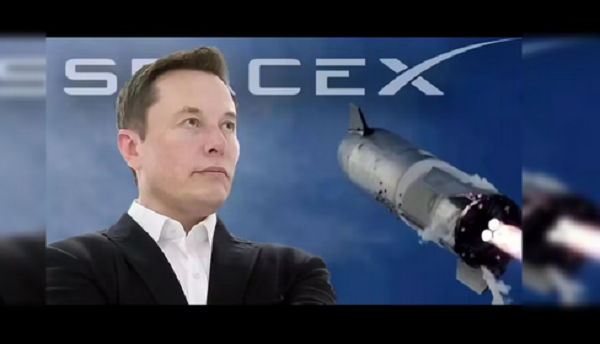
In a surprise move ahead of its investor roadshow, Elon Musk’s SpaceX plans to fix its IPO price at $135 per share to raise a record-setting $75 billion, according to a source familiar with the matter.
The rocket and satellite communications company plans to sell 555.6 million shares, the source said. It is aiming for a valuation of $1.75 trillion, two other people said.
The listing leads a wave of high-profile private companies preparing to test public markets after years of muted large-cap IPO activity, with SpaceX expected to be followed by artificial intelligence giants OpenAI and Anthropic.
SpaceX aims to set records and break tradition with the public offering.
A fixed price ahead of presentations to investors and bookbuilding is highly unusual.
Companies planning to go public typically set a price range to frame valuation expectations and allow pricing to be adjusted based on investor demand. Strong demand can push the final price to the top of the range, or above it, ahead of the market debut.

SpaceX’s roadshow begins on Thursday. It earlier held some “testing the waters” meetings with investors.
The company’s plans, including the size of the raise, are subject to change as investor meetings get under way, the sources cautioned.
There is no rule banning SpaceX’s unconventional plan for setting a fixed price for the IPO, said Weiheng Chen, a senior partner in Hong Kong at U.S. law firm Wilson Sonsini Goodrich & Rosati.
“Musk is simply taking a ‘take-it-or-leave-it’ approach which works for his followers and is also sensible given the market conditions and the lack of comparables,” Chen said.
MISSION: MARS AND SPACE DATA CENTERS
Musk has rewritten the IPO playbook for SpaceX in many other ways, from planning to give retail investors a larger role in allocations to pushing for early index inclusion, and structuring governance to preserve strong founder control.
The company’s valuation relies on SpaceX dominating technologies and markets that do not yet exist – from Mars missions to AI data centers in space.
Reuters previously reported that the company is considering allocating as much as 30% of the offering to individual investors, an unusually large retail tranche aimed at tapping into Musk’s cult-like following and broadening ownership of the company.
The IPO is expected to be structured as an all-primary offering, meaning all proceeds would go to the company and existing SpaceX shareholders will not be able to sell any of their shares in the IPO, the sources said.
Musk will be required to hold his SpaceX shares for 366 days after the IPO, one of the sources said, a signal to investors of his commitment to the company.
Proceeds of the IPO will be used for purposes including expanding AI computing resources and SpaceX’s satellite network, the source added.
SpaceX merged with Musk’s AI startup xAI earlier this year in a deal that valued the rocket company at $1 trillion and the developer of the Grok AI chatbot at $250 billion.
The company has no direct peers, making valuing the company subject to interpretation.

Morningstar placed a $780 billion price tag on SpaceX, 48% below its current private-market valuation, according to a June 1 research note. Most of that comes from its Starlink satellite communications business, which drove most of its revenue, profits and growth last year.
SpaceX, however, has tied most of its growth prospects to AI, and its plans rely on yet-to-be-built technologies for a significant portion of future revenue, including solar-powered data centers in space, as it targets a potential $28.5 trillion market, Reuters previously reported.
At a $1.75 trillion valuation with the company booking revenue of $18.67 billion in 2025, SpaceX would trade at a trailing price-to-revenue multiple of 93.7 times.
On the same basis, space company Rocket Lab (RKLB.O) is trading on a multiple of 118, data analytics firm Palantir Technologies (PLTR.O) at 81, and Tesla (TSLA.O) at nearly 17.
SpaceX cannot be evaluated on a price-to-earnings basis as it reported a net loss last year.
MEGA IPO WAVE
The listing is expected to kick off a wave of mega IPOs, with SpaceX, OpenAI and Anthropic together poised to add almost $4 trillion in market capitalization to public markets and intensify competition for investor dollars.
For many investors, the bet is as much on Musk as on SpaceX. His track record at electric-vehicle company Tesla and his ability to galvanize retail traders could likewise spur strong demand for shares, as his reputation has done for past ventures.
“When you’re the most anticipated IPO ever, you can ask investors to adapt to your process rather than the other way around,” said Craig Coben, former Bank of America co-head Asia-Pacific global capital markets, referring to SpaceX’s unusual approach to the IPO.
Still, two of SpaceX’s three businesses are burning cash, with only its connectivity segment, home to the Starlink satellite constellation, generating profits and widely viewed as the company’s cash cow.

SpaceX revenue rose to $4.69 billion in the three months ended March 31 from $4.07 billion a year ago. Losses widened to $1.27 per share versus 18 cents per share over the same period.
In 2025, it swung to a net loss of $4.94 billion from a profit of $791 million.
Since a large part of SpaceX’s pitch to investors hinges on Musk, some corporate governance concerns could give investors pause, experts have said. Measures, including a dual-class share structure laid out in the IPO prospectus, concentrate voting power in the hands of Musk and a small group of insiders.
SpaceX is aiming to trade on the Nasdaq under the ticker symbol “SPCX.” The debut is expected on June 12, two of the sources said.
Goldman Sachs, Morgan Stanley, BofA Securities, Citigroup and J.P. Morgan are the joint book-running managers for the offering, leading a syndicate of global investment banks underwriting the deal.
Reporting by Echo Wang; Additional reporting by Sayantani Ghosh, Kane Wu and Selena Li; Editing by Dawn Kopecki, Peter Henderson, Edmund Klamann and Sonali Paul
This article was first reported by Reuters