






U.S. Tariff Cuts on Metals Offer Optimistic Outlook for Upcoming CUSMA Discussions
U.S. President Donald Trump has lowered steel and aluminum import tariffs on a handful of agricultural equipment and some heating and air conditioning parts, bowing to pressure from the American farming and construction industries.
Canadian business groups and trade experts say the changes won’t have a significant impact on exporters here, but are another sign that Trump will cut tariffs if they hurt American businesses.
“What this tells me more than anything is that businesses in the U.S. are saying ‘things are getting too expensive and we need more relief.’ And the way they get that relief is by asking the government to lower tariffs,” said Matthew Holmes, head of government policy at the Canadian Chamber of Commerce.
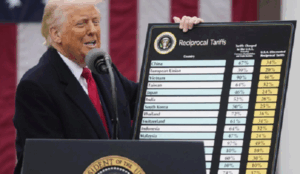
In a presidential proclamation posted late Monday night, Trump lowered the tariff from 25 per cent to 15 per cent for agricultural equipment, as well as heating and air conditioning systems, effective June 8. He also added steel racks and aluminum lithographic plates to the list of products facing a 25 per cent import tariff.

“Recent circumstances have affected and are affecting domestic industries that use agricultural equipment, industrial equipment and machinery, and other related products,” Trump said in his proclamation. “These products … serve an important role in productive domestic economic activity.”
On Monday, Canada formally told the U.S. and Mexico this week that it wants to renew the Canada-U.S.-Mexico Agreement on trade for another 16 year term.
A review of CUSMA is scheduled to start on July 1.
While it’s still too early to tell the precise financial impact of Trump’s changes, Holmes said, it’s clear it’s a mixed bag.
“It does not make entry into the American market easier for Canadian exporters,” he added. “It makes it cheaper for some, and more expensive for others.”
The head of Canada’s Automotive Parts Manufacturers Association sounded a note of cautious optimism on the steel and aluminum tariff changes, as well as U.S.-Mexican bilateral discussions over the weekend that suggested the Americans were open to allowing some foreign car parts into the U.S. at lower tariff levels.

“This is the Americans starting to turn back toward ‘is this cost to American businesses and consumers worth it?’,” said APMA CEO Flavio Volpe. “It’s for us to analyze whether there’s a deeper opening here.”
Still, said Volpe, there’s no question the assumption of barrier-free continental trade we once took for granted is no longer a dependable reality.
“Regardless of what you’re doing, you’ll still have punitive tariffs in place, but they’ll just hurt less,” said Volpe of the steel and aluminum changes. “A thaw is still just a thaw if the ground is still frozen.”
Veteran trade attorney John Boscariol said it’s clear that Trump has bowed to pressure from the American business community — and isn’t doing this as a favour to Canadian exporters.
“It’s a realization that the initial order went too far and was hurting businesses in the U.S. that needed to access these items,” said Boscariol, head of the international trade law group at McCarthy Tetrault. “It’s a recognition that tariffs across the board can be harmful to American business interests. I do think that’s a somewhat positive sign.”
Last August, Trump added more than 400 items containing steel and aluminum to the list of products facing import tariffs.

As far as the immediate impact of the changes, they will be limited for Canadian producers, said the head of association representing Canadian steel companies.
“The key takeaway here is that last night’s executive order is limited in scope and application for Canada,” said Catherine Cobden, CEO of the Canadian Steel Producers Association.
The Aluminum Association of Canada didn’t immediately reply to a request for comment.
This article was first reported by The Star