







Market Benchmarks Advance Despite Persistent Rise in Bond Yields as Oil Prices Retreat Slightly
The Canadian Vanguard Stock Market Report Monday, October 5, 2026, Edition
.
The Toronto Market
Monday’s Toronto Market Index
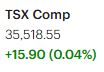
The S&P/TSX Composite Index rose 15.90 points, or 0.04%, to close at 35,518.55.
The TSX posted a second consecutive gain, although today’s advance was marginal compared with Friday’s nearly 1% surge. Friday’s strong rally more than offset the losses from the preceding three sessions. Market breadth remained positive and relatively strong, suggesting that today’s modest gain was broadly supported.
Technically, the TSX remains below its 25-day and 50-day moving averages, but the gap is narrowing. Continued gains over the next few sessions could push the index back above both averages, strengthening the near-term recovery signal.
The longer-term technical picture remains constructive. The TSX continues to trade comfortably above its 200-day moving average, preserving its broader upward trend.
Monday’s TSX Market Statistics
Market breadth was positive, with 1,326 advancers outnumbering 920 decliners. This produced an advancer-to-decliner ratio of 1.44 to 1, or roughly three advancers for every two decliners. A further 141 issues were unchanged.
The TSX recorded 128 new 52-week highs and 116 new 52-week lows, compared with 110 highs and 87 lows on Friday. The new-high/new-low ratio improved to approximately 1.10 to 1, with new highs again exceeding new lows for a second consecutive session.
This is an encouraging development. For most of the past two weeks, new 52-week lows had consistently overwhelmed new highs, reflecting significantly weakened market internals. The reversal over the past two sessions suggests that the deterioration may be losing momentum and that market breadth is beginning to improve.
However, today’s internals were not strong enough to confirm a meaningful change in trend. Friday’s stronger performance provided a more convincing improvement, whereas today’s modest market gain, despite positive breadth, leaves the broader internal picture still weakened. Several more sessions of improving breadth and new-high/new-low readings will be needed before a new positive trend can be confirmed.
TSX trading volume reached 433.7 million shares, up approximately 4% from Friday’s 416.5 million shares. Although advancing issues clearly outnumbered decliners, the relatively modest index gain indicates that the advance lacked sufficient strength to qualify as a broad-based market rally.
Overall, market internals are improving but remain fragile. The recent deterioration appears to be stabilizing, but the evidence is not yet strong enough to signal a confirmed trend reversal. Investors should therefore continue to exercise caution until the improving breadth is sustained over several additional sessions
Monday’s Toronto TSX Market Wrap-Up Report
Technology stocks took control of the Toronto market today, producing a notable shift in the sector leadership normally dominated by resource and mining stocks. Technology surged 3.74% and was the only one of the TSX’s ten major sectors to post a meaningful gain.
Utilities declined 0.02%, while Basic Materials and Consumer Discretionary both slipped 0.06%. At the other end of the spectrum, Industrials fell 0.48%, Financials declined 0.53%, and Telecommunications Services was the session’s weakest sector, down 0.85%.
The sector rotation is noteworthy. While technology provided strong leadership, weakness in Financials and Telecommunications Services limited the broader market’s upside. The TSX ultimately gained only 0.04%, closing at 35,518.55 for its second consecutive advance.
Banks Under Pressure
The major Canadian banks were generally weak. National Bank was the exception, edging up 0.07%. Bank of Nova Scotia was the weakest of the major banks, falling 0.92% to $128.74 on 4.6 million shares. Bank of Montreal declined 0.68% to $234.65, with 1.6 million shares changing hands.
Weakness among the major banks is significant because Financials remain one of the largest and most influential components of the TSX. Until financial stocks begin participating more positively, a sustained broad-market advance may remain difficult.
Shopify Leads the Technology Rally
Shopify was one of the session’s standout performers, rising 5.70% to $228.17 on 2.31 million shares. The stock has now advanced for six consecutive sessions and closed above $225 for the first time since January.
The combination of a six-session advance and stronger trading volume suggests that the current move has momentum behind it. The $250 area could become a potential psychological and technical target if the advance continues.
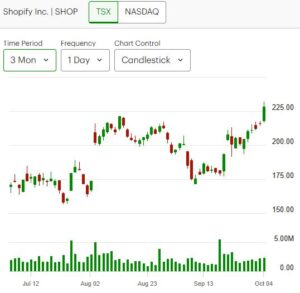
However, traders should avoid chasing a stock after a sharp run. Momentum can remain powerful, but buying after an extended move materially increases short-term risk. A pullback or consolidation that allows the stock to establish a new support level would generally provide a more attractive risk-reward opportunity than chasing strength.
Stocks to Watch
Bird Construction (BDT), highlighted in Friday’s report, declined 2.2% today on lower volume. The decline therefore did not appear to represent aggressive selling, and the stock continues to warrant attention. A period of short-term consolidation would not be surprising following its recent advance.
Aecon Group (ARE) also declined today on lower volume. As with Bird Construction, the lower volume is worth noting; traders should watch whether the stocks stabilize and resume their respective uptrends rather than reacting to a single down session.
Illumina (ILMN) and Moderna (MRNA) also remain on the watchlist. Both warrant further research and should be considered only if their current technical setups continue to strengthen.
Market Breadth: Improving but Not Yet Confirmed
Market breadth provided an encouraging signal today. Advancers outnumbered decliners 1,326 to 920, producing a healthy 1.44-to-1 advancer-to-decliner ratio. There were also 141 unchanged issues.
More importantly, the TSX recorded 128 new 52-week highs against 116 new 52-week lows. This was the second consecutive session in which new highs exceeded new lows, a meaningful improvement from the pattern of the past two weeks, when new 52-week lows consistently overwhelmed new highs.
Trading volume also increased approximately 4% to 433.7 million shares from Friday’s 416.5 million.
These indicators suggest that the deterioration in market internals may finally be stabilizing. However, the improvement is not yet strong enough to confirm a new positive market trend. The TSX remains below its 25-day and 50-day moving averages, although it is steadily approaching both. At the same time, the index remains comfortably above its 200-day moving average, keeping the longer-term technical picture constructive.
Key Takeaway for Traders and Investors
The market is improving, but it has not yet earned an all-clear signal.
The most encouraging developments are the second consecutive session of gains, positive market breadth, the return of new 52-week highs above new lows, and strong leadership from Technology.
The principal concerns are the TSX’s still-modest overall advance, weakness in Financials and Telecommunications, and the fact that the index remains below its 25-day and 50-day moving averages.
For traders, the current environment favors selectivity rather than aggressive positioning. Technology leaders such as Shopify are demonstrating momentum, while stocks such as Bird Construction and Aecon should be monitored for constructive consolidation or renewed buying interest.
For investors, the improving internals are encouraging but require confirmation. Several more sessions of sustained breadth improvement, stronger participation across sectors, and a move back above the 25-day and 50-day moving averages would provide considerably stronger evidence that a new positive trend is developing.
Until then, maintaining some caution and avoiding extended stocks remains the prudent approach.
.
The US Markets
Monday’s U.S. Market Indexes
U.S. equities extended Friday’s strong advance, with all four major indexes closing higher. The Nasdaq led the market with another strong gain, while the S&P 500 also posted a solid advance.
The Dow Jones Industrial Average rose 90.94 points, or 0.18%, to 51,267.90. The S&P 500 gained 51.23 points, or 0.66%, to 7,773.95. The Nasdaq Composite advanced 286.45 points, or 1.05%, to 27,190.86. The Russell 2000 gained 14.24 points, or 0.50%, to close at 2,847.14.

NASDAQ Continues to Lead
The Nasdaq again provided the strongest performance among the major indexes, gaining 1.05%. The index is now trading comfortably above its 25-day, 50-day and 200-day moving averages, giving it the strongest technical position of the four major indexes.
The S&P 500 also remains in a generally constructive position. Although it is still below its 25-day moving average, it remains above both its 50-day and 200-day moving averages. A move back above the 25-day average would strengthen the near-term technical picture.
The Dow continues to lag. It remains below both its 25-day and 50-day moving averages, although it is still slightly above its 200-day moving average. The narrowing gap between the Dow and its 200-day average warrants attention, as a break below that long-term indicator would weaken its technical outlook further.
The Russell 2000 remains the weakest of the four indexes from a technical perspective. It continues to trade well below its 25-day and 50-day moving averages and only slightly above its 200-day moving average. Small-cap stocks therefore have yet to provide convincing confirmation of a broad-based market recovery.
Rates and Oil
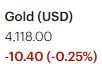
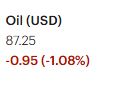
The 10-year Treasury yield rose three basis points to 5.31%, indicating continued pressure from higher long-term interest rates. Oil prices moved lower following the G7 agreement to release a substantial amount of oil from strategic reserves.
Key Takeaway
The U.S. market continues to recover, but leadership remains concentrated. The Nasdaq is showing the clearest technical strength, while the S&P 500 is improving but still needs to reclaim its 25-day moving average.
The Dow and Russell 2000 remain considerably less convincing. In particular, the Russell 2000’s weak position relative to its moving averages suggests that small-cap participation has yet to confirm a fully broad-based recovery.
For traders, the current setup continues to favor relative strength and selective positioning rather than assuming that the entire market has entered a confirmed new uptrend. For investors, the next few sessions should provide important confirmation as to whether the recent strength can broaden beyond the technology-led advance.
Monday’s U.S. Market Statistics
New York Stock Exchange: Market breadth on the NYSE was positive, with 2,482 advancers outnumbering 2,062 decliners. This produced an advancer-to-decliner ratio of 1.20 to 1, or approximately six advancers for every five decliners. Another 453 issues were unchanged.
The NYSE recorded 220 new 52-week highs and 439 new 52-week lows, compared with 36 highs and 134 lows on Friday. The sharp increase in both readings reflects greater market activity, but the imbalance remains a concern: new 52-week lows were still roughly twice the number of new highs.
Nevertheless, the increase in new highs is encouraging. The number of new highs jumped more than six fold from Friday, while new lows also increased substantially. Although the absolute number of new lows remains elevated, the high-to-low relationship has improved considerably from the extremely weak readings seen recently.
NYSE trading volume reached approximately 6.01 billion shares, up 12% from Friday’s 5.38 billion shares. The combination of positive breadth, higher volume and a significant increase in new highs points to improving market participation.
Assessment: NYSE internals are improving, but they remain weak. The large number of new 52-week lows continues to argue for caution. A sustained decline in new lows, accompanied by further growth in new highs, would provide stronger evidence that the market’s internal condition is turning decisively more positive.
NASDAQ: Nasdaq breadth was also positive. There were 2,671 advancers versus 2,250 decliners, producing an advancer-to-decliner ratio of 1.19 to 1, or approximately six advancers for every five decliners. Another 405 issues were unchanged.
The Nasdaq recorded 168 new 52-week highs and 350 new 52-week lows, compared with 129 highs and 288 lows on Friday. New highs increased approximately 30%, while new lows rose about 22%.
The improvement in new highs is encouraging, but the imbalance remains significant: new 52-week lows are still more than twice the number of new highs. The Nasdaq’s internal indicators therefore remain weakened, even though they are moving in the right direction.
Nasdaq trading volume reached approximately 8.15 billion shares. Despite some variation in the comparison figure provided, the key point is that trading activity remained strong as the Nasdaq advanced another 1.05%.
Market Internals: Improving, but Not Yet Confirmed
The most important message from today’s statistics is that market internals are improving, but the improvement is not yet strong enough to confirm a broad-based new uptrend.
Both the NYSE and Nasdaq recorded positive breadth, and both exchanges saw a meaningful increase in new 52-week highs. This is encouraging, particularly following the strong performance of the major indexes over the past two sessions.
However, new 52-week lows remain substantially higher than new highs on both exchanges. That imbalance indicates that underlying market weakness has not yet been fully resolved.
The Nasdaq’s performance is particularly noteworthy. The index gained another 1.05% and remains technically strong despite the 10-year Treasury yield rising to 5.31%. This relative strength suggests that buyers continue to support technology stocks even in a challenging interest-rate environment.
Key Takeaway for Traders and Investors
The market is getting stronger, but the internals still require confirmation.
The improving breadth and significant increase in new 52-week highs are constructive developments. However, the continued dominance of new lows means that the market’s underlying condition remains fragile.
For traders, the current environment favors selective exposure to stocks and sectors demonstrating clear relative strength, rather than assuming that the broad market has already entered a confirmed uptrend.
For investors, patience remains appropriate. A sustained decline in new 52-week lows, continued expansion in new highs, and broader participation across the market would provide much stronger evidence that the current recovery is developing into a durable trend.
.
Monday’s U.S. Market Wrap-Up Report
U.S. equities extended Friday’s strong advance on Monday, producing a notable divergence between rising Treasury yields and rising stock prices.
The 10-year Treasury yield climbed another three basis points to 5.31%, yet the Nasdaq Composite advanced 1.05% to a new record close. The S&P 500 gained 0.66%, the Russell 2000 rose 0.50%, and the Dow Jones Industrial Average added 0.18%.
This is an important development for traders. Normally, a sustained rise in long-term Treasury yields creates additional pressure on equity valuations, particularly technology and other growth stocks. Monday’s action demonstrated that strong equity demand can temporarily overcome that headwind.
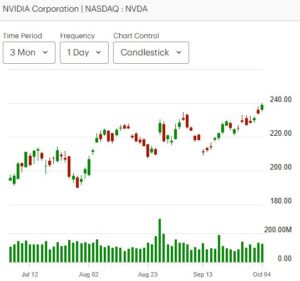
Technology’s continued strength is particularly significant. The Nasdaq is now trading comfortably above its 25-day, 50-day and 200-day moving averages, placing it in the strongest technical position among the major U.S. indexes. The continued investment cycle surrounding artificial intelligence appears to remain an important source of momentum for technology stocks and related industries.
However, traders should distinguish between strong market momentum and confirmation of a broad-based market advance. The underlying market internals are improving, but they remain weakened.
Broad-Based Gains, but Leadership Still Matters
Monday’s advance was broad at the sector level, with all major sectors posting gains.
Industrials led the market, rising 1.55%. Energy gained 1.08%, while Technology and Consumer Durables & Services each advanced 0.93%. Basic Materials rose 0.68% and Healthcare gained 0.66%.
Financials were among the weaker performers, although the sector still gained 0.57%. Consumer Discretionary rose 0.42% and was the session’s laggard.
The broad sector participation is encouraging and provides stronger support for the rally than a technology-only advance would. Nevertheless, continued participation from Financials, small-cap stocks and other economically sensitive areas would provide stronger confirmation that the recovery is becoming genuinely broad-based.
Market Internals Improving, but Still Weak
The NYSE recorded 2,482 advancers versus 2,062 decliners, while the Nasdaq had 2,671 advancers against 2,250 decliners. Breadth was therefore positive on both exchanges.
Trading volume was also substantial, with approximately 6.01 billion shares traded on the NYSE and 8.15 billion on the Nasdaq.
The new-high/new-low statistics, however, remain less encouraging. The NYSE recorded 220 new 52-week highs against 439 new lows, while the Nasdaq recorded 168 highs versus 350 lows.
The improvement is that the number of new highs has increased significantly from Friday. The concern is that new lows remain more than twice as numerous as new highs on both exchanges.
This tells us that the market’s internal condition is improving, but it has not yet fully recovered. The next few sessions will be important. A continued increase in new highs accompanied by a sustained decline in new lows would materially strengthen the case for a durable market recovery.
Seagate Rebounds
The sharp decline in Seagate Technology Holdings on Friday following concerns about Toshiba’s competitive position in the disk-drive market appeared to be substantially reversed on Monday.
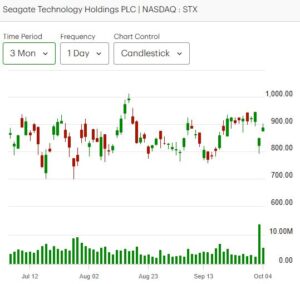
The strong rebound suggests that investors may have viewed Friday’s sell-off as excessive, although one recovery session is not enough to determine whether the underlying concern has been completely removed.
For traders, the important signal will be whether Seagate can sustain the rebound and whether trading volume confirms renewed institutional buying.
Key Takeaway for Traders and Investors
The U.S. market is demonstrating impressive resilience, but the rally still needs broader confirmation.
The strongest positive signals are the Nasdaq’s new record close, continued technology leadership, positive breadth on both major exchanges, higher trading activity and improving new-high readings.
The principal warning remains the unusually high number of new 52-week lows. Until that measure improves substantially, the market should not be considered fully repaired internally.
For traders, the current environment favors following relative strength while maintaining disciplined risk management. Technology remains the clear leadership group, but traders should avoid chasing stocks that have become technically extended.
For investors, the rising 10-year Treasury yield deserves close attention. The market has so far absorbed higher yields remarkably well, but that relationship can change quickly.
The key question now is whether the combination of strong index performance and improving internals can persist. If new highs continue expanding while new lows contract, the current rally would gain considerably stronger confirmation.
.
NOTICE TO READERS
The Canadian Vanguard Stock Market is about empowering you to build and manage your wealth by yourself. There is certainly no magic in managing finances or wealth but one needs to know what to do and commit to doing what is needed. When you are ready to start the journey to Take Charge and Put Your Destiny In Your Own Hands, start with reading The Canadian Vanguard every market day. If and when you need more related information or to advertise your business products or services in The Canadian Vanguard, Contact Us
Our readers are strongly advised to conduct their own research into individual stocks before making a purchase decision. In addition, investors are advised that past stock performance is no guarantee of future price appreciation. Any recommendation is not a guarantee of any particular stock’s future prices, and The Canadian Vanguard accepts no responsibility or liability for investors’ or readers’ purchases.
Stocks In The News/ Stocks To Watch and Market Strategy will soon be available only to Paying Subscribers. The dollar sign “$” in the Toronto Market section in the articles only stands for Canadian dollar and in the US market section “$” stands for US dollar.
(c) This article is published by The Canadian Vanguard on October 5, 2026