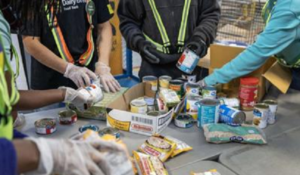






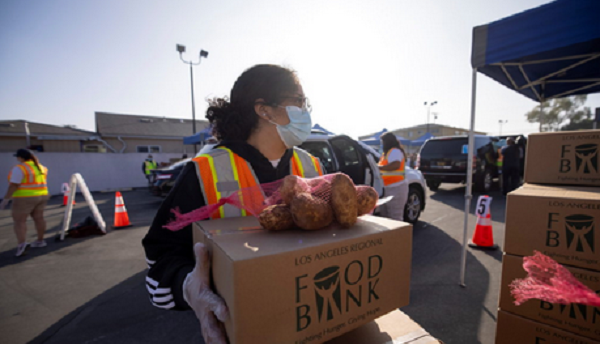
Fuel Costs Squeeze Food Bank Operations, Cutting Vital Services Amid Rising Demand
The organization that delivers food to food banks across New Brunswick said it’s worried about what the coming months will bring if fuel prices continue to rise.
Feed NB’s Executive Director Stéphane Sirois said the non-profit has already stopped buying beef because the cost is just too high.
“Meat. This is where we’ve seen the highest increase in prices. If you go to the grocery store you can see it. We try to substitute for other high protein,” Sirois said in an interview with CTV News.
“Meat is definitely the big ticket item. That’s very expensive.”
The cost of importing and trucking meat products are adding to its already high price tag.

Sirois said grains, like cereal, could be next as he watches the risk rise within the supply chain.
“The high cost of living, housing, food and grocery prices. And now this comes,” he said. “And it’s self-inflicted. This was completely unnecessary.”
The price of a litre of gas on Dec. 15 in Fredericton was $1.33.
On April 9, it’s risen to $1.90.
Sirois said they’ve had to increase their fuel budget by 30 per cent. The fuel surcharge has gone from 38 to 45 per cent when they have to use third-party carriers.
It’s led to some “difficult decisions.”
“If some families were coming twice a month in some areas now, it’s only once a month that they can get food assistance,” he said. “The volume of food has decreased in what they’re getting or the quality of food as well.”
Alex Boyd, CEO at Fredericton’s largest food bank Greener Village, said they’re already starting to see the impact the war in Iran is having on people’s ability to afford fuel and food.
But he said they’ll start to see the real, much larger increase, in two to three months when people have reached their tipping point. He expects food banks will be hit by all sides with food, fuel, and demand all on the rise.
“Not only the price per unit goes up when the fuel price increases, but the number of clients go up. So it’s like a double whammy for us,” he said.
Boyd and Sirois both admit they are worried.
“The thing that offsets my worry is the confidence I have in the community and the people who care about others, who say, we’re not going to let people in our community go without supper tonight,” Boyd said.
New dashboard tracks usage
The province can now watch for that surge in food bank use in real time, thanks to the Human Development Council.
The organization shines a light on social issues facing the province and developed a dashboard that tracks how many – and who – are having to turn to food banks.
It shows that in September 2022, 17,543 people were using food banks.
In January 2026, that number has ballooned to 26,760.

In the same time period, almost 10,000 more were having to turn to community kitchens, from 24,383 to 33,212.
What has also changed is the demographics of people having to turn to the food bank.
Liam Fisher, who oversees data and research for the council, said they are seeing an increase in people who’ve been in Canada for less than ten years, post-secondary students and families who are employed.
“I think that really speaks to employment income and affordability as the biggest driver of increased use in recent years,” he said.
Food banks are not immune to these struggles either.
“Not only is it impacting their clientele, so an increased number of users, but also just the cost to keep the doors open,” he said. “So there’s a direct impact on them as well… just running the operation becomes increasingly more expensive.”
This article was first reported by CTV News