







The Canadian Vanguard Stock Market Report Weekend May 22-24, 2026 Edition
Stock Markets Rally to New Highs as Investors Shrug Off Inflation and Eye Potential Peace Deal
The Canadian Vanguard Stock Market Report is updated regularly during the weekend
.
The Toronto Market
Friday’s Toronto Market Index
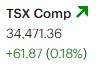
The S&P/TSX Composite Index rose 61.87 points, or 0.18%, to close at 34,471.36 on Friday. The index has now posted gains for three consecutive trading sessions, although the pace of gains has slowed since Wednesday.
Trading volume on Friday was eight percent lower than on Thursday and remained well below the recent daily average.
Friday’s TSX Market Statistics
On the Toronto Stock Exchange, advancing issues outnumbered declining issues by a wide margin on Friday. There were 1,487 advancers and 692 decliners, resulting in an advancer-to-decliner ratio of 2.15-to-1, or roughly two advancing stocks for every declining stock. Another 143 issues closed unchanged.
The exchange recorded 421 new 52-week highs and 19 new 52-week lows, compared with 273 new highs and 32 new lows on Thursday, reflecting continued strength in overall market breadth.
Total trading volume on the TSX reached 406,553,098 shares, down 8% from the 502,904,376 shares traded on Thursday. Friday’s trading activity was also below the recent daily average.
In analyzing current market conditions, investors should recognize the significant influence of geopolitical developments, particularly ongoing tensions involving the United States and Iran. Recent market performance has been heavily news-driven, increasing volatility and the potential for rapid shifts in investor sentiment. Investors should therefore remain flexible in their strategies and be prepared to adjust positions quickly to protect gains and limit potential losses.
Toronto Market Wrap-Up Report — Trader & Investor Focus
The S&P/TSX Composite Index extended its rally for a third straight session on Friday, although momentum slowed considerably after the stronger advances recorded earlier in the week. The market continues to trade with a bullish undertone, but Friday’s lighter volume and narrower gains suggest traders are becoming more selective heading into next week.
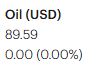
The key driver remains geopolitics. Weekend comments from Donald Trump regarding a possible Iran agreement added another layer of uncertainty for traders positioning around commodities, energy, and risk assets. Any confirmed de-escalation between the United States and Iran would likely trigger immediate sector rotation, particularly in oil-sensitive names and defensive plays. Until an actual agreement is signed, however, headline risk remains elevated and markets are likely to stay highly reactive to news flow.
From a trading perspective, Friday’s session showed signs of consolidation rather than deterioration. Six major sectors closed positive, with leadership shifting toward defensive and income-oriented groups. Telecommunications Services led with a 1.17% gain, followed by Utilities (+0.88%) and Industrials (+0.86%). Financials and Energy also finished higher, helping stabilize the broader index.
Technology (-0.27%), Consumer Discretionary (-0.31%), and Basic Materials (-0.44%) lagged, but the declines were relatively mild considering the strong run earlier in the week. Importantly, sellers failed to generate any broad-based sector breakdown, which keeps the short-term bullish structure intact.
Weekly Sector Rotation
Technology rebounded aggressively this week, gaining 6.99% and reclaiming leadership after months of underperformance. The move suggests traders are rotating back into higher-beta growth names, particularly those linked to artificial intelligence and infrastructure spending. Telecommunications Services also remained strong, advancing 3.64%, while Financials (+2.79%), Energy (+2.40%), Industrials (+1.88%), and Utilities (+1.81%) continued to provide broad market support.
Healthcare (-1.3%) and Basic Materials (-7.27%) were the weakest sectors. The sharp decline in Basic Materials remains a concern because it reflects ongoing pressure in metals and commodity-sensitive equities. Traders should continue monitoring this group closely for signs of stabilization before aggressively positioning in cyclical resource names.
The Energy sector remains highly headline-driven. Oil-related equities are reacting more to geopolitical developments than fundamentals at the moment, creating both opportunity and elevated risk for short-term traders. Position sizing and disciplined risk management remain critical in this environment.
Stocks in Focus
BlackBerry Limited was one of the standout momentum names on Friday, surging 18.52% to close at $10.88 on volume of roughly 8 million shares. The stock is attracting renewed speculative interest and could remain highly volatile in the near term. Traders should watch for follow-through buying early next week, particularly if volume remains elevated.
MDA Space gained 5.10% with 1.48 million shares traded. The stock continues to benefit from strong investor appetite for aerospace, defense, and satellite-related growth themes. Momentum traders will likely continue to monitor the name for breakout continuation opportunities.
Celestica advanced another 4.1% to close at $507.99. The stock remains one of the strongest AI infrastructure plays on the TSX and continues to attract institutional momentum flows. As long as the AI trade remains active globally, pullbacks in the stock may continue to attract buyers.
Bombardier extended its winning streak to four consecutive sessions, climbing 2.35% to close at $296.54. The market continues to respond positively to recent aircraft orders and expanding defense operations. The stock is increasingly behaving like a momentum industrial name rather than a turnaround story, and traders should monitor whether it can sustain a breakout above recent highs on stronger volume.
Market Outlook
The TSX remains technically constructive, but momentum is slowing as traders assess geopolitical developments and digest recent gains. The market’s ability to hold higher levels despite lower volume and mixed sector performance is still a positive sign for bulls.
However, next week could bring increased volatility if geopolitical headlines intensify. Investors should remain flexible, avoid overcommitting to any single narrative, and continue focusing on relative strength leadership, volume confirmation, and disciplined risk management.
The US Markets
Friday’s U.S. Market Indexes
U.S. equities extended their advance on Friday, with all four major indexes finishing higher as investors continued rotating into cyclical and small-cap names. The Dow Jones Industrial Average rose 294.04 points, or 0.58%, to close at 50,579.70, reaching another record high during the session.
The S&P 500 gained 27.75 points, or 0.37%, ending at 7,473.47, while the Nasdaq Composite advanced 50.87 points, or 0.19%, to finish at 26,343.97.
The strongest performance once again came from small-cap stocks. The Russell 2000 climbed 27.77 points, or 0.91%, closing at 2,869.23. The Russell 2000 nearly repeated Thursday’s leadership performance and has now outperformed the broader market for two consecutive sessions. Although the index closed slightly below its intraday high, buying momentum in small-cap equities remains notable.
From a market strategy perspective, Friday’s session reinforced the ongoing rotation into economically sensitive and domestically focused stocks. Lower Treasury yields provided additional support for small caps, as the 10-year U.S. Treasury yield edged lower during the session. Declining yields tend to benefit smaller companies because they are generally more sensitive to borrowing costs and financing conditions than large-cap multinational firms.
The continued strength in the Russell 2000 is important because sustained small-cap leadership often signals improving investor confidence and broader market participation. Traders should watch closely to see whether this rotation continues next week, particularly if bond yields remain stable or move lower.
Meanwhile, the Dow’s ability to push to fresh highs reflects continued resilience in industrial, financial, and value-oriented sectors, even as large-cap technology stocks showed signs of consolidation after recent strong gains. Overall, market momentum remains constructive, although investors should continue monitoring interest rates, geopolitical developments, and sector rotation trends for signs of changing risk appetite.

Friday’s U.S. Market Statistics
New York Stock Exchange (NYSE): Market breadth on the New York Stock Exchange remained positive on Friday, with advancing issues comfortably outpacing declining issues. There were 2,774 advancing stocks versus 1,653 declining stocks, while 396 issues closed unchanged. This produced an advancer-to-decliner ratio of approximately 1.68-to-1, or roughly three advancing stocks for every two decliners.
The internal market data also showed improving momentum beneath the surface. The NYSE recorded 384 new 52-week highs compared with only 79 new 52-week lows. This marked a notable improvement from Thursday’s totals of 234 new highs and 106 new lows, suggesting broader participation in the ongoing rally.
NYSE trading volume totaled 5.05 billion shares, down approximately 9% from Thursday’s 5.54 billion shares. While lighter volume may indicate some short-term caution from institutional traders, the strong expansion in new highs suggests the broader uptrend remains intact.
For traders and investors, the increase in new highs alongside positive breadth is generally viewed as a constructive signal because it reflects improving participation across multiple sectors rather than gains being concentrated in only a handful of large-cap stocks.
NASDAQ: On the NASDAQ, advancing stocks also outnumbered decliners, although breadth was somewhat narrower than on the NYSE. The exchange reported 2,820 advancing issues and 2,090 declining issues, with 205 stocks unchanged, resulting in an advancer-to-decliner ratio of approximately 1.35-to-1, or about seven advancers for every five decliners.
NASDAQ market internals continued to improve as the exchange posted 334 new 52-week highs against 110 new 52-week lows. This represented a meaningful improvement from Thursday’s 205 new highs and 123 new lows, indicating renewed momentum in growth-oriented and technology-related stocks.
Trading activity on the NASDAQ increased notably, with total volume reaching 9.51 billion shares, approximately 7% higher than Thursday’s 8.89 billion shares traded. Rising volume accompanying positive breadth and expanding new highs is generally viewed as a healthy sign for bullish momentum, particularly in growth and momentum-driven sectors.
The combination of improving breadth, expanding new highs, and stronger NASDAQ volume suggests that institutional participation in growth stocks may be returning after recent consolidation. Traders should continue monitoring whether small-cap leadership, technology momentum, and falling Treasury yields can sustain the current market advance into next week.
.
Friday’s U.S. Market Wrap-Up Report
U.S. equities pushed to fresh highs on Friday as investors largely shrugged off the latest inflation data and continued rotating into cyclical, industrial, and small-cap names. The Dow Jones Industrial Average reached another record high during the session, while the S&P 500 and Nasdaq Composite posted more moderate gains as leadership broadened beyond mega-cap technology stocks.
One of the most important developments for traders was the continued strength in small-cap equities. Small caps have now outperformed for two consecutive sessions, signaling improving risk appetite and broader market participation. The recent pullback in the 10-year Treasury yield has helped fuel this rotation, as lower yields tend to support smaller and more economically sensitive companies. If yields continue stabilizing or moving lower, traders may continue shifting capital toward cyclical and domestic growth names.
Sector Rotation Remains Healthy
Eight of the eleven major sectors closed higher on Friday, reflecting constructive market breadth rather than narrow leadership concentrated in a few large-cap names. Industrials led the session with a 0.93% gain, reinforcing the market’s current preference for economically sensitive sectors. Utilities advanced 0.53%, while Technology gained 0.35%. Energy and Basic Materials posted smaller advances of 0.13% and 0.12%, respectively.
On the downside, Financials slipped 0.08% and Telecommunications Services declined 0.40%, making them the weakest groups of the session. Importantly, Friday’s trading remained orderly, with no major sector breakdowns or excessive volatility. The absence of aggressive selling pressure suggests institutional investors are still supporting the broader uptrend despite the market trading near record levels.
Weekly Sector Performance
For the week, Telecommunications Services led all sectors with a strong 4.81% advance. Healthcare followed with a 3.13% gain, while Utilities, Financials, and Consumer Discretionary added 2.90%, 2.20%, and 1.66%, respectively.
Energy (-0.08%) and Durable Consumer Goods & Services (-0.42%) were the only sectors to finish the week negative, although the declines remained relatively mild. Overall, the weekly sector performance reflects a market still favoring growth, communication services, and defensive positioning simultaneously — an indication that investors remain optimistic but cautious about macroeconomic and geopolitical risks.
Stocks in Focus
Artificial intelligence infrastructure and semiconductor-related names continued to dominate trading activity and investor attention.
Dell Technologies was one of Friday’s standout momentum stocks, surging 16.77% on heavy volume of 15.3 million shares traded. The breakout reflects strong institutional demand tied to AI server infrastructure and enterprise spending trends. Traders will likely monitor whether the stock can sustain momentum after such a sharp move.
NVIDIA delivered another strong earnings report that exceeded expectations across key metrics. However, the stock declined 1.9% on Friday and has now fallen for two consecutive sessions. This type of price action may indicate short-term profit-taking after a massive rally rather than a deterioration in fundamentals. Still, traders should closely monitor whether support levels hold, as NVIDIA remains one of the market’s most influential leadership stocks.
The space and satellite-launch sector also attracted strong speculative flows. Rocket Lab gained 8.22% on volume of 33 million shares, while AST SpaceMobile surged 10.01% with 30.7 million shares traded. Momentum traders continue targeting high-growth aerospace and satellite names as speculative appetite remains elevated.
Within semiconductors, Advanced Micro Devices rose 3.99% on strong volume of 34.8 million shares, continuing to benefit from AI-related demand expectations. Arm Holdings extended its recent momentum with another 2.78% gain, while Intel added 1.13%, continuing its strong year-to-date recovery trend on volume exceeding 82 million shares.
Market Outlook
The broader market trend remains bullish, supported by improving breadth, healthy sector rotation, and continued institutional participation. However, leadership is beginning to broaden beyond mega-cap technology into small caps, industrials, and selective cyclical sectors — a development traders should watch closely.
At the same time, markets remain highly sensitive to inflation expectations, Treasury yields, Federal Reserve policy signals, and geopolitical developments. Investors should remain disciplined, focus on relative strength leadership, and continue monitoring whether the recent small-cap breakout gains traction in the sessions ahead.
.
NOTICE TO READERS
The Canadian Vanguard Stock Market is about empowering you to build and manage your wealth by yourself. There is certainly no magic in managing finances or wealth but one needs to know what to do and commit to doing what is needed. When you are ready to start the journey to Take Charge and Put Your Destiny In Your Own Hands, read The Canadian Vanguard every market day. If you need more related information, Contact Us
Our readers are strongly advised to conduct their own research into individual stocks before making a purchase decision. In addition, investors are advised that past stock performance is no guarantee of future price appreciation. Any recommendation is not a guarantee of any particular stock’s future prices, and The Canadian Vanguard accepts no responsibility or liability for investors’ or readers’ purchases.
Stocks In The News/ Stocks To Watch and Market Strategy will soon be available but only to Paying Subscribers. The dollar sign “$” in the Toronto Market section in the articles only stands for Canadian dollar and in the US market section “$” stands for US dollar.
(c) This article is published by The Canadian Vanguard on May 23, 2026